
Table of Contents
- Why Mobile Inspection for Rideshare Vehicles Saves Drivers Time
- Alberta Rideshare Vehicle Inspection Requirements You Need to Meet
- Step by Step: How a Mobile Inspection Appointment Works
- Your Rideshare Safety Inspection Checklist Before the Mechanic Arrives
- Vehicle Inspection Documents and Preparation: What to Have Ready
- Out-of-Province Vehicle Inspection Alberta: Extra Steps for New Arrivals
- Mobile vs In-Person Rideshare Inspection: Which Fits Your Schedule
- After the Inspection: Pass, Fail, and What Comes Next
- Frequently Asked Questions
Last Updated: October 18, 2026
Why Mobile Inspection for Rideshare Vehicles Saves Drivers Time
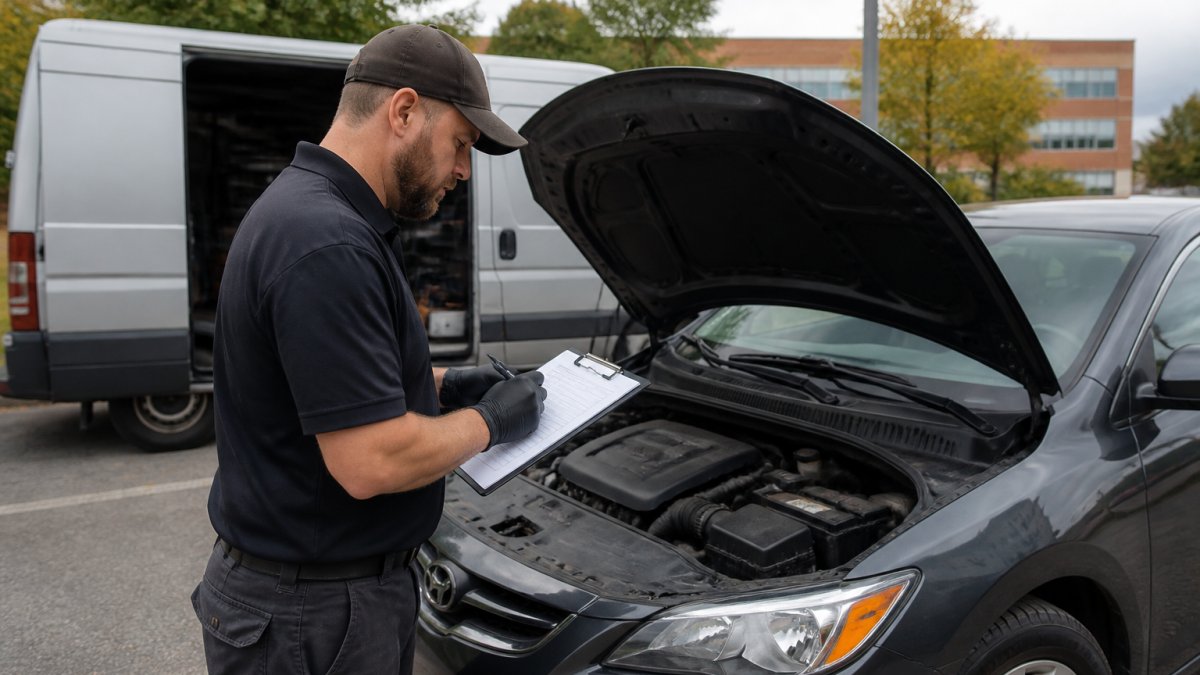
A mobile inspection for rideshare vehicles is a safety check performed at your home, workplace, or anywhere you park.
Every hour in a waiting room is an hour not earning. We bring journeyman-certified mechanics directly to your location across Alberta, so your car gets checked while you get on with your day.
Most guides treat the inspection as a quick errand. In practice, it’s a scheduling problem: shops run on their hours, not yours. Mobile service flips that.
The benefits stack up fast:
- No driving across town to a shop
- No waiting room, no lost fares
- Inspection done in your own driveway or lot
Alberta Rideshare Vehicle Inspection Requirements You Need to Meet
Rideshare platforms and provincial rules both apply: you must satisfy the platform’s approval process and the safety standards governing Alberta roads.
Platforms like Uber and Lyft require a vehicle safety inspection before you can accept rides. The check confirms your car is roadworthy: brakes, tires, lights, steering, and body condition all get reviewed. Your rideshare vehicle must also meet age and type rules set by each platform.
Platform Rules and Provincial Standards
Each platform publishes its own requirements, and they change, a car that passed last year may fall outside current age limits. Check the driver portal before you book.
Provincial standards sit underneath platform rules. Alberta’s vehicle inspection program sets what a passing commercial vehicle inspection or safety check must cover, and AMVIC licenses inspection facilities and sets trade standards.
A common mistake is assuming platform approval replaces a provincial inspection. They’re separate, and you may need both. Confirm with your platform and a licensed inspector which applies to you.
Step by Step: How a Mobile Inspection Appointment Works
Here’s the process, start to finish:
- Book your appointment. Share your vehicle details and location. Pick a time that fits your schedule.
- Confirm the service area. Mobile service covers many parts of Alberta, but confirm your address is in range before you commit.
- Prepare your documents. Have your registration, insurance, and platform forms ready (more on this below).
- The mechanic arrives. They bring the tools and inspection forms to your location.
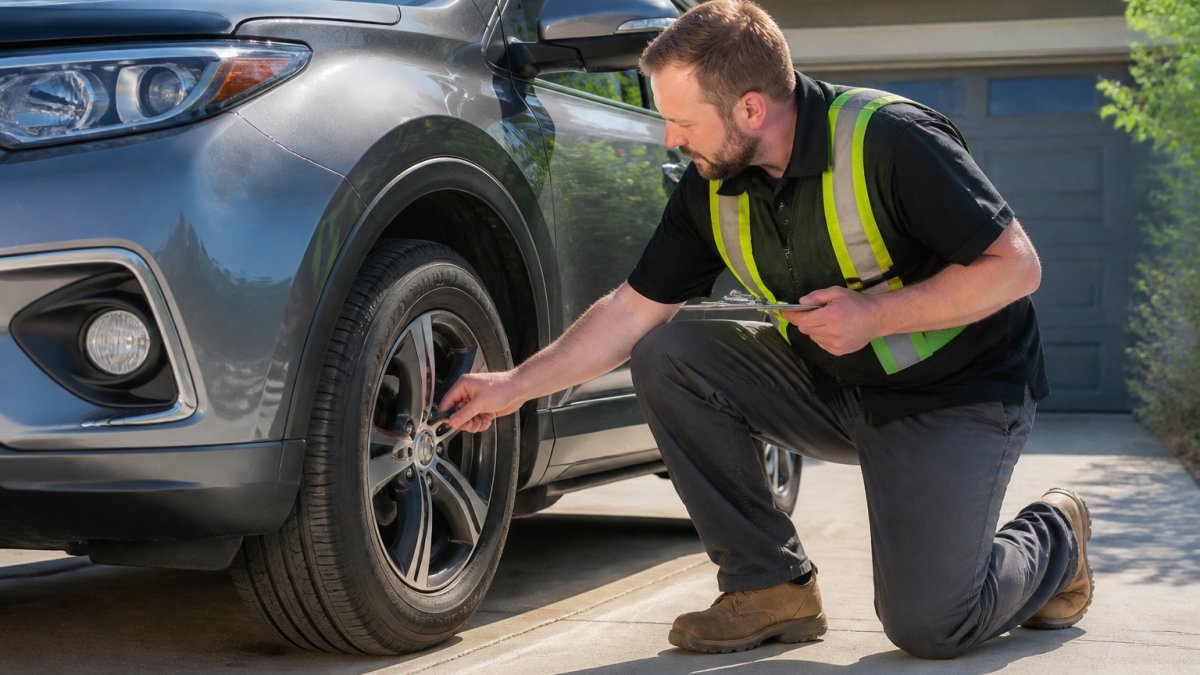
- The inspection runs. Brakes, tires, lights, steering, suspension, and body get checked against the standard.
- You get the results. Pass or fail, you’ll know what was found and what comes next.
- Paperwork is completed. The signed inspection form goes to you and, where required, to your platform.
The mechanic performs the same checks a shop would, just at your curb.
Book your mobile inspection for a day you’re already parked for a few hours, like a rest day or a slow morning. You won’t lose earning time, and the mechanic gets full access to the vehicle.
Your Rideshare Safety Inspection Checklist Before the Mechanic Arrives
Run through this rideshare safety inspection checklist the day before your appointment. It won’t replace the inspection, but it catches the easy fails.
- Check all exterior lights: headlights, brake lights, turn signals, hazards
- Look at tire tread and pressure on all four tires, plus the spare
- Test the horn and wipers
Most inspection rejection issues are small and preventable, a burned-out bulb, a worn wiper, a cracked windshield.
What most drivers miss is the paperwork: a clean, complete file moves faster than a spotless car with missing documents.
Vehicle Inspection Documents and Preparation: What to Have Ready
Vehicle inspection documents and preparation matter as much as the car itself, a missing form can delay your platform approval by days.
Have these ready before the mechanic arrives:
- Vehicle registration
- Proof of insurance
- Your driver’s licence
Keep everything in one folder, physical or digital. The mechanic reviews the documents, completes the inspection form, and signs off.
If you’re unsure which forms your platform needs, check the driver app or support page first. The inspection certificate and signed form are what your platform reviews for approval.
Don’t book an inspection with an expired registration or lapsed insurance. The mechanic can’t certify a vehicle that isn’t legally on the road, and you’ll lose the appointment slot.
Out-of-Province Vehicle Inspection Alberta: Extra Steps for New Arrivals
Moved to Alberta with an out-of-province vehicle? You’ll need an out-of-province vehicle inspection Alberta process before local registration, a separate requirement from rideshare approval that’s easy to overlook.
New arrivals typically need:
- A provincial safety inspection at a licensed facility
- Valid out-of-province registration and insurance to start
- The inspection completed within the required window after establishing residency
The two inspections can often be handled in one booking if your vehicle qualifies. Confirm current rules with the provincial registry or a licensed inspector, since timelines change.
For rideshare drivers, plan the out-of-province inspection first. Platform approval usually depends on the car being properly registered in the province.
Mobile vs In-Person Rideshare Inspection: Which Fits Your Schedule
Mobile and in-person inspections check the same safety items. The difference is where the work happens, who may perform it, and what each option can and cannot do.
What each option actually covers
A mobile inspection brings a certified mechanic to your home, workplace, or lot. They perform the same roadworthiness checks a shop would, brakes, tires, lights, steering, suspension, seat belts, horn, wipers, glass, and body, and complete the signed form on site.
An in-person inspection happens at a licensed facility, where a hoist gives the mechanic a better view of the undercarriage, frame, brake lines, and exhaust, access that matters with rust, collision damage, or a suspension concern hard to judge from ground level.
When mobile is the right call
Mobile fits most rideshare drivers because the inspection is a compliance step, not a diagnostic one. Choose mobile when:
- Your vehicle is in normal working condition with no known mechanical faults
- You need a routine platform safety inspection or renewal
- Your schedule makes a shop visit expensive in lost fares
When a physical facility is required or smarter
Some situations push you toward a shop or licensed inspection facility:
- Provincial safety inspections tied to registration. Out-of-province vehicles and some rebuilt or salvaged vehicles typically need an inspection at a licensed facility, and the inspector may need a hoist to complete the required checks.
- Known or suspected defects. If you already know about a brake, suspension, or structural issue, a facility lets the mechanic diagnose and, where the shop offers it, repair in the same visit.
- Platform-specific requirements. Some platforms or provinces require the inspection to be performed at an approved facility or by an approved inspector. Check the driver portal before you book mobile.
Side-by-side comparison
| Factor | Mobile Inspection | In-Person Inspection |
|---|---|---|
| Where it happens | Your location | Licensed shop or inspection facility |
| Undercarriage access | Ground-level visual check | Hoist access |
| Time lost | Minimal, no travel | Travel plus wait time |
| Scheduling | Fits your hours | Shop hours only |
| Repairs on site | Not included | Often available at the same shop |
| Best for | Routine platform inspections, busy drivers | Registration inspections, known defects, modified vehicles |
The trade-off to understand
Mobile convenience does not lower the standard. The same inspection items are checked, and the same pass-or-fail judgment applies. What mobile removes is travel and waiting time.
A practical rule: if your car is healthy and you need a routine platform inspection, book mobile. If the inspection is tied to registration, a rebuilt title, or a known defect, book a licensed facility and confirm the requirement with the provincial registry or your platform first.
If you are unsure which option your platform accepts, check the driver app’s inspection requirements page before booking. Booking the wrong type of inspection is the most common reason drivers repeat the process.
After the Inspection: Pass, Fail, and What Comes Next
What happens after the mechanic finishes matters as much as the inspection. A pass still needs the right paperwork to reach your platform, and a fail needs a clear repair and re-inspection path.
If you pass
A pass means the vehicle met the inspection standard on the day of the visit. The mechanic completes and signs the inspection form and gives you a copy. From there:
- Receive the documents. You get the signed inspection form and, where the platform requires it, an inspection certificate or report number.
- Upload to your platform. Most platforms accept a photo or PDF upload through the driver portal or app. Upload clear, complete images of every page, including the mechanic’s signature and the date.
- Wait for verification. Platform review times vary. A complete, legible form usually clears faster than one with missing pages or unclear photos.
- Keep your copy. Store the signed form and certificate. Platforms often ask for them again at annual renewal or when a vehicle is added to your account.
Drivers often pass the inspection but delay approval because the uploaded photo cut off the signature block or the form was for the wrong platform. Check the upload before you submit.
If you fail
A fail is a list of defects, not a permanent rejection. The mechanic documents what failed and why. The path forward depends on severity:
- Minor items such as a burned-out bulb, worn wiper, or cracked windshield are usually fixed quickly and cleared on a re-inspection.
- Safety-critical items such as brakes, tires, suspension, or steering components need repair before the vehicle can pass.
- Structural or collision-related findings may require a facility inspection with hoist access before the vehicle can be certified.
Once repairs are done, book a re-inspection. Re-inspections focus on the failed items and confirm the rest of the vehicle is unchanged.
If your form is rejected
Platforms reject inspection forms for predictable reasons. Before you resubmit, check for:
- Missing or illegible mechanic signature
- Wrong platform’s form used
- Expired registration or insurance listed on the form
Correct the issue, get a corrected form from the inspector if needed, and resubmit. Do not alter a signed form yourself; a corrected form must come from the inspector who performed the inspection.
Keeping your file current
Inspection documents have a shelf life, and platforms set their own renewal intervals. Keep a digital folder with your signed form, certificate, registration, and insurance so renewal means uploading, not re-booking from scratch.
If your registration or insurance lapses after a passing inspection, your platform approval can be suspended even though the inspection itself was valid. Keep both current alongside your inspection documents.
The inspection is one step. Approval depends on a complete, legible, correctly dated form reaching your platform and matching your vehicle and account details. Treat the paperwork with the same care as the car.
Frequently Asked Questions
Do rideshare drivers in Alberta need a vehicle inspection?
Yes. Uber and Lyft both require an annual vehicle inspection before a driver can be approved, and the vehicle must meet platform age and condition standards. Alberta’s vehicle equipment rules also apply on every trip, so a car has to stay roadworthy between inspections. A mobile inspection for rideshare vehicles covers the same safety items a shop would check, just at your driveway. Keep the inspection certificate on file, because both platforms can ask for it again during a re-verification or after a rider complaint.
What does a rideshare vehicle inspection check?
A typical rideshare inspection looks at brakes, tires and tread depth, suspension, steering, lights and signals, horn, wipers, seat belts, mirrors, glass, exhaust, and fluid leaks. The mechanic also checks for warning lights, battery condition, and general body damage. Interior checks cover seats, door handles, and cleanliness. The vehicle must seat at least four passengers and meet the platform’s model year rule. Anything that fails the safety inspection checklist gets noted on the form so you know what to fix before a re-check.
Can I get a rideshare vehicle inspected at my home or workplace?
Mobile inspection services bring a certified mechanic to your driveway, parking garage, or workplace, which is the main reason drivers book them. You need a flat, safe spot with room to walk around the car and enough light to see the underside and brakes. Most providers cover a set service area, so confirm your address falls inside it when you book. If you are outside the coverage zone, ask whether a nearby meeting point or shop visit is possible instead.
What happens if a vehicle fails its rideshare inspection?
You get a written report listing each failed item, and the platform will not approve the vehicle until the issues are repaired and re-inspected. Common failures include worn tires, burnt-out lights, cracked windshields, and brake wear. Fix the flagged items, keep the receipts, then book a re-check. A mobile inspection makes this easier because the mechanic can return to the same spot after repairs. Ask the provider how re-inspection fees work before you book so there are no surprises.