
Table of Contents
- What Is an AMVIC Inspection?
- Mechanical Fitness Assessment Requirements
- Brake System and Suspension Inspection Criteria
- Steering, Lighting, and Tire Standards
- How Long Does an AMVIC Inspection Take?
- Book Mobile AMVIC Inspection Services
- Common Inspection Failures and What to Do
- Your Rights After a Failed Inspection
- Frequently Asked Questions
Last Updated: September 23, 2026
What Is an AMVIC Inspection?
An AMVIC inspection is a comprehensive mechanical fitness assessment performed on used vehicles before sale in Alberta. AMVIC stands for Alberta Motor Vehicle Industry Council, the regulatory body that oversees the used vehicle market. This inspection verifies that a vehicle meets minimum safety and roadworthiness standards before changing hands, protecting buyers from inheriting hidden mechanical problems.
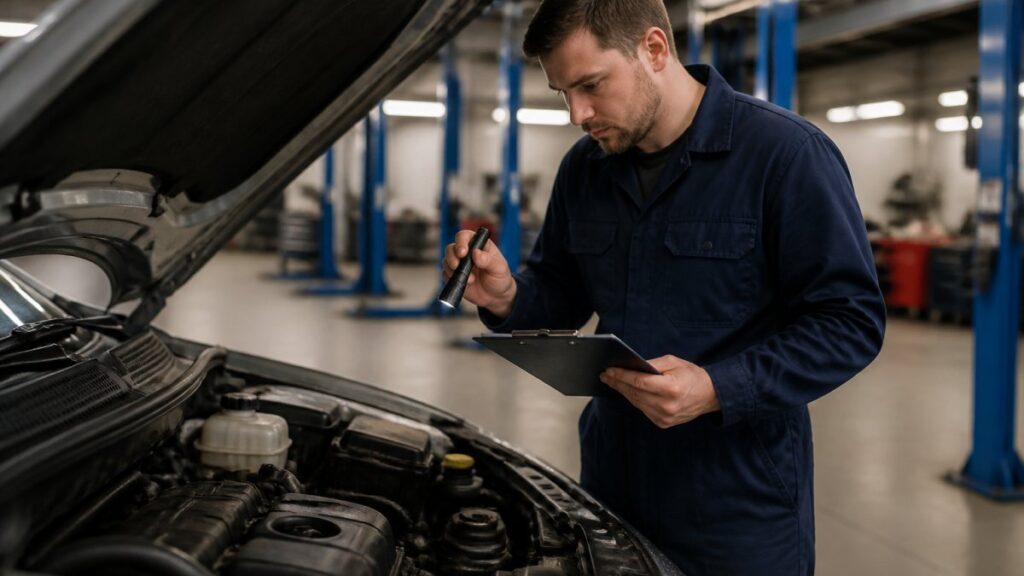
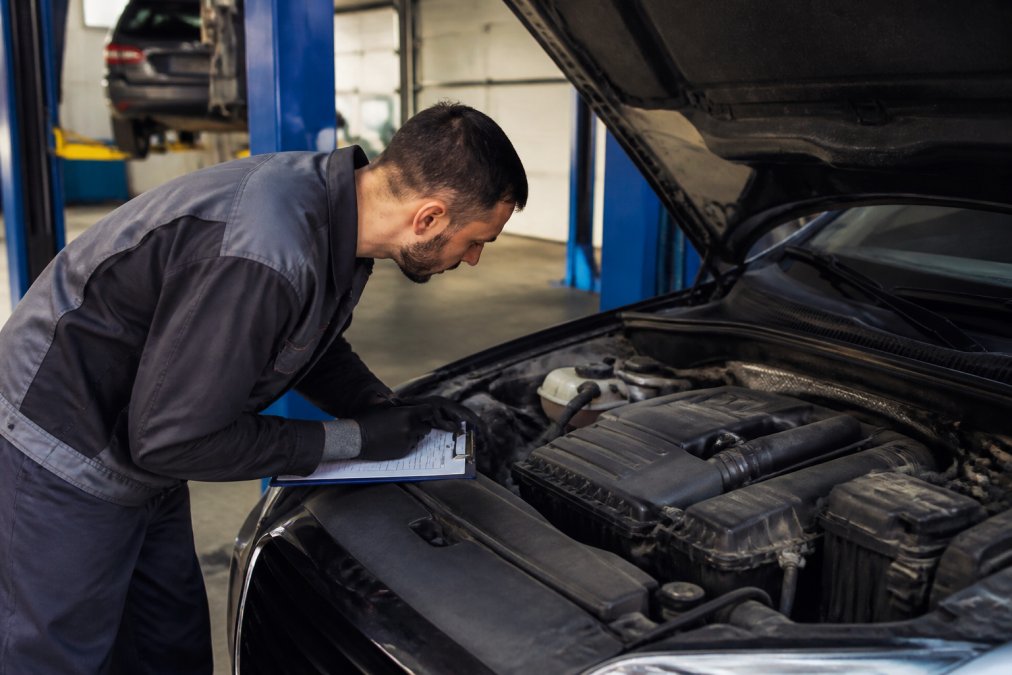
The inspection goes beyond a simple walk-around. A certified mechanic conducts a detailed examination of critical systems: brakes, steering, suspension, lighting, tires, and structural integrity. The result is a standardized vehicle condition report that discloses exactly what condition the vehicle is in. This transparency is why the AMVIC inspection matters; it prevents buyers from discovering major defects weeks after purchase, and it gives sellers confidence that their vehicle is being represented fairly.
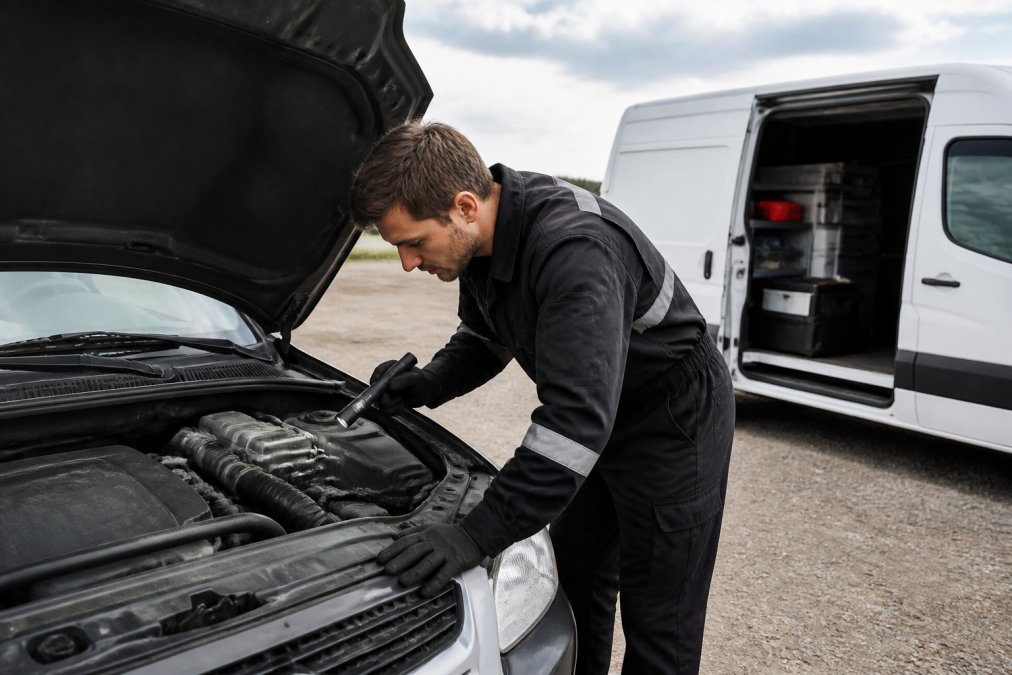
At Vehicleinspectionservices, we perform AMVIC inspections on-site at your location across Alberta. Our journeyman-certified mechanics follow the official AMVIC standards to the letter, documenting every finding so you have a clear, objective picture of what you’re buying. Whether you’re purchasing a used truck or sedan, the inspection takes the guesswork out of the decision.
An AMVIC inspection is a mandatory safety assessment for used vehicles sold in Alberta. It identifies mechanical defects, safety hazards, and structural issues before the sale is finalized, protecting the buyer and ensuring the vehicle meets regulatory standards.
Mechanical Fitness Assessment Requirements
The mechanical fitness assessment is the core of the AMVIC inspection. It evaluates whether a vehicle is safe to operate and meets Alberta’s roadworthiness standards. This assessment covers dozens of specific components across multiple systems, each with defined pass-fail criteria.
The inspection is not about cosmetic condition or minor wear. A vehicle can have a dented bumper or worn upholstery and still pass. The focus is on safety-critical systems: anything that affects whether the vehicle can stop, steer, stay together, or be seen on the road.
Safety-Critical Systems Covered
The AMVIC inspection examines several interconnected systems that directly impact driver and passenger safety. Brake functionality is tested for responsiveness and stopping power. Steering components are checked for play, damage, and proper alignment. Suspension parts are inspected for wear, cracks, and leaks that could cause loss of control.
Lighting systems must function correctly; headlights, taillights, turn signals, and brake lights all need to work. Windshield condition matters too; large cracks or damage in the driver’s line of sight result in a failure. Wipers and defrost systems are checked because visibility during adverse weather is a safety requirement.
The frame and body structure are examined for rust, corrosion, or damage that compromises structural integrity. Wheels and tires must have adequate tread depth and show no signs of dangerous wear patterns. Electrical systems are tested to ensure all safety-related functions operate as designed.
What Doesn’t Get Inspected
Understanding what falls outside the AMVIC inspection scope prevents misunderstandings. The inspection does not cover engine performance or internal engine condition; a vehicle can pass with a worn engine as long as it starts and runs. Transmission fluid condition, transmission noise, or shifting quality are not formally assessed unless they affect safety.
Interior comfort features like air conditioning, heating, power windows, and audio systems are not part of the inspection. Cosmetic damage, paint condition, upholstery wear, and body panel alignment are not evaluated. Oil changes, fluid top-ups, and routine maintenance items are not included.
The inspection also does not cover emissions testing or fuel economy. It does not assess whether the odometer reading is accurate. It does not evaluate the vehicle’s history, title status, or whether there are outstanding liens; those are separate legal and financial matters handled outside the inspection process.
A passed AMVIC inspection confirms the vehicle is mechanically safe and meets minimum standards. It does NOT guarantee the engine won’t fail next month, the transmission won’t slip, or the vehicle won’t need repairs soon. It is a snapshot of condition at the moment of inspection, not a lifetime warranty.
Brake System and Suspension Inspection Criteria
Brake and suspension systems are among the most critical components evaluated during the AMVIC inspection because they directly affect the vehicle’s ability to stop and remain stable.
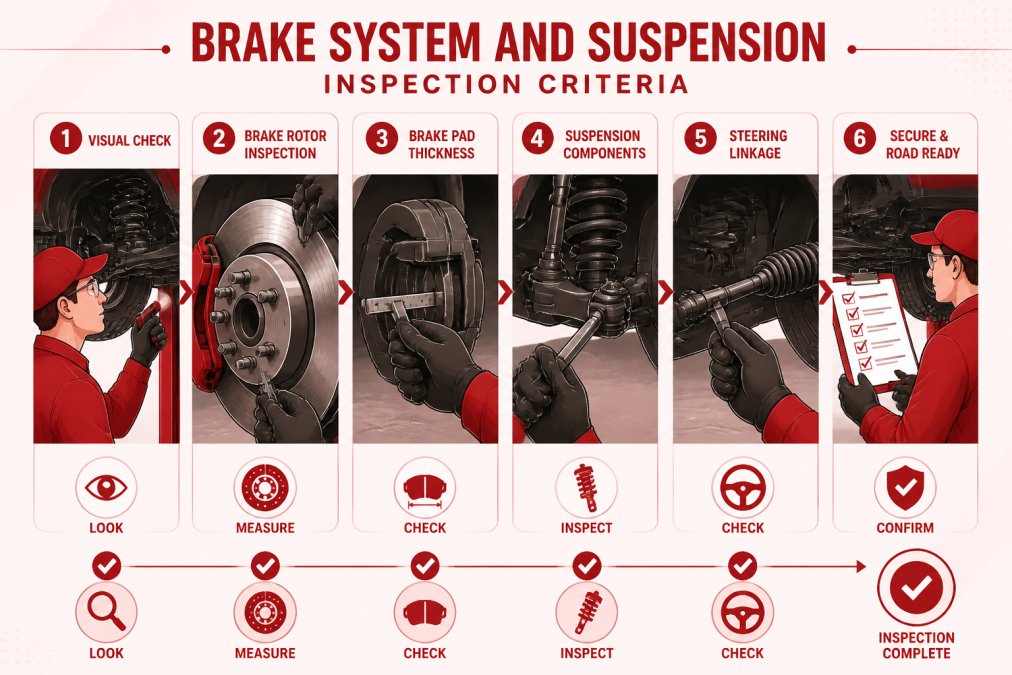
The brake inspection includes checking rotor thickness, pad wear, and hydraulic system integrity. Rotors must meet minimum thickness specifications; worn rotors that have been turned too many times fail. Brake pads need adequate material remaining; if they’re worn down to the backing plate, the system is unsafe. The hydraulic lines are inspected for leaks, cracks, or corrosion that could cause brake failure.
Suspension components include control arms, ball joints, tie rods, springs, and shock absorbers. Each component is checked for cracks, bending, or excessive wear. A worn ball joint or tie rod can cause loss of steering control. Springs that are broken or severely sagging affect handling and safety. Shock absorbers that are leaking or completely worn out reduce stability and increase stopping distance.
The inspection also evaluates whether suspension modifications have been made that affect safety or roadworthiness. A vehicle that has been lowered or lifted must still maintain proper alignment and clearance for safe operation.
Steering, Lighting, and Tire Standards
Steering systems must respond smoothly without excessive play in the steering wheel. The inspector turns the wheel and checks that there is minimal free movement before the wheels respond. Excessive play indicates worn components that need replacement.
Lighting systems are tested for full functionality. All exterior lights must work: headlights (low and high beam), taillights, turn signals, and brake lights. Interior lights are not required but are checked if present.
Before an inspection, check your tire tread yourself using the penny test: insert a penny into the tread with Lincoln’s head upside down. If you can see the top of his head, tread depth is below the minimum requirement and the tire will likely fail. Replace tires before the inspection if they’re marginal.
How Long Does an AMVIC Inspection Take?
The duration of an AMVIC inspection can vary depending on the vehicle’s condition and complexity.
Book Mobile AMVIC Inspection Services
Booking an AMVIC inspection with Vehicleinspectionservices is straightforward. Contact us to schedule an appointment that fits your schedule. We serve all of Alberta, from major cities to rural areas, bringing professional inspection directly to you.
Common Inspection Failures and What to Do
Certain issues appear repeatedly in failed AMVIC inspections. Brake system failures are among the most common: worn pads, thin rotors, or leaking hydraulic lines all result in failure. Suspension failures include worn ball joints, cracked control arms, or severely leaking shocks.
Common AMVIC inspection failures include worn brakes, suspension damage, insufficient tire tread, burned-out lights, and windshield cracks. Most failures are repairable, but understanding what failed and the cost to fix it is essential for negotiating the sale.
Your Rights After a Failed Inspection
In Alberta, a failed AMVIC inspection triggers specific consumer protections. If you’re the buyer, you have the right to request that the seller make repairs, negotiate a price adjustment, or withdraw from the purchase. The inspection report provides objective documentation of the vehicle’s condition, giving you use in negotiations.
| Inspection Component | What Gets Checked | Pass Criteria | Common Failure Reason |
|---|---|---|---|
| Brake System | Pads, rotors, hydraulic lines, stopping power | Adequate pad thickness, rotors within spec, no leaks | Worn pads or thin rotors |
| Suspension | Control arms, ball joints, shocks, springs | No cracks, leaks, or excessive wear | Worn ball joints or leaking shocks |
| Steering | Wheel play, linkage, response | Minimal free play, smooth response | Excessive play or worn components |
| Tires | Tread depth, damage, wear pattern | Minimum tread depth, no bulges or cracks | Insufficient tread depth |
| Lighting | Headlights, taillights, turn signals, brake lights | All lights functional | Burned-out bulbs or corroded wiring |
| Windshield | Cracks, chips, visibility | No damage in driver’s line of sight | Cracks in driver’s vision area |
Frequently Asked Questions
What does the AMVIC inspection checklist include?
An AMVIC inspection covers safety-critical systems: brake hydraulic and rotor condition, steering linkage and suspension components, tire tread depth and condition, lighting and electrical systems, windshield and visibility requirements, structural integrity and frame condition, and door latches. The inspection verifies roadworthiness and regulatory compliance. Cosmetic damage, interior wear, or paint condition are not part of the assessment.
Is a mechanical fitness assessment the same as a pre-purchase inspection?
No. A mechanical fitness assessment is a standardized, regulatory inspection that checks specific safety components and follows government standards. A pre-purchase inspection is often more comprehensive and may include additional checks like fluid conditions, engine performance, and transmission function. Many buyers use both to get a complete vehicle condition report before purchasing a used vehicle.
What happens if a vehicle fails the mechanical fitness assessment?
A failed inspection means the vehicle does not meet safety standards and cannot be legally driven until repairs are completed. The owner receives a detailed report identifying all failed items. They must have those specific components repaired or replaced, then return the vehicle for a re-inspection. A passed re-inspection is required before the vehicle can be registered or sold.
How quickly can I book a mobile AMVIC inspection in Alberta?
Mobile inspection services bring the assessment directly to your location, eliminating the need to drive to a shop. Availability depends on your location and current demand. Contact your inspection provider to check scheduling options. Many mobile services can accommodate inspections within days, and some offer flexible appointment times to fit busy schedules.
Who is authorized to perform an AMVIC mechanical fitness assessment?
Only certified, journeyman-level mechanics are authorized to perform AMVIC inspections. These professionals must meet industry standards and regulatory requirements. When booking an inspection, verify that your service provider employs certified mechanics with proper credentials to ensure the assessment meets all mandatory documentation and compliance standards.
What is the difference between an AMVIC inspection and an out-of-province inspection?
An AMVIC inspection is the standard mechanical fitness assessment required for vehicles sold or registered in Alberta. An out-of-province inspection applies to vehicles imported from other provinces and must meet equivalent safety standards. Both verify roadworthiness, but out-of-province inspections may have additional requirements depending on the vehicle’s origin and condition.