

Table of Contents
- Mobile vs Shop Inspections: What Actually Changes for the Buyer
- What Does a Pre-Purchase Inspection Include? Scope and Components Checked
- Mobile Vehicle Inspection Checklist: What Gets Checked Without a Lift
- Mobile Inspection Limitations: Jack Stands, Lifts, and What You Can’t See
- How Long Does a Pre-Purchase Inspection Take? Turnaround and Travel Time
- Dealer Restrictions, Seller Refusals, and Your Rights as a Buyer
- Decision Framework: When Mobile Inspections Win and When to Book a Shop
- Frequently Asked Questions
Last Updated: October 15, 2026
Mobile vs Shop Inspections: What Actually Changes for the Buyer
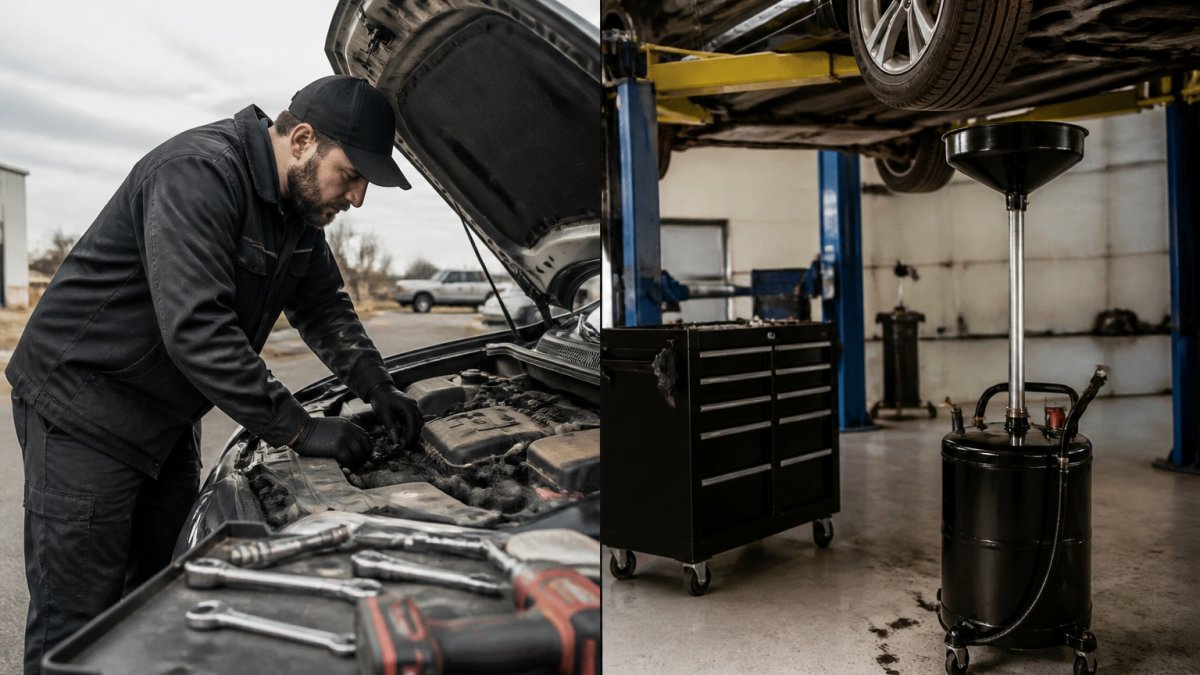
The choice of why choose mobile over shop inspections comes down to access, not price. A mobile pre-purchase inspection brings a journeyman-certified mechanic to the vehicle; a shop inspection moves the vehicle to a fixed facility with a lift.
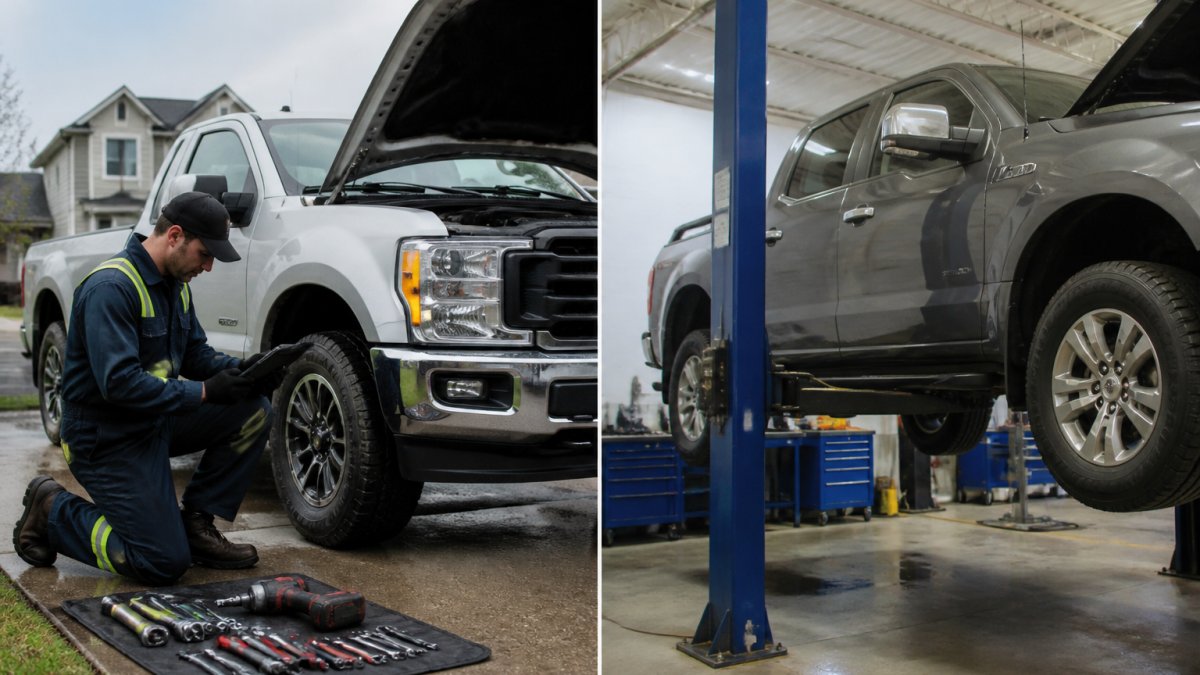
At Vehicleinspectionservices, we’ve spent a decade bringing inspections to driveways, office parks, and rural properties. The vehicle’s location, not the inspector’s skill, usually decides which option makes sense.
This guide breaks down why choose mobile over shop inspections when access is limited, what each option can and cannot see, and how to pick based on your situation.
What a Mobile Pre-Purchase Inspection Involves
A mobile pre-purchase inspection is an on-site assessment at the seller’s location or the buyer’s home, using portable diagnostic tools and jack stands instead of a fixed lift. The inspector drives to the vehicle, which matters most when the seller won’t release the car, the vehicle isn’t insured or plated, or the buyer lives far from the nearest shop.
- Portable diagnostic scan for stored fault codes
- Visual and mechanical inspection of the engine bay, cabin, and exterior
- Undercarriage check with the vehicle raised on jack stands
What a Shop or Garage Inspection Involves
A shop inspection happens at a fixed facility, where the vehicle goes onto a hoist and the mechanic works with full shop equipment. The lift lets the inspector stand underneath, check the undercarriage thoroughly, and move suspension and drivetrain components under load, something jack stands don’t allow. The trade-off is logistics: someone has to get the vehicle to the shop.
What Does a Pre-Purchase Inspection Include? Scope and Components Checked
A pre-purchase inspection typically covers the engine, transmission, brakes, suspension, tires, undercarriage, fluids, and electronics, plus a diagnostic scan and, where possible, a test drive. Scope varies by provider and by what the vehicle’s location allows.
The core systems checked in a standard inspection:
| System | What’s Checked | Mobile Feasible? |
|---|---|---|
| Engine and drivetrain | Leaks, belts, mounts, codes | Yes |
| Transmission | Fluid condition, shift behavior | Yes, with test drive |
| Brakes | Pad and rotor wear, lines | Yes |
| Suspension | Shocks, bushings, play | Partial without a lift |
| Undercarriage | Rust, frame, exhaust | Partial on jack stands |
| Tires | Tread depth, wear patterns | Yes |
| Electrical | Warning lights, scan | Yes |
A thorough report should include photos, a repair estimate for anything found, and a note on safety concerns. A checklist with no photos or notes is a red flag.
Mobile Vehicle Inspection Checklist: What Gets Checked Without a Lift
A mobile vehicle inspection checklist covers everything a shop can see from above and around the vehicle, plus most of what sits within reach on jack stands. It’s not a substitute for a hoist, but it catches the issues that most often turn a used vehicle into a money pit.
Engine, Transmission, and Drivetrain
The engine bay gets a full look: fluid condition and level, visible leaks, belt and hose wear, and mount condition. A diagnostic scan pulls stored and pending codes, which often reveal problems the seller hasn’t mentioned. The inspector also checks transmission fluid color and smell and, when a test drive is possible, how the vehicle shifts under load. Warning lights that stay on after startup get flagged immediately.
Brakes, Suspension, Tires, and Undercarriage
Brake pads, rotors, and lines are checked for wear and leaks. Suspension components get a visual review and a bounce test, though a lift shows more. Tires are checked for tread depth and uneven wear, which can point to alignment or suspension problems (Riding On Air). The undercarriage gets a look on jack stands for rust, frame damage, exhaust leaks, and fluid drips, mobile inspections are strongest for the parts you can reach and weakest for the parts you can’t.
Ask the inspector to photograph anything they flag. A written note saying “suspension noise” is nearly useless in a negotiation, but a photo of a cracked bushing gives you real use on price.
Mobile Inspection Limitations: Jack Stands, Lifts, and What You Can’t See
A mobile inspection is not a lesser inspection, it is a differently scoped one.
Here is the system-by-system breakdown of what a mobile inspection can and cannot confirm at the vehicle’s location.
| System | What Mobile Can Confirm | What Mobile Can Miss | Why the Lift Matters |
|---|---|---|---|
| Engine and drivetrain | Fluid condition and level, visible leaks, belt and hose wear, mount condition, stored and pending fault codes via scan tool | Internal bearing wear, early timing chain stretch, intermittent faults that only trigger under sustained load | A lift does not change engine access much; the scan tool and test drive matter more than the hoist here |
| Transmission | Fluid color and smell, shift behavior on a test drive, warning lights | Internal clutch pack wear, valve body faults that only appear when hot, torque converter shudder | A lift allows a running under-vehicle check for leaks at the pan and cooler lines, but internal faults still need a road test or a specialist scan |
| Brakes | Pad thickness, rotor scoring and lip, visible line corrosion, fluid level | Seized caliper pistons, internally collapsed flexible hoses, ABS pump faults | A lift lets the inspector spin each wheel and check for drag, which jack stands make awkward |
| Suspension and steering | Visible bushing cracks, shock body leaks, obvious play with a pry bar, ride height | Ball joint play that only clunks under load, worn tie rod ends that show only when the wheels are unloaded, cracked coil springs hidden behind shields | A lift unloads the suspension so the inspector can pry components through their full travel, this is the biggest single advantage of a hoist |
| Undercarriage and frame | Surface rust, exhaust leaks, obvious frame damage, fluid drips, floor pan condition | Hairline frame cracks behind skid plates, hidden rust in rocker panels and subframe mounts, prior collision repair under coating | Standing underneath with a light and a pick is the only reliable way to probe structural metal |
| Tires and wheels | Tread depth, uneven wear patterns, sidewall damage, mismatched brands | Bent rims, internal belt separation, wheel bearing play | A lift lets the inspector spin and shake each wheel under no load |
| Electrical and electronics | Warning lights, stored codes, basic live data, battery and charging check | Intermittent module faults, parasitic draws, wiring chafe hidden in harnesses | A lift does not help here; a scan tool and time do |
Two practical rules follow.
No inspection, mobile or shop-based, is a guarantee. A good provider will tell you what they could not see and why, and put those limitations in the report.
Before booking, tell the inspector the vehicle’s age, mileage, and any symptoms the seller mentioned. A good inspector will tell you upfront whether those symptoms can be reproduced on jack stands or whether you should insist on a lift inspection.
How Long Does a Pre-Purchase Inspection Take? Turnaround and Travel Time
A pre-purchase inspection usually takes 60 to 90 minutes on site, with a written report following shortly after. Travel time is the variable that changes the total, and it’s why mobile service often wins on turnaround.
For a shop inspection, add the time to get the vehicle there and back, plus any queue. For a mobile inspection, the vehicle never moves, the inspector comes to it.
Don’t book an inspection until the seller confirms access in writing. Showing up to find the vehicle locked, the seller unavailable, or the keys withheld wastes the trip and the fee.
Dealer Restrictions, Seller Refusals, and Your Rights as a Buyer
Dealers sometimes restrict off-site inspections, and private sellers sometimes refuse them outright. Neither is illegal, but both should change how you proceed.
When a dealer won’t allow an off-site inspection, ask whether they’ll allow a mobile inspector on their lot, many will, since the vehicle stays put.
Your practical rights as a buyer:
- You can make an inspection a condition of the sale before money changes hands.
- You can walk away if the seller refuses reasonable access.
- You can ask for the vehicle history report alongside the inspection.
On the regulatory side, AMVIC licenses vehicle sales and sets the rules for inspections in Alberta, and a licensed AMVIC inspection provider can explain what a given inspection must cover. AMVIC licensing and consumer resources
A seller’s willingness to allow an inspection tells you as much as the inspection itself. Refusal is a deal-breaker, not a negotiating point.
Decision Framework: When Mobile Inspections Win and When to Book a Shop
Most articles stop at “mobile is convenient, shops have lifts.” That’s true but not useful. The real decision depends on four variables: whether the vehicle can legally and physically move, what its age and symptoms suggest, how far the nearest suitable shop is, and what the seller will allow. Work through them in order.
Step 1: Can the vehicle move?
If the vehicle is unplated, uninsured, not roadworthy, or the seller will not release it, mobile is the only option. There is no decision to make. Move on.
Step 2: What does the vehicle’s profile suggest?
| Vehicle Profile | Recommended Option | Reasoning |
|---|---|---|
| Under 5 years old, under 100,000 km, no symptoms | Mobile | Modern vehicles rarely hide structural faults at this age; a scan and visual check covers the common risks |
| 5-10 years old, 100,000-200,000 km, minor symptoms | Mobile first, shop if anything is flagged | Mobile screens cheaply; escalate to a lift only if the inspector finds something that needs a closer look |
| Over 10 years old or over 200,000 km | Shop if the vehicle can move | Rust, suspension wear, and hidden collision repair are the dominant risks, and a lift is the only way to assess them properly |
| Any age with clunks, vibrations, or shudder under load | Shop if the vehicle can move | These symptoms often only reproduce with the suspension unloaded or the drivetrain under load |
| Classic, imported, or modified vehicle | Shop with a marque specialist | General mobile inspectors may not know the model-specific failure points |
Step 3: How far is the nearest suitable shop?
If the vehicle is two hours from the nearest shop that can actually inspect it, not just any garage, but one with the right equipment and experience, transport time and cost usually outweigh the lift advantage. Mobile wins on logistics in rural and remote areas, and the quality difference is smaller than the travel difference.
Step 4: What will the seller allow?
This is where most buyers get stuck. Dealers sometimes restrict off-site inspections; private sellers sometimes refuse them outright. Neither is illegal on its own, but both should change how you proceed.
- Dealer restricts off-site inspections. Ask whether they will allow a mobile inspector on their lot. Many will, since the vehicle stays put and the dealer keeps control of the keys. If they refuse even that, ask why in writing.
- Private seller refuses any inspection. Treat this as information, not an obstacle. A seller with nothing to hide rarely blocks a buyer from checking the vehicle. A refusal is often the clearest signal you will get.
- Seller allows inspection but only at a shop of their choosing. Decline. The inspector must be your choice, not theirs.
When a seller refuses reasonable access, your alternatives are limited but real: you can make the inspection a condition of sale, you can walk away, or you can negotiate a price reduction that reflects the added risk of buying blind.
What changes the cost
Pricing varies by provider, vehicle type, and travel distance. A few factors consistently move the number:
- Travel distance. Mobile inspections often include a radius in the base fee and charge per kilometre beyond it. Ask for the radius and the per-kilometre rate before booking.
- Vehicle type. Trucks, vans, and heavy-duty vehicles take longer and may carry a surcharge.
- Inspection depth. A basic safety-style check costs less than a full pre-purchase inspection with a diagnostic scan, test drive, and photo report.
A shop inspection can be cheaper on the sticker price because the vehicle comes to the inspector, but add transport, fuel, and your own time, and the gap often narrows or disappears. Compare total cost to you, not the invoice alone.
The practical rule
If the vehicle cannot easily get to a lift, bring the inspection to the vehicle. If it can, and it’s old enough or symptomatic enough that hidden structural or suspension faults are a real risk, book the shop. Everything else is a judgment call about how much risk you’ll price into the offer.
Frequently Asked Questions
What is the difference between a mobile vehicle inspection and a shop inspection?
A mobile inspection brings the mechanic to the vehicle, whether that’s a seller’s driveway, a parking lot, or your workplace. A shop inspection requires you to bring the vehicle to a garage. Both cover the same major systems: engine, transmission, brakes, suspension, tires, fluids, and warning lights. The key difference is access. Shops have lifts that let inspectors see the full undercarriage, while mobile inspectors work on jack stands or ramps, which limits how much of the underside they can examine closely.
Can a mobile mechanic perform a pre-purchase inspection?
Yes. Mobile inspections are one of the most common services mobile mechanics offer. A qualified inspector will check the engine, transmission, brakes, suspension, tires, fluid leaks, warning lights, and vehicle history. They’ll also take the vehicle for a test drive if the seller allows it. The main constraint is that without a lift, some undercarriage areas are harder to reach. Ask the inspector what their mobile vehicle inspection checklist covers so you know exactly what’s included before you book.
Is a shop inspection more thorough than a mobile inspection?
Not necessarily. A shop inspection has one advantage: a lift. That gives the mechanic a better view of the undercarriage, exhaust, and frame. But thoroughness depends more on the inspector’s skill and how much time they spend than on the location. A journeyman-certified mobile inspector who follows a detailed checklist can catch the same major issues. The real question is whether your specific vehicle needs lift access. Older trucks with rust concerns benefit from a lift. Newer cars with clean history often don’t.
When should I choose a shop inspection instead of a mobile inspection?
Book a shop inspection when the vehicle has known rust issues, frame damage concerns, or you need a lift to verify structural integrity. Also choose a shop if the seller refuses an off-site inspection and won’t let a mobile mechanic come to them. For most used vehicle purchases, especially when the seller is cooperative and the vehicle is newer, a mobile inspection saves you travel time and gets you the same core answers. Weigh the convenience against what you need to see underneath.
A used vehicle can hide expensive problems until it’s too late, and the wrong inspection format leaves gaps you only discover after you’ve paid. Vehicleinspectionservices brings journeyman-certified mechanics to your location for pre-purchase, insurance, and AMVIC inspections, backed by a decade of service in Alberta and a Complimentary Courtesy Check on every visit. Get started with Vehicleinspectionservices and know exactly what you’re buying before you sign.