
Table of Contents
- Why Book a Mobile AMVIC Inspection in Alberta
- Mechanical Fitness Assessment Requirements You Need to Meet
- Out-of-Province Vehicle Inspection Cost and What Affects It
- Mobile Mechanic Inspection Checklist: What to Prepare
- How to Book a Mobile AMVIC Inspection: Step-by-Step
- Mobile vs. Shop-Based Inspections: Logistics Compared
- Common Inspection Failures and How to Avoid Them
- Frequently Asked Questions
Last Updated: September 14, 2026
Why Book a Mobile AMVIC Inspection in Alberta
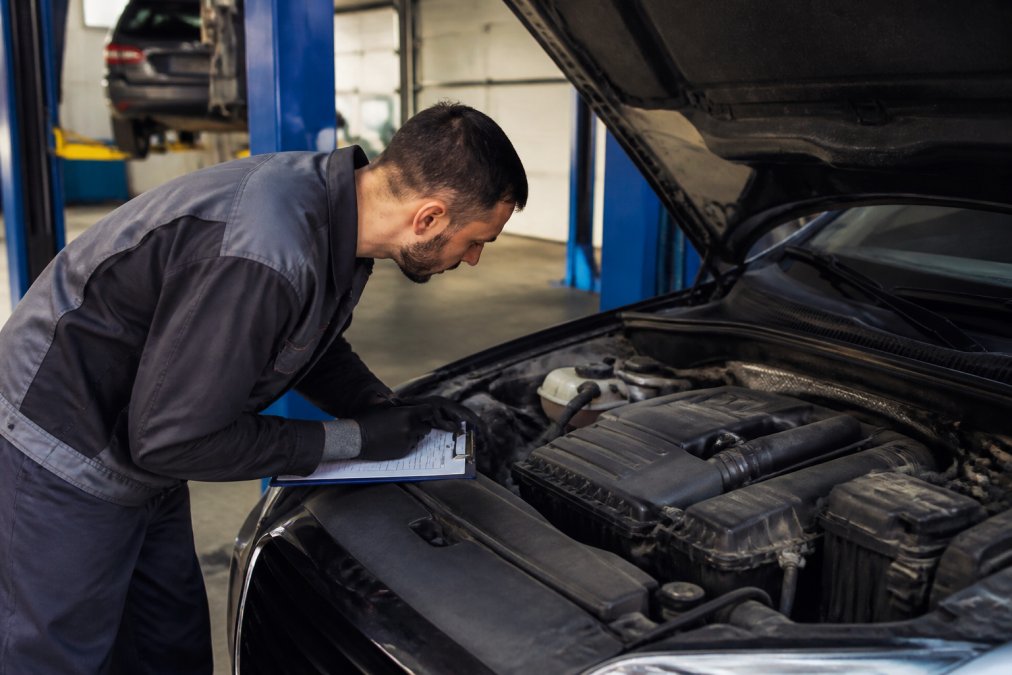
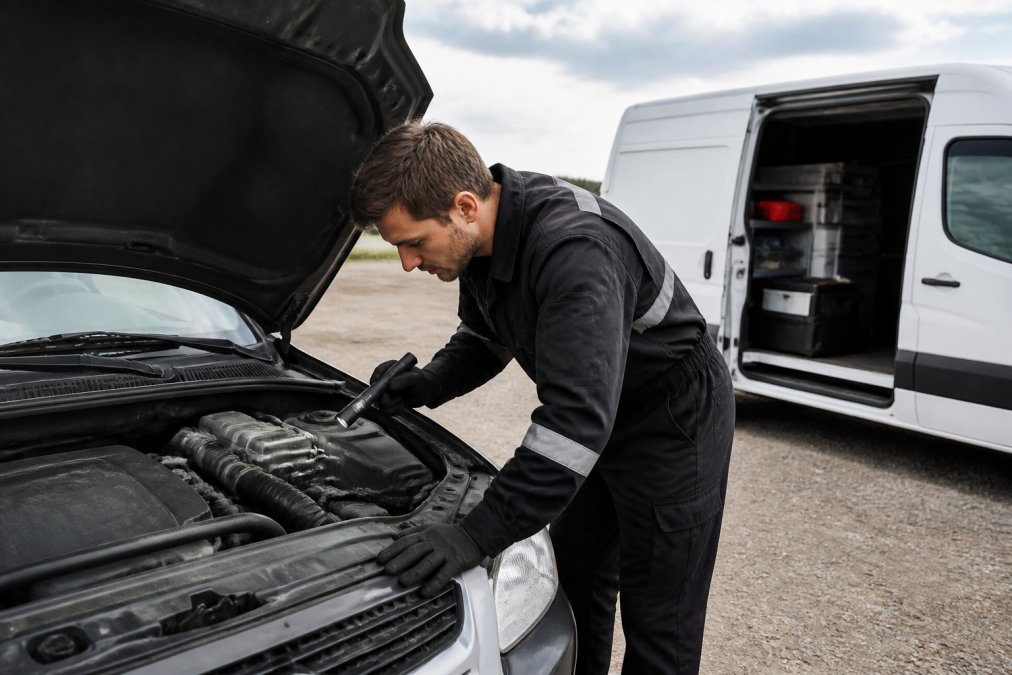
Booking a mobile AMVIC inspection in Alberta means a licensed technician comes to your home, workplace, or dealership lot to perform the assessment on site, rather than you driving the vehicle to a shop. This guide walks through the requirements, costs, and booking steps so you know exactly what to expect.
A Mechanical Fitness Assessment (MFA) is a provincial inspection that verifies a vehicle meets Alberta’s safety standards before it can be registered or sold under certain conditions. Under Alberta’s vehicle inspection framework, only licensed technicians at approved facilities can issue the certificate that makes a vehicle eligible for registration (Out-of-province vehicle inspections).
Here’s what most guides get wrong: an AMVIC inspection, an out-of-province inspection, and a pre-purchase check are three different processes with different rules. Mixing them up wastes time and money.
Mechanical Fitness Assessment Requirements You Need to Meet
A Mechanical Fitness Assessment is required whenever a vehicle needs to prove it meets Alberta’s safety standards, and the exact trigger depends on the vehicle’s history.
When a Mechanical Fitness Assessment Is Required
Alberta mandates an inspection in several common situations:
- A vehicle brought in from out of province needs an out-of-province inspection before it can be registered.
- A used vehicle being sold may require an inspection depending on its age and the seller’s obligations under provincial regulations.
- A vehicle that has been written off and rebuilt needs a salvage inspection before it returns to the road.
- Some insurance providers require a safety inspection to maintain coverage on certain vehicles.
The rules are set by the province’s vehicle inspection program and enforced through the Traffic Safety Act. Because requirements can change, confirm your specific situation against Alberta’s official vehicle inspection program guidance before you commit to a booking.
What Gets Checked During the Assessment
The assessment covers the systems that affect road safety, not cosmetic condition. A licensed technician works through a defined checklist:
- Brakes, including lines, pads, and fluid condition
- Steering and suspension components
- Tires, tread depth, and wheel integrity
- Lighting, signals, and reflectors
- Windshield, wipers, and visibility equipment
- Exhaust and emissions-related components
- Seat belts and structural integrity
- The vehicle identification number against registration documents
A clean-looking car can still fail on something invisible, like a corroded brake line or a worn ball joint, which is why the inspection matters more than the test drive.
Out-of-Province Vehicle Inspection Cost and What Affects It
Out-of-province vehicle inspection cost depends on the vehicle type, the provider, and how much disassembly the assessment requires. There is no single flat fee across the province. Several factors move the price:
- Vehicle class. A passenger car, a heavy truck, and a motorcycle each follow different inspection scopes.
- Provider type. Mobile providers and fixed shops structure their fees differently, and travel distance can factor in.
- Condition and access. A vehicle that’s easy to inspect takes less time than one needing components removed for access.
- Documentation work. Preparing and filing the inspection report adds administrative time.
Ask for a quote based on your specific vehicle rather than a generic figure. Vehicleinspectionservices provides competitive pricing and can offer a clear number before you commit, so there’s no surprise on the invoice.
Don’t choose a provider on price alone. An inspection that misses a serious defect can leave you with a vehicle that fails a later registration check, and you’ll pay twice. Confirm the provider is licensed before booking.
Mobile Mechanic Inspection Checklist: What to Prepare
A mobile mechanic inspection checklist keeps the appointment moving and reduces the chance of a return visit.
Before the technician arrives, gather:
- The vehicle’s registration and proof of ownership
- The vehicle identification number, clearly visible and matching documents
- Any prior inspection reports or repair records
- A clear, accessible space around the vehicle for the assessment
- Keys available so the technician can check the ignition, lights, and instruments
- The vehicle reasonably clean so defects are visible
A common mistake is booking an inspection on a vehicle that’s blocked in or parked on a slope, the technician needs room to work underneath and around it safely. If you’re two hours outside a major center, confirm travel arrangements when you book.
How to Book a Mobile AMVIC Inspection: Step-by-Step
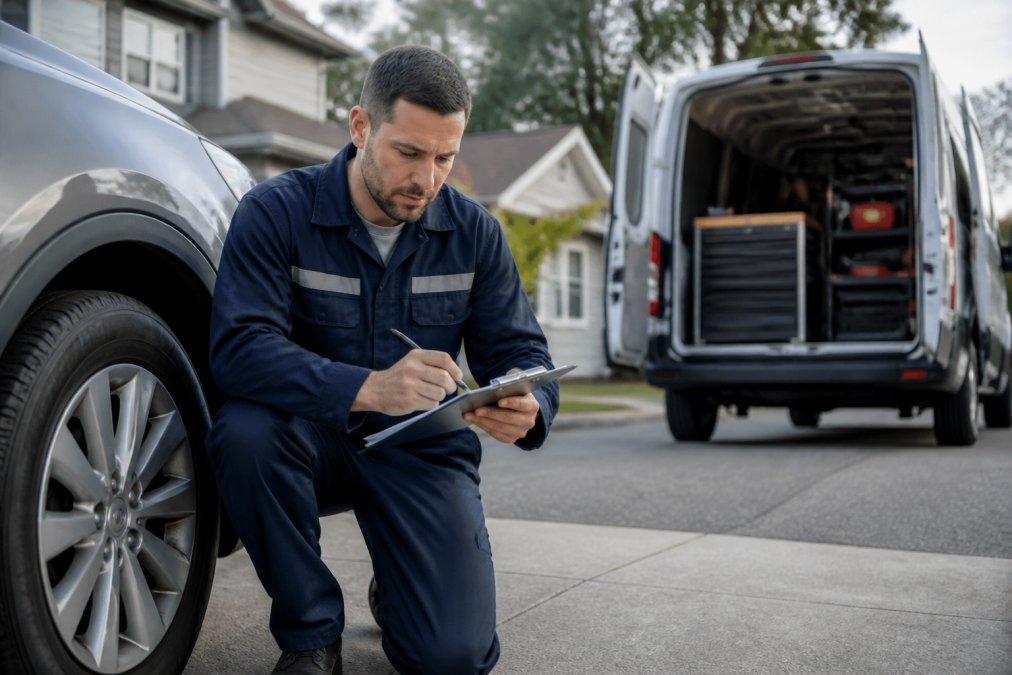
Booking a mobile AMVIC inspection takes four steps: confirm you need one, contact a licensed mobile provider, prepare the vehicle and documents, then complete the on-site assessment. A mobile visit only counts if the technician and the facility behind them are properly licensed.
Step 1: Confirm Your Vehicle Needs an Inspection
Check whether your situation triggers a mandatory inspection. Out-of-province imports, rebuilt vehicles, and certain used vehicle sales all qualify. Different inspection types carry different scopes and certificate validity windows, and booking the wrong one means paying twice, so confirm with a licensed provider before you book.
Step 2: Contact a Licensed Mobile Provider
“Licensed” has two layers: the technician must hold the appropriate certification, and the facility issuing the certificate must be an approved inspection facility under the provincial vehicle inspection program. A mobile provider brings an approved facility to your location, so both layers must be in place before the visit counts.
Ask three questions before you book:
- Are your technicians certified to perform this specific inspection type?
- Is your business an approved inspection facility, and what is your facility number?
- Can you come to my location, and is there a travel charge outside your normal service area?
A provider that answers all three clearly is set up for legitimate mobile work. Vehicleinspectionservices uses journeyman-certified mechanics and brings the assessment to your location.
Step 3: Prepare Your Vehicle and Documentation
Use the checklist above: registration, VIN, and prior records ready, with clear space around the vehicle. For a mobile visit, confirm the ground is level, the vehicle is not blocked in, and there is clearance on at least one side and underneath for the technician to work safely.
Step 4: Complete the On-Site Assessment
The technician inspects the vehicle against the safety checklist, documents findings, and issues the inspection report. If it passes, you receive the certificate you need for registration; if it fails, you get a list of what to fix before a re-inspection. The paperwork trail is what makes the certificate usable at the registry, so confirm you are receiving:
- The completed inspection report, signed by the certified technician
- The inspection certificate itself, with the issuing facility identified
- A clear record of any defects noted, even if the vehicle passed
Keep the original certificate, a registry agent will need it, and a certificate that cannot be tied back to an approved facility will not clear that step. Resolve any incomplete paperwork before the technician leaves.
Ask for the report in writing the same day. If you’re buying a used vehicle, that document is your proof of condition and your use in negotiation.
How Long the Booking Usually Takes
Timelines vary by provider and season, but a mobile visit can usually be scheduled within a few business days in urban areas, while remote locations need more lead time. If you’re working against a registration deadline, book early and confirm the turnaround in writing.
Mobile vs. Shop-Based Inspections: Logistics Compared
Mobile and shop-based inspections differ mainly in logistics: who travels, how long it takes, and how much disruption it causes. The assessment itself follows the same safety standards either way.
| Factor | Mobile Inspection | Shop-Based Inspection |
|---|---|---|
| Who travels | Technician comes to you | You drive to the shop |
| Time cost | Minimal, fits your schedule | Travel plus wait time |
| Best for | Busy owners, remote locations | Owners near a shop |
| Vehicle must be drivable | Not necessarily | Usually yes |
| Space needed | Clear area at your location | Shop bay |
The trade-off is straightforward: if your vehicle isn’t safely drivable or your schedule doesn’t allow a shop visit, mobile wins. If you’re near a facility and the vehicle runs fine, a shop visit works too.
Common Inspection Failures and How to Avoid Them
Most inspection failures trace back to a short list of predictable problems, each avoidable with a little preparation. The mobile-specific angle: when the technician comes to you, a failure means a second visit and a second travel charge, so being unprepared costs more than it does at a shop.
The repeat offenders:
- Worn brakes or corroded lines. Get brakes checked before the inspection, not during it.
- Burnt-out lights or faulty signals. A five-minute bulb check prevents a fail.
- Tire tread below the limit or uneven wear. Replace worn tires first.
- Cracked windshield in the driver’s line of sight. Repair or replace before booking.
- Warning lights on the dash. Diagnose and clear them, since they signal underlying faults.
Pre-Inspection Checklist for a Mobile Visit
Run through this before the technician arrives, it targets what actually causes mobile re-visits.
- Walk the vehicle and confirm every exterior light works, including brake lights and turn signals
- Check tire tread depth and look for uneven wear or sidewall damage
- Test the brakes at low speed and listen for grinding or pulling
- Inspect the windshield for chips or cracks in the driver’s field of view
- Confirm wipers and washers function
- Check that seat belts latch and retract properly
- Look for fluid leaks under the vehicle after it has sat overnight
- Confirm the VIN plate is present, legible, and matches the registration
- Clear the area around the vehicle so the technician has room to work
- Have registration, ownership, and prior records on hand
Why Mobile Failures Cost More
At a shop, a failed inspection usually means the vehicle is already on site and can be repaired in the same visit. With a mobile inspection, a failure means the technician leaves, you fix the issue, and you book a second appointment, possibly with another travel charge. That’s the strongest argument for running the checklist before the first visit.
What Happens If the Vehicle Fails
A failed inspection is not the end of the process. The technician documents the defects, and you can repair them and book a re-inspection. Keep the failed report, it tells you exactly what to fix and gives you a written record when negotiating with a seller. Confirm whether the re-inspection covers only the failed items or the full checklist, since that affects cost and time.
The cheapest inspection is the one that passes the first time. A short pre-inspection check of lights, tires, brakes, and the windshield catches most failures before they cost you a second appointment, and on a mobile visit, a second appointment costs more than it does at a shop.
Frequently Asked Questions
How long is an AMVIC inspection valid for in Alberta?
An AMVIC inspection certificate is valid for 120 days from the date it is issued. This means you must complete your vehicle registration or sale transaction within that window. If the 120-day period expires, you will need to book a new inspection and pay the service fee again. Keep your inspection report in a safe place, as you may need to present it when registering the vehicle or completing a private sale.
Can a mobile mechanic perform an official mechanical fitness assessment?
Yes, a mobile mechanic who holds the proper technician certification and works for a licensed automotive repair facility can perform an official mechanical fitness assessment on-site. The key is verifying that the provider is authorized under the Vehicle Inspection Program. Ask to see their credentials and confirm they are registered with the appropriate regulatory body before booking.
What documents should I have ready for a mobile inspection?
Before your mobile mechanic arrives, have your vehicle registration, insurance documents, and the vehicle identification number (VIN) accessible. If you are buying or selling a used vehicle, bring the bill of sale or transfer documents. For out-of-province vehicles, have your previous registration and any import paperwork ready. Having these documents on hand speeds up the inspection and ensures your report is accurate.
How much does a mechanical fitness assessment cost in Alberta?
Pricing for a mechanical fitness assessment depends on the provider, your location, and the type of inspection required. Mobile services may charge differently than shop-based options due to travel logistics. Contact your chosen provider directly for a quote before committing. Ask whether the service fee includes the inspection report and certificate, and confirm there are no additional charges for travel to your location.