

Table of Contents
- Why a Mobile Mechanic Service for Used Trucks Beats a Shop Visit
- What to Expect: Mobile Mechanic Services for Trucks
- Your Used Truck Inspection Checklist: Step by Step
- Pre-Purchase Truck Inspection: What Happens After the Report
- Mobile Mechanic Cost: What Affects the Price
- When a Mobile Diesel Mechanic Is the Right Call
- How to Choose and Verify a Mobile Mechanic
- Frequently Asked Questions
Last Updated: October 20, 2026
Why a Mobile Mechanic Service for Used Trucks Beats a Shop Visit
A mobile mechanic service for used trucks brings the inspection bay to the vehicle instead of asking you to drive a truck you don’t own yet across town. For a used-truck buyer, that single change removes the biggest practical obstacle in the purchase: getting the seller to release the vehicle for a shop appointment. At Vehicleinspectionservices, our journeyman-certified mechanics have spent a decade traveling to driveways, job sites, and roadside pull-offs across Alberta to inspect trucks before money changes hands.
The logistics advantage for busy buyers
The math is simple. A shop visit requires the seller to hand over the keys, the buyer to arrange transport, and both parties to coordinate schedules. A mobile pre-purchase inspection collapses all of that into one appointment at the truck’s current location.
For anyone working long shifts or traveling for work, that convenience isn’t a luxury. It’s often the difference between inspecting a truck properly and skipping the inspection entirely because the logistics got too complicated.
Ask the seller to have the truck cold when the mechanic arrives. A diesel that’s been idling for twenty minutes hides glow plug faults, rough cold starts, and injector issues that only show up on a true cold start.
What to Expect: Mobile Mechanic Services for Trucks
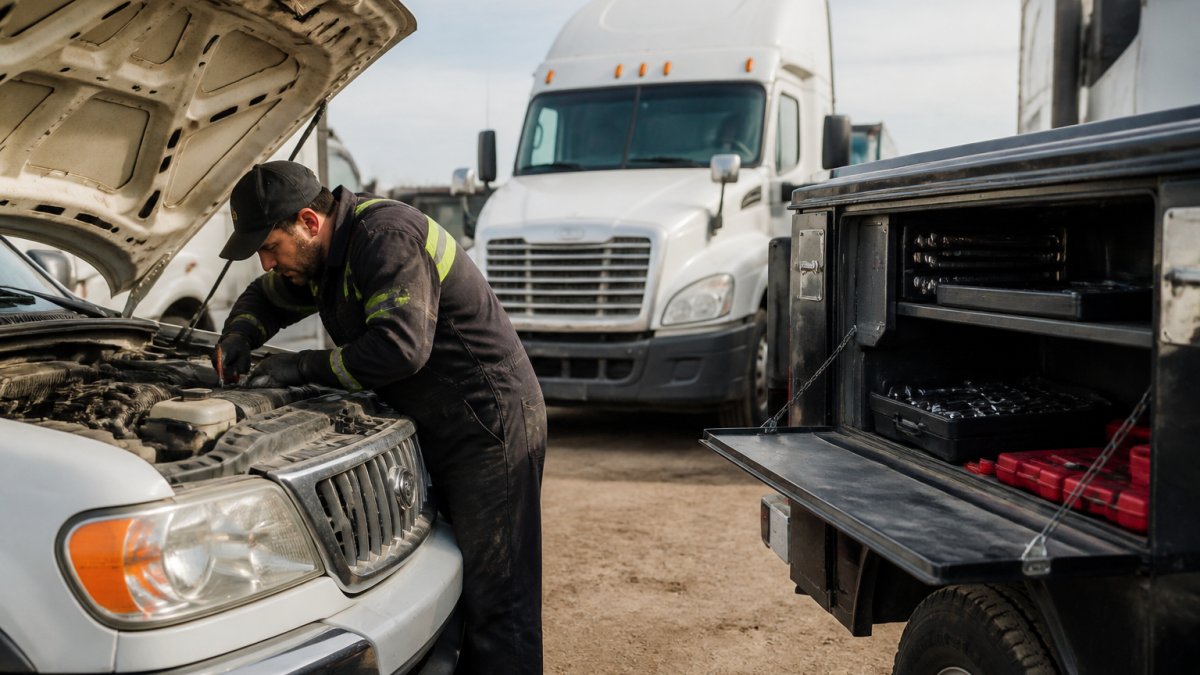
A mobile mechanic arrives with a van stocked for diagnostics and mechanical repair, not just a flashlight and a clipboard. Expect a visual walkaround, a scan for stored fault codes, and a hands-on check of the systems that fail most often on high-mileage trucks.
Vehicle types and systems covered
Mobile services handle light-duty pickups, heavy-duty trucks, and SUVs, both domestic and import. The systems inspected typically include:
- Engine and transmission behavior under load
- Brakes, rotors, and lines
- Battery, charging, and the electrical system
- Suspension and steering components
- Air conditioning performance
- Tires and fluid leaks
Coverage varies by provider, so confirm before booking that the mechanic handles diesel and heavy-duty work if that’s what you’re buying.
Your Used Truck Inspection Checklist: Step by Step
A used truck inspection checklist turns a vague “it seems fine” into a documented verdict. Most mobile mechanics follow a similar sequence, but the value is in knowing what each step is actually testing and what a bad result means for your offer. Work through these in order, and insist the mechanic does the same.
- Cold start. The engine should be stone cold when the mechanic arrives. Listen for extended cranking, blue or white smoke, a rough idle that smooths out only when warm, or a starter that sounds labored. A diesel that fires instantly when warm but stumbles when cold is telling you something about glow plugs, injectors, or compression.
- Fluid check. Look at oil color and level, coolant condition, transmission fluid, and differential fluid. Milky or pinkish transmission fluid signals coolant contamination, which usually means a failed cooler and an expensive repair. Dark, gritty oil with a strong fuel smell points to injector problems or neglected changes.
- Underbody scan. Check the frame, cab corners, bed mounts, and rocker panels for rust perforation, especially on trucks that have seen winter road salt. Surface rust is normal; flaking, holes, or cracks at body mounts are not. Pay attention to the frame rails around the rear wheels and the area behind the cab.
- Brake inspection. Measure pad and rotor thickness, and check lines and fittings for corrosion. On heavier trucks, look at the parking brake mechanism and air brake components if equipped. A soft pedal or a brake warning light deserves a follow-up before you drive it.
- Suspension and steering. Test ball joints, tie rods, and wheel bearings for play. Bounce each corner and listen for clunks. Check leaf springs for cracked leaves and worn bushings, and look at the shocks for leaking fluid.
- Tire assessment. Check tread depth, uneven wear patterns, and the manufacture date on the sidewall. Tires older than about six years should be replaced regardless of tread, and mismatched brands or sizes can indicate neglected maintenance or a recent curb strike.
- Diagnostic scan. Pull all stored and pending codes, including transmission and body modules. Ask the mechanic to check readiness monitors, which reset only after a full drive cycle and reveal a recent code clear. A scan that shows “not ready” on several monitors is a red flag.
- Road test. Verify shift quality, four-wheel-drive engagement, and any vibration under load. Listen for whines from the differential or transfer case, and feel for pulling or wandering that suggests alignment or steering issues.
Used-truck-specific failure points to flag
Trucks wear differently than cars. Pay particular attention to turbocharger play, diesel particulate filter history, injector balance, and transmission cooler lines. On half-ton pickups, check the rear leaf springs and the hitch mounting points for cracks. On heavier trucks, ask about the service history of the emissions system, since replacement components can be costly.
A practical pattern is to group findings into three buckets: safety items that must be fixed before the truck is roadworthy, maintenance items that will need attention soon, and cosmetic or minor issues you can live with. That grouping is what makes the checklist useful when you sit down with the seller.
A clean diagnostic scan does not mean the truck is healthy. Sellers can clear codes right before an appointment. Ask the mechanic to check readiness monitors, which reset only after a full drive cycle and reveal a recent code clear.
Pre-Purchase Truck Inspection: What Happens After the Report
A pre-purchase truck inspection ends with a written inspection report, and what you do with it decides whether the fee was worth paying. The report should list each finding by severity, separate safety issues from maintenance items, and give you a repair estimate for anything that needs attention. If it does not, ask for that breakdown before you pay.
Start by reading the report in three passes. First, identify any safety items the mechanic says make the truck unsafe to drive. Second, list maintenance items with an estimated cost and a timeframe. Third, note cosmetic or minor issues that do not affect reliability. That order keeps you from anchoring on a small problem while missing a structural one.
Use the report in three ways:
- Negotiate. A documented repair estimate is leverage. Subtract the cost of safety items from the asking price, and be prepared to show the report. Sellers respond better to a specific number tied to a specific finding than to a general complaint.
- Walk away. Structural rust, transmission faults, or evidence of a major internal engine problem rarely get cheaper with time. If the report flags one of those, the cheapest decision is often to keep looking.
- Plan maintenance. Minor items become your first-month budget. Factor them into what you can afford, not just the purchase price.
Ask upfront whether the provider stands behind the inspection, and what that guarantee actually covers. Get the guarantee terms in writing before the appointment, and confirm whether the report is delivered the same day or later.
A common pattern is for buyers to use the report as a conversation tool rather than a verdict. You can ask the seller to fix safety items before purchase, split the cost of a repair, or reduce the price and handle the work yourself. Decide in advance which of those outcomes you are willing to accept, so you are not making that decision in the seller’s driveway.
Bring the report to the conversation and ask the seller to respond to each safety item specifically. A seller who is confident in the truck will usually engage with the findings; one who deflects is giving you useful information.
Mobile Mechanic Cost: What Affects the Price
Mobile mechanic cost depends on the vehicle, the depth of the inspection, and travel distance, so no honest provider quotes a flat number before knowing the job. A basic pre-purchase check on a half-ton pickup costs less than a full diagnostic inspection on a heavy-duty diesel with a transmission scan.
Factors that move the price:
- Vehicle class. Heavy-duty and diesel trucks take longer to inspect.
- Travel distance. Remote or rural locations add a service call charge.
- Inspection depth. A code scan is quick; a compression test is not.
- Urgency. Same-day or after-hours appointments usually cost more.
Request a written estimate before you commit.
When a Mobile Diesel Mechanic Is the Right Call
A mobile diesel mechanic makes sense when the truck can’t safely move, when the seller won’t release it, or when the vehicle is hours from the nearest shop. Diesel diagnostics need specific tooling, so confirm the mechanic carries diesel scan equipment and has hands-on experience with the engine family you’re buying.
The limits matter too. A mobile inspection cannot replicate a hoist-based check of the underbody, and it can’t perform a teardown. If the report flags a major internal fault, budget for a shop follow-up before you sign anything.
How to Choose and Verify a Mobile Mechanic
Verify credentials before you book. Ask for the mechanic’s journeyman certification, proof of trade registration, and business insurance.
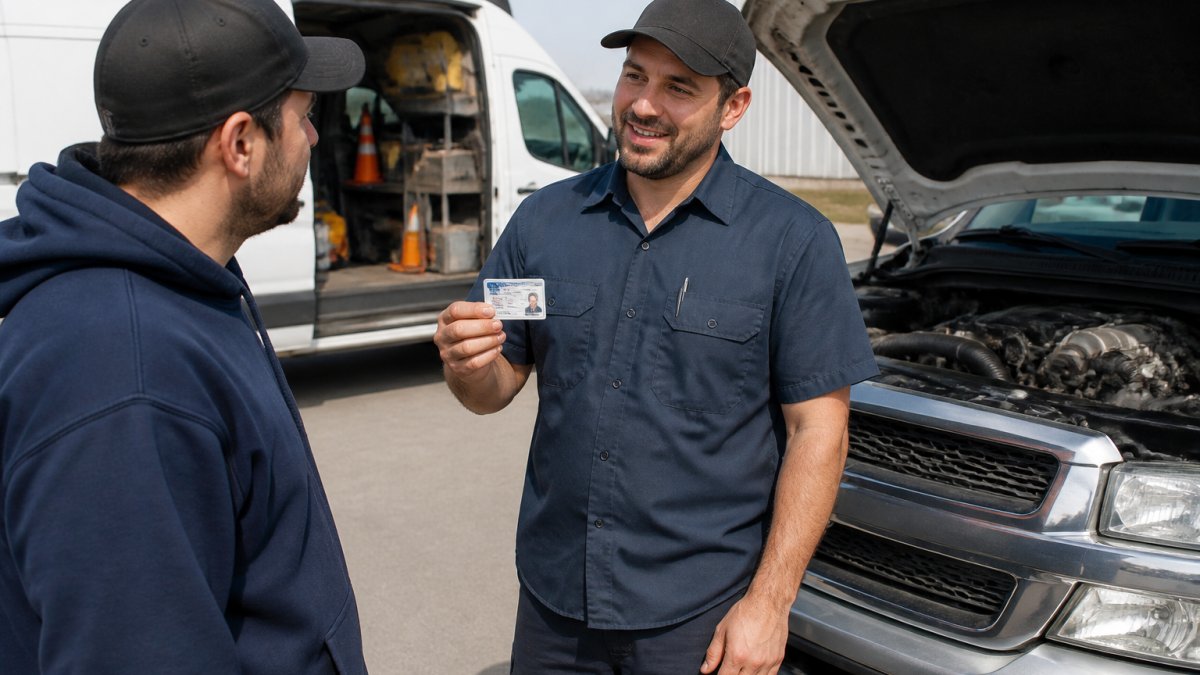
A few checks separate a professional from a phone number:
- Ask what the report includes. A real inspection report is written, itemized, and delivered the same day.
- Confirm the tools. Diesel and heavy-duty work requires more than a generic code reader.
- Read reviews for specifics. Look for mentions of punctuality and report quality, not just star ratings.
- Ask about the courtesy check.
Vehicleinspectionservices provides on-site pre-purchase, insurance, and AMVIC inspections across Alberta, with journeyman-certified mechanics and a complimentary courtesy check on every visit.
Frequently Asked Questions
How much does a mobile mechanic cost for a used truck inspection?
Pricing depends on the truck’s size, location, and the depth of inspection you request. A basic pre-purchase check costs less than a full diagnostic with fluid analysis or a diesel-specific scan. Travel distance also matters if you are outside a major service area. Vehicleinspectionservices quotes each job based on your exact situation, so ask for a written estimate before booking.
Can a mobile mechanic inspect a used truck before I buy it?
Yes. A mobile mechanic can perform a pre-purchase truck inspection at the seller’s location, your home, or a roadside meeting point. The mechanic checks the engine, transmission, brakes, suspension, electrical system, tires, and frame for wear or damage. For diesel trucks, ask whether the mechanic has the scanning tools to read fault codes and check emissions components. Always confirm the provider carries liability insurance and offers a written inspection report you can keep.
What are the downsides of using a mobile mechanic for a used truck?
A mobile mechanic works without a hoist, so some checks are limited. Frame rust, exhaust leaks, and certain suspension components are harder to assess from the ground. Heavy repairs like transmission rebuilds or major engine work usually need a shop. Weather can also delay an outdoor inspection. For a pre-purchase check, these limits rarely matter because the goal is to spot problems, not fix them on the spot.
How do I verify a mobile mechanic’s credentials?
Ask for the mechanic’s journeyman certificate number. Check for a business license, liability insurance, and a physical business address. Look for AMVIC registration if the provider offers inspections tied to vehicle sales. Read recent customer reviews and ask specifically about truck experience, especially diesel.
Buying a used truck without an inspection is a gamble, and the stakes are highest on diesel and heavy-duty models where a single missed fault can cost more than the truck is worth. Vehicleinspectionservices brings journeyman-certified mechanics to your location for pre-purchase, insurance, and AMVIC inspections, backed by a decade of on-site work across Alberta and a complimentary courtesy check. Get started with Vehicleinspectionservices and know exactly what you’re buying before you sign.