
Table of Contents
- The 2026 Used Car Inspection Checklist: What to Check First
- Your Used Car Pre-Purchase Inspection Checklist: Exterior, Tires, and Lights
- Under the Hood: Engine Bay, Fluid Levels, and Leaks
- Interior Condition and Verifying Vehicle History
- Used Car Test Drive Checklist: What to Watch For
- Used Car Inspection Checklist PDF: What to Include
- Pre-Purchase Inspection Cost and Repair Thresholds
- 2026-Specific Checks: Driver-Assistance, Infotainment, and EVs
- Frequently Asked Questions
Last Updated: October 5, 2026
The 2026 Used Car Inspection Checklist: What to Check First
A used car inspection checklist 2026 is a structured, stage-by-stage process for verifying a vehicle’s condition before you commit money to it. At Vehicleinspectionservices, our journeyman-certified mechanics have spent a decade performing pre-purchase inspections across Alberta, and buyers with a written sequence catch problems that others miss.
The stakes are real. According to AMVIC’s consumer guidance on vehicle purchases, Alberta buyers have limited recourse on private as-is sales, which means the inspection you do before money changes hands is often your only protection.
Inspect in the same order every time: exterior, engine bay, interior and documents, road test, then professional mechanical inspection. Consistency is what catches the problems.
Your Used Car Pre-Purchase Inspection Checklist: Exterior, Tires, and Lights
Start with the exterior, because body damage is the easiest thing to verify and the hardest for a seller to explain away. Begin in daylight, on a clean, dry vehicle: rain hides scratches, and a fresh wash hides fluid drips.
Walk the full perimeter twice. First from a few metres back to spot panel misalignment, then up close with your hand.
Exterior bodywork: dents, scratches, rust, and accident damage
Look for mismatched paint, uneven gaps between doors and fenders, and overspray on window trim or rubber seals, the fingerprints of accident damage. Rust matters most at wheel arches, rocker panels, and door bottoms; bubbling paint is worse than surface rust because corrosion works from behind.
Tires: tread depth, uneven wear, and safety basics
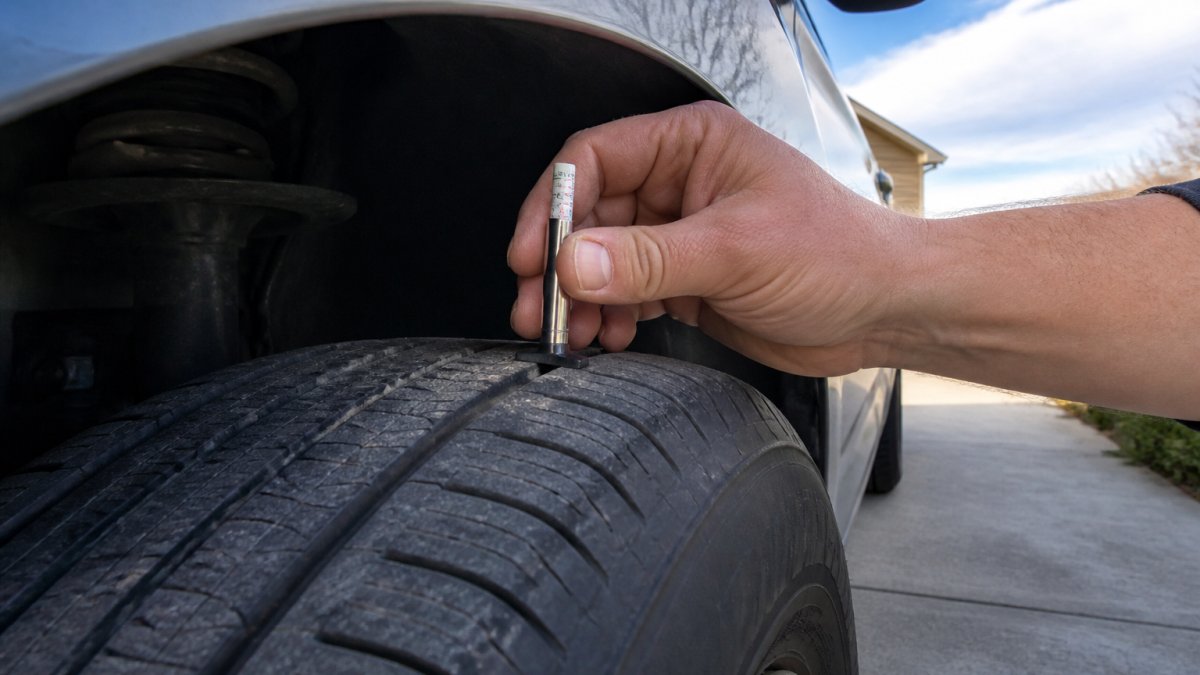
Tires tell you more than almost any other component. Uneven wear points to alignment or suspension problems, and mismatched brands suggest one-at-a-time replacement.
Lights and basic safety equipment
Have someone work the controls while you watch from outside. Headlights, brake lights, turn signals, reverse lights, and hazard flashers must all function; cracked or fogged lenses are a repair you’ll pay for later. Confirm seatbelts retract cleanly and the jack, spare, and wheel wrench are present.
Under the Hood: Engine Bay, Fluid Levels, and Leaks
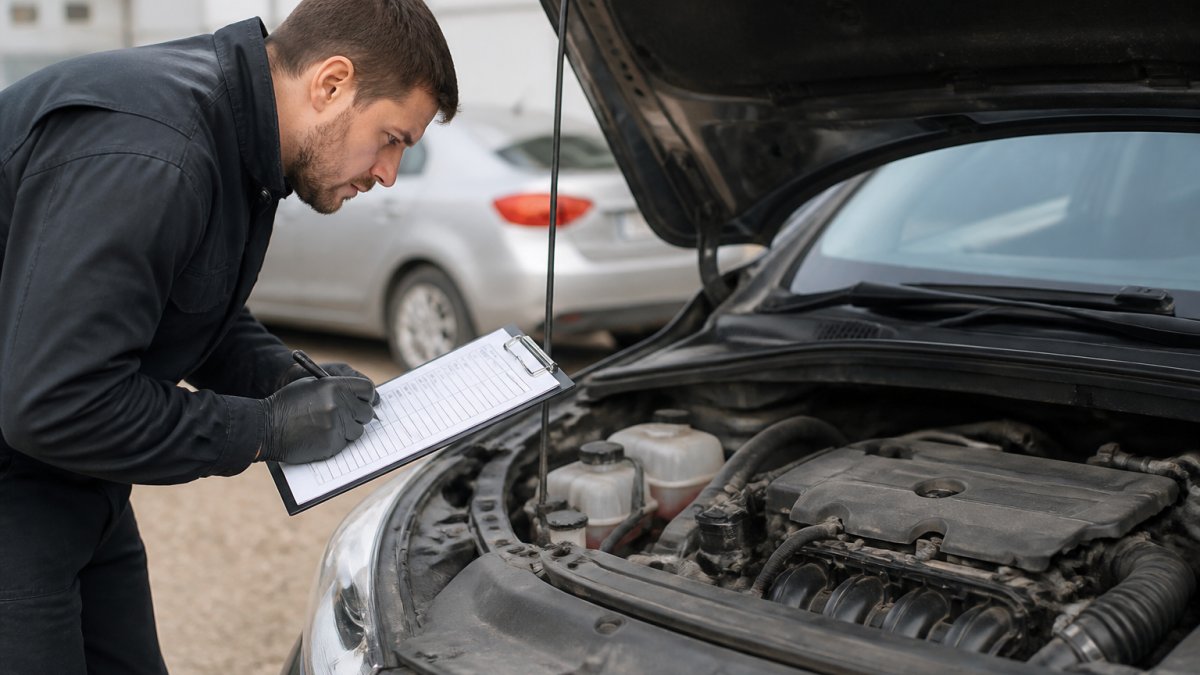
Open the hood on a cold engine, never after the seller has warmed it up, a warm engine burns off oil residue and pressurizes the cooling system, masking leaks. You’re looking for evidence, not diagnosing.
Engine condition and visible wear
Check for oil seepage around the valve cover, fresh gasket sealant, and an engine bay that looks suspiciously detailed, steam-cleaning hides leaks. Inspect the belt for cracks and glazing, and press the hoses for brittleness.
Fluid levels, oil leaks, corrosion, and belts
Pull the oil dipstick and check colour and level. Transmission fluid should be reddish, not brown or burnt-smelling, and the coolant reservoir free of rusty or oily film. Corrosion on battery terminals and around the radiator signals neglect, and a battery more than a few years old is a near-term expense.
Never inspect the engine bay on a warm engine, and never accept a freshly steam-cleaned engine compartment at face value. Cleaning hides oil leaks, and warm engines burn off the residue you’re trying to find.
Interior Condition and Verifying Vehicle History
Interior wear has to match the odometer. A vehicle showing low mileage with a collapsed driver’s seat, a shiny worn steering wheel, and a scuffed brake pedal is telling you two different stories, and only one of them is true. According to Transport Canada’s vehicle recall and safety information, you can also check open safety recalls by VIN before you buy, which is a step most buyers skip.
Interior wear and tear
Check the driver’s seat bolster, pedals, and gear selector for wear consistent with the mileage. Test every window, the air conditioning, the heater, and all interior lights. Water stains on the headliner or a musty smell point to flood damage or a leaking sunroof, often permanent.
Odometer, service records, and ownership documents
Verify the odometer against the service history and vehicle history report. Ask for the registration and confirm the seller’s name matches. On a private as-is sale you carry the risk, so a mismatched name or missing documents is a reason to walk.
Used Car Test Drive Checklist: What to Watch For
A used car test drive checklist should cover city streets, a highway merge, and firm braking from speed, ten minutes around the block proves nothing. Ask to start the car cold, and watch the dashboard before you drive.
Warning lights and dashboard checks
Every warning light should illuminate briefly when you turn the key, then go out. A light that never comes on may have been disabled, and an engine, ABS, or airbag light that stays on is a diagnostic bill waiting for you.
Road-test protocol: symptoms to note
Listen for clunks over bumps, feel for vibration through the steering wheel at highway speed, and note whether the transmission shifts smoothly or hesitates. Brake firmly once from speed and feel for pulsing or pulling, then park over clean pavement and check for fresh drips.
| Stage | What to Check | Red Flag |
|---|---|---|
| Cold start | Warning lights, exhaust smoke | Lights disabled or stay on |
| City streets | Transmission shifts, steering | Hesitation, pulling |
| Highway merge | Vibration, acceleration | Shudder at speed |
| Firm braking | Pedal feel, tracking | Pulsing or drift |
| Park and wait | Fluid drips underneath | Fresh oil or coolant |
Used Car Inspection Checklist PDF: What to Include
A printable used car inspection checklist PDF should be organized by inspection stage, with a checkbox for each item and space for notes and photos. Printing it keeps you working in order and gives you a written record for negotiations.
Build your sheet with these sections, in this order:
- Exterior: panels, paint, rust, glass
- Tires: tread depth, wear pattern, matching brands
- Lights and safety equipment
Add a notes column for repair cost estimates and a photo column for anything you want to revisit.
Pre-Purchase Inspection Cost and Repair Thresholds
Pre-purchase inspection cost varies with vehicle type, inspection depth, and location. The exact figure matters less than the decision rule you apply to the findings.
Repair cost as a share of purchase price
Add up the itemized repairs and compare the total to the asking price. A common guideline:
- Under 5% of purchase price: Normal deferred maintenance on a used vehicle. Budget for it, but it is not a deal-breaker.
- 5% to 15%: Negotiation territory. Use the itemized report to ask for a price reduction or for the seller to complete the repairs before sale.
- Over 15%: Serious caution. At this level, the vehicle may not be worth the purchase price plus repairs, especially if the repairs are structural or safety-related.
These thresholds are guidelines, not rules: a $2,000 repair on a $10,000 vehicle differs greatly from one on a $40,000 vehicle.
Repairs that justify walking away
Some findings are not negotiable, regardless of price:
- Structural rust in the frame, subframe, or suspension mounting points. This is expensive to repair correctly and often indicates deeper corrosion.
- Transmission symptoms such as slipping, harsh shifting, or delayed engagement. Rebuilds or replacements are among the most expensive common repairs.
- Unresolved warning lights for the engine, ABS, or airbag systems. These can indicate anything from a cheap sensor to a major system failure, and the diagnostic cost alone adds up.
Repairs that are normal negotiating points
- Worn brake pads or rotors
- Tires nearing the end of their tread life
- A battery more than a few years old
How to negotiate with an inspection report
Ask for the inspection before you discuss price. A written report gives you itemized findings to negotiate with, and sellers respond better to a list of repairs than a vague offer.
Convenience matters too. If you’re buying two hours outside the city, a mobile inspection saves a round trip and lets you inspect the car where it sits.
Ask for the inspection before you discuss price, not after. A written inspection report gives you specific, itemized findings to negotiate with, and sellers respond better to a list of repairs than to a vague offer.
2026-Specific Checks: Driver-Assistance, Infotainment, and EVs
Modern vehicles carry systems a 2015-era checklist won’t cover. On any 2026 model, test driver-assistance features on a real road, not a parking lot. Adaptive cruise control, lane-keeping assist, blind-spot monitoring, and the backup camera rely on sensors, cameras, and radar that can fail or fall out of calibration, an expensive repair, and recalibration after a windshield replacement is a real cost on many newer vehicles.
Driver-assistance and safety systems
Test each system in the conditions it is designed for:
- Adaptive cruise control: Set it on a highway with light traffic. The vehicle should maintain distance and slow smoothly when the car ahead slows. Abrupt braking or failure to detect a vehicle indicates a sensor or software issue.
- Lane-keeping assist: Drive on a road with clear lane markings. The system should gently correct if you drift. If it does nothing or overcorrects, the camera or calibration may be off.
- Blind-spot monitoring: Have a passenger or a parked car serve as a target. The warning should trigger when a vehicle enters the blind spot. Check both sides.
Infotainment and connected services
Infotainment systems deserve their own test. Pair your phone, run the navigation, and check that over-the-air updates and connected services still work, since subscription features sometimes lapse when a vehicle changes hands. Check:
- Touchscreen responsiveness: Test all corners and check for dead spots or lag.
- Phone pairing: Pair both Apple CarPlay and Android Auto if supported.
- Navigation: Enter a destination and confirm it calculates a route.
Hybrid and EV inspection differences
For hybrids and EVs, the inspection shifts. The standard mechanical checklist still applies to tires, brakes, suspension, and body, but the powertrain requires different checks:
- Battery health or state-of-health reading: Ask for a battery health report. Most manufacturers provide this through the vehicle’s diagnostic system or a dealer tool. Battery degradation is the single biggest cost risk on a used EV, and it does not show up in a standard mechanical inspection.
- Charging port and cable: Check the charging port for damage, corrosion, or bent pins. Test that the vehicle charges at the rate it should on both Level 2 and DC fast charging if available.
- Charging equipment: Confirm whether the vehicle comes with a portable charging cable and whether a home charging station is included.
Software and recall status
Before you buy, check for open recalls by VIN through Transport Canada’s vehicle recall and safety information, and check whether the vehicle has outstanding software updates. Some updates are safety-related and may be required before the vehicle can be registered or insured.
A clean mechanical inspection does not cover battery health, sensor calibration, or software status. On a 2026 vehicle, these systems are as important as the engine and transmission. Ask for a diagnostic scan that includes battery state-of-health and stored fault codes.
Frequently Asked Questions
What should I check when inspecting a used car?
Start with the exterior: look for dents, scratches, rust, and mismatched paint that could signal accident damage. Check tire tread depth and uneven wear. Under the hood, examine fluid levels, oil leaks, corrosion, and belts. Inside, test all electronics and look for wear. Then take a test drive to check warning lights and how the vehicle performs. A used car inspection checklist 2026 helps you stay organized.
How do I inspect a used car before buying it?
Bring a flashlight, tire gauge, and a copy of a used car inspection checklist. Inspect the vehicle in daylight, ideally on a dry day. Check every system methodically: body, tires, lights, engine bay, interior. Ask for service records and verify the odometer. A pre-purchase inspection by a certified mechanic catches hidden issues. For a used car pre-purchase inspection checklist, organize checks by exterior, mechanical, and interior stages.
What are the red flags when buying a used car?
Watch for fresh paint or overspray that hides rust, uneven tire wear suggesting alignment problems, milky oil or transmission fluid, persistent warning lights, and a test drive with unusual noises or vibrations. A seller who avoids questions about service history or refuses a mechanical inspection is a major red flag. Flood damage signs include musty odors and water stains under carpets.
Should I get a mechanic to inspect a used car before buying?
Yes. A journeyman-certified mechanic can spot issues a visual check misses, like frame damage, worn suspension, or engine codes. In Alberta, AMVIC-licensed inspections add credibility. A professional pre-purchase inspection typically takes 1-2 hours and gives you negotiating power. If the seller declines, walk away.
How much does a pre-purchase car inspection cost?
Pre-purchase inspection cost varies by region, vehicle type, and provider. Mobile services may charge differently than shop-based inspections. For accurate pricing, contact a provider directly. Many buyers find it worthwhile for peace of mind.
What should I check during a used car test drive?
Use a used car test drive checklist: start the engine and listen for odd noises, test acceleration, braking, and steering. Check that all warning lights turn off after ignition. Drive on different roads, including highways, to feel for vibrations or pulling. Test the air conditioning, heating, infotainment, and driver-assistance features. Note any hesitation, clunks, or unusual smells.
Can I use a checklist to inspect a used car myself?
Yes. A used car inspection checklist PDF or printed guide helps you cover all critical areas. Focus on what you can see and feel: body condition, tire tread, fluid levels, interior wear, and test drive behavior. However, some issues require a lift and diagnostic tools. Use your checklist as a first pass, then hire a professional for a thorough mechanical inspection.