
Table of Contents
- What AMVIC Inspection Requirements for Sellers Actually Cover
- When AMVIC Inspection Requirements Apply to Your Sale
- Mechanical Fitness Assessment Requirements for Sellers
- Out-of-Province Vehicle Inspection Alberta: What Sellers Need to Know
- How to Book a Mobile AMVIC Inspection in Alberta
- Seller Checklist: Documentation, Disclosure, and Advertising Rules
- Frequently Asked Questions
Last Updated: October 13, 2026
What AMVIC Inspection Requirements for Sellers Actually Cover
AMVIC inspection requirements for sellers are the rules the Alberta Motor Vehicle Industry Council places on anyone selling a vehicle in the province, and they hinge on one question: are you a licensed automotive business or a private seller?
Most sellers confuse two very different things. An AMVIC business inspection is a regulatory audit of a licensed business, not a mechanical check of a car. A mechanical fitness assessment is the physical inspection of the vehicle itself.
The AMVIC consumer and industry resources set the framework for both, and this guide walks through each requirement in order.
AMVIC Inspections vs. Mechanical Fitness Assessments
An AMVIC business inspection is a regulator’s review of a licensed automotive business, covering records, advertising, contracts, and compliance with the Consumer Protection Act. A mechanical fitness assessment is an inspection of the vehicle’s systems and condition, performed by a qualified mechanic.
The two serve different purposes and audiences:
- Business inspection: confirms the dealer operates lawfully, checks documentation and advertising; triggered by licensing and AMVIC’s inspection schedule
- Mechanical fitness assessment: confirms the vehicle is safe and roadworthy; triggered by a sale, an out-of-province registration, or a buyer’s request
Sellers who assume one replaces the other end up either over-preparing or under-preparing. They are separate obligations.
Private Sellers vs. Licensed Dealers: Who Follows What
Private sellers in Alberta are not bound by AMVIC licensing and advertising rules, but licensed dealers are. That distinction determines almost everything else.
If you sell your own vehicle to another individual, you are not an automotive business. You do not need a business licence, a salesperson licence, or an AMVIC business inspection.
Licensed dealers carry the full weight: business licensing, salesperson licensing, advertising compliance, all-in pricing, and AMVIC inspections.
The most common mistake private sellers make is assuming they have no obligations at all. You are not licensed, but misrepresenting a vehicle’s condition or history can still expose you to a civil claim under Alberta’s consumer protection framework.
When AMVIC Inspection Requirements Apply to Your Sale
AMVIC inspection requirements apply to licensed automotive businesses on a scheduled basis, and to any seller whose vehicle needs a mechanical fitness assessment before registration. A private sale between two individuals does not trigger an AMVIC business inspection.
Here is how the triggers break down:
| Seller Type | AMVIC Business Inspection | Mechanical Fitness Assessment |
|---|---|---|
| Licensed dealer | Yes, on AMVIC’s schedule | Yes, before sale |
| Private seller | No | Only if required for registration |
| Out-of-province vehicle | No | Yes, before registration |
Selling Privately in Alberta: What Is Mandatory
Selling privately in Alberta requires no AMVIC licensing, but you must hand over a complete bill of sale, disclose the vehicle’s history, and provide a mechanical fitness assessment if the buyer or registry requires one. The bill of sale should include the date, both parties’ names and signatures, the vehicle identification number, the odometer reading, and the sale price. Keep a copy for your records.
Selling as a Licensed Automotive Business
Selling as a licensed automotive business means AMVIC can inspect your operation, your records, and your advertising at any time. You need a valid business licence, licensed salespeople, and documentation that matches what you advertised.
AMVIC’s licensing and compliance guidance outlines what inspectors review, and the short version is: everything that touches the consumer. Contracts, ads, financing disclosures, and repair authorizations all fall inside the scope.
Mechanical Fitness Assessment Requirements for Sellers
A mechanical fitness assessment is a documented inspection of a vehicle’s safety-related systems, needed when a vehicle is registered after coming from out of province or when a buyer requests it.
A typical assessment covers:
- Brakes, steering, and suspension
- Tires, wheels, and alignment
- Lighting, signals, and visibility equipment
The assessment’s value depends on who performs it and how thoroughly they document findings. A checklist with no measurements tells the buyer nothing; a report with readings, photos, and pass or fail notes gives both parties something to stand on.
Who Can Perform the Assessment
The inspection must be completed by a qualified mechanic or a recognized inspection facility. Not every shop offers it, and not every technician can produce a report a registry agent will accept. Before you book, confirm the facility performs mechanical fitness assessments and that the report format meets registry requirements. A cheap inspection that produces an unusable report costs you the fee plus a second appointment.
What Pass and Fail Actually Mean
A mechanical fitness assessment is not a repair estimate. If the vehicle fails, the report identifies the specific defects. You then either repair the defects and have the vehicle re-inspected, or disclose the failure to the buyer and let them decide.
A common pattern is a vehicle that fails on one or two minor items, a burnt-out signal bulb, a cracked windshield in the driver’s line of sight, a tire below the wear limit.
How Long an Inspection Stays Valid
Inspections carry a validity window, and an expired report means the buyer starts over. The window is set by the registration framework, not the shop, so confirm the current period with the registry agent handling the transfer. If you are selling a recently imported vehicle, get the inspection done close to the sale date rather than months in advance, a report valid when you listed may not be valid when the buyer shows up.
Ask for the inspection report as a written document, not a verbal summary. If a defect is later disputed, the report is your only record of what was true on inspection day. Keep a copy even after the sale closes, disputes can surface weeks later.
Salvage, Rebuilt, and Out-of-Province Vehicles
Vehicles with a salvage history or rebuilt status face additional scrutiny. Structural repairs need documentation, and inspectors will look closely at the quality of the work. Sellers who cannot produce repair records often find the inspection stalls. The same applies to vehicles brought in from another province: the inspection confirms the vehicle meets the safety standards applied at registration, and any modification or repair that departs from the original build draws attention.
Out-of-Province Vehicle Inspection Alberta: What Sellers Need to Know
An out-of-province vehicle inspection is required before a vehicle brought in from another province can be registered in Alberta, and the seller is often the one who arranges it. The inspection confirms the vehicle meets Alberta’s safety standards and must be completed by a qualified inspector. Timing matters: inspections carry a validity window, so if you are selling a recently imported vehicle, get the inspection done close to the sale date rather than months in advance.
How to Book a Mobile AMVIC Inspection in Alberta
Booking a mobile AMVIC inspection in Alberta means scheduling a certified inspector to come to your location. At Vehicleinspectionservices, our journeyman-certified mechanics travel to your home, workplace, or storage location, so the vehicle never has to move.
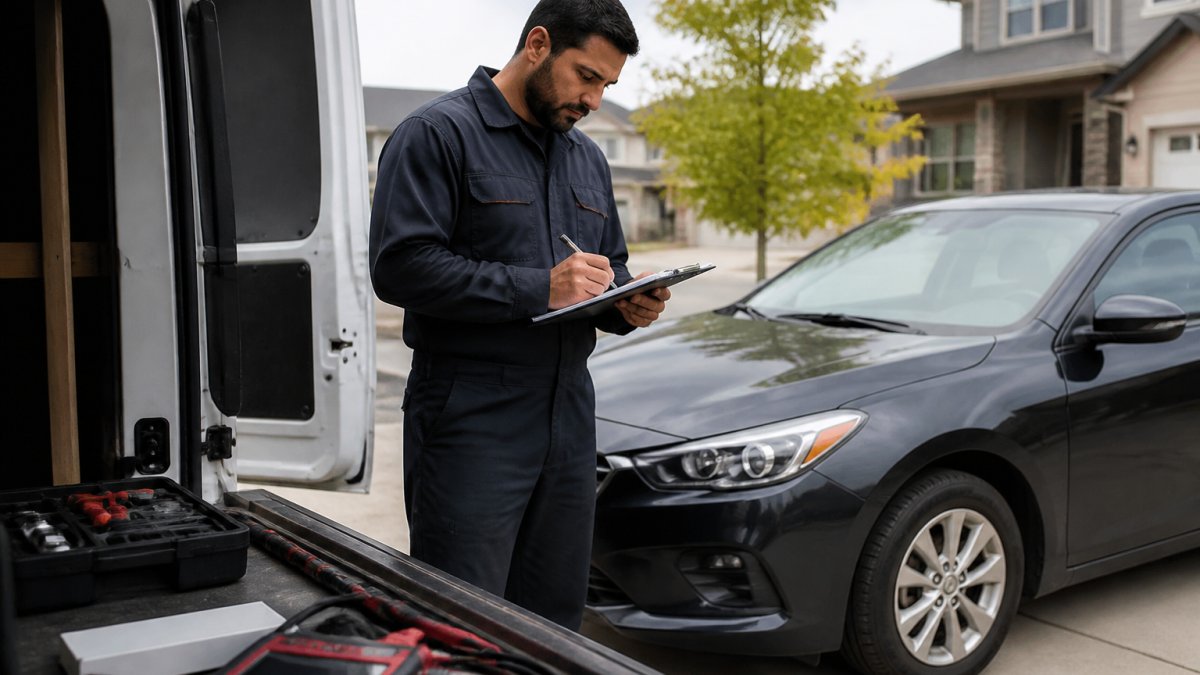
Here is the step-by-step process:
- Confirm which inspection your sale requires. A business inspection and a mechanical fitness assessment are booked differently.
- Gather your documents. Registration, insurance, service records, and any repair history speed things up.
- Choose a location and time. Mobile service works anywhere the vehicle is parked, including rural properties.
- Complete the inspection. Expect a full walkaround, system checks, and a written report.
- Review the findings. Address any failures before listing or completing the sale.
The convenience matters more than it sounds. A vehicle that cannot be driven legally, expired registration or an unresolved defect, still needs inspection, and mobile service solves that directly.
The fastest way to slow down a sale is to book the wrong inspection. Confirm whether you need a mechanical fitness assessment or a business inspection before you pick up the phone.
Seller Checklist: Documentation, Disclosure, and Advertising Rules
Documentation, disclosure, and advertising rules are where most sellers lose time, and a checklist keeps you ahead of them. This section walks through the workflow from pre-listing to handover and flags which steps apply only to licensed dealers.
Before You List
- Confirm your seller type. Private sale or licensed dealership? The obligations diverge sharply from here.
- Pull the vehicle’s history. Registration records, insurance claims, lien searches, and any prior inspection reports.
- Gather service records. Organized maintenance history supports your asking price and preempts buyer doubt.
What the Bill of Sale Must Include
The bill of sale is the backbone of a private sale. A complete one includes:
- Date of sale
- Full legal names of buyer and seller
- Both parties’ signatures
Keep a copy for your records. If a dispute arises later, the bill of sale is the first document anyone will ask for.
Disclosure: What You Must Tell the Buyer
Disclosure of vehicle history and defects is the one obligation that follows every seller, licensed or not. Tell the buyer what you know: prior collisions, insurance claims, rebuild status, odometer discrepancies, and any defect that affects safety or value. Put it in writing, a verbal “yeah, it had a small fender bender” is worth nothing if the buyer later discovers a rebuilt title.
Advertising and All-In Pricing Rules
Advertising and all-in pricing rules apply to licensed dealers and exist to stop bait pricing. If you advertise a price as a dealer, that price must include all mandatory fees and charges, you cannot advertise one number and present a higher one at the desk (All-in advertised pricing). The advertised price must also match the vehicle’s actual condition and equipment.
At Handover
- Signed bill of sale, with a copy for each party
- Signed disclosure statement attached
- Odometer reading recorded and consistent across all documents
The sellers who run into trouble are rarely the ones who ignored the rules on purpose. They are the ones who assumed a private sale had no obligations at all. A complete paper trail is the cheapest insurance you can buy.
Frequently Asked Questions
Is an inspection mandatory when selling a vehicle privately in Alberta?
No. AMVIC does not require private sellers to obtain an AMVIC inspection or mechanical fitness assessment before selling a used vehicle to another individual. Private sales fall outside AMVIC’s licensing and inspection framework. However, buyers often request a pre-purchase inspection, and providing one builds trust. Licensed dealers, by contrast, must follow AMVIC’s inspection and disclosure rules, including meeting mechanical fitness assessment requirements for certain vehicles.
What is the difference between an AMVIC inspection and a mechanical fitness assessment?
An AMVIC business inspection examines a licensed automotive business’s operations, records, and compliance with the Consumer Protection Act and AMVIC’s rules. A mechanical fitness assessment is a vehicle-level inspection that checks major systems against a standard checklist and produces a pass or fail result. Sellers should not confuse the two: one applies to the business, the other to the vehicle’s condition at the time of sale.
How long is an AMVIC inspection good for?
AMVIC inspection reports for vehicle mechanical fitness are typically valid for 120 days from the inspection date. After that period, the report is considered expired and a new inspection is required if a buyer or dealer needs current proof of condition. For out-of-province vehicle inspection Alberta requirements, the same 120-day validity window generally applies to the inspection report used for registration.
Does AMVIC regulate private sales between individuals?
AMVIC regulates licensed automotive businesses, not private sales between two individuals. If you sell your personal vehicle to another person without acting as a dealer, AMVIC licensing and inspection rules generally do not apply. However, other Alberta rules still matter, such as accurate advertising, honest disclosure of known defects, and providing a bill of sale. If you sell multiple vehicles in a year, AMVIC may treat you as an unlicensed dealer.
What happens if I sell a vehicle without a mechanical fitness assessment?
If you are a private seller, there is no AMVIC penalty for skipping a mechanical fitness assessment, but you remain responsible for honest disclosure. If you are a licensed dealer and sell a vehicle that requires an inspection without one, AMVIC can issue fines, suspend your licence, or take other compliance action. Buyers can also file complaints, and unresolved disputes may lead to compensation orders under Alberta’s consumer protection rules.
How do I verify if a vehicle requires an out-of-province inspection?
Check the vehicle’s registration history. If it was last registered outside Alberta, an out-of-province vehicle inspection is usually required before it can be registered here. Inspections must be done by a licensed mechanic at an approved facility and the report is valid for 120 days. Sellers moving a vehicle into Alberta should arrange the inspection before listing it, since buyers will ask for proof that it meets Alberta standards.