
Table of Contents
- Why Used Car Inspections Uncover Problems You Can’t See
- The Used Car Inspection Checklist Every Buyer Needs
- Common Used Car Red Flags You Should Never Ignore
- How to Check Used Car History Before You Commit
- What a Pre-Purchase Car Inspection Covers (and What It Doesn’t)
- Test-Drive Checks and Diagnostic Scanning
- When to Walk Away: Inspection Costs and Negotiation
- Frequently Asked Questions
Last Updated: October 12, 2026
Why Used Car Inspections Uncover Problems You Can’t See
Most used car problems are invisible in a parking lot.
At Vehicleinspectionservices, our journeyman-certified mechanics have spent a decade performing on-site pre-purchase inspections across Alberta.
A used car inspection is a systematic check of a vehicle’s body, mechanical systems, and history to find hidden damage or wear before purchase.
The sections below walk through what to check, what red flags mean, and when to walk away.
The Used Car Inspection Checklist Every Buyer Needs
A good used car inspection checklist covers the body, the engine bay, the interior, and the safety systems. Work through each area in order and note every problem, even small ones.
Exterior and Body Checks
Start with the body, because collision damage and rust are the most common hidden costs.
- Look for dents, scratches, and bubbling paint along panel edges
- Check for mismatched paint color between panels, a sign of repair
- Inspect wheel wells and door bottoms for rust
- Look for uneven panel gaps, which can signal accident damage
Rust is the one issue that rarely gets cheaper to fix. Surface rust on a rocker panel can spread into a structural problem within a season.
Engine Bay and Fluid Inspection
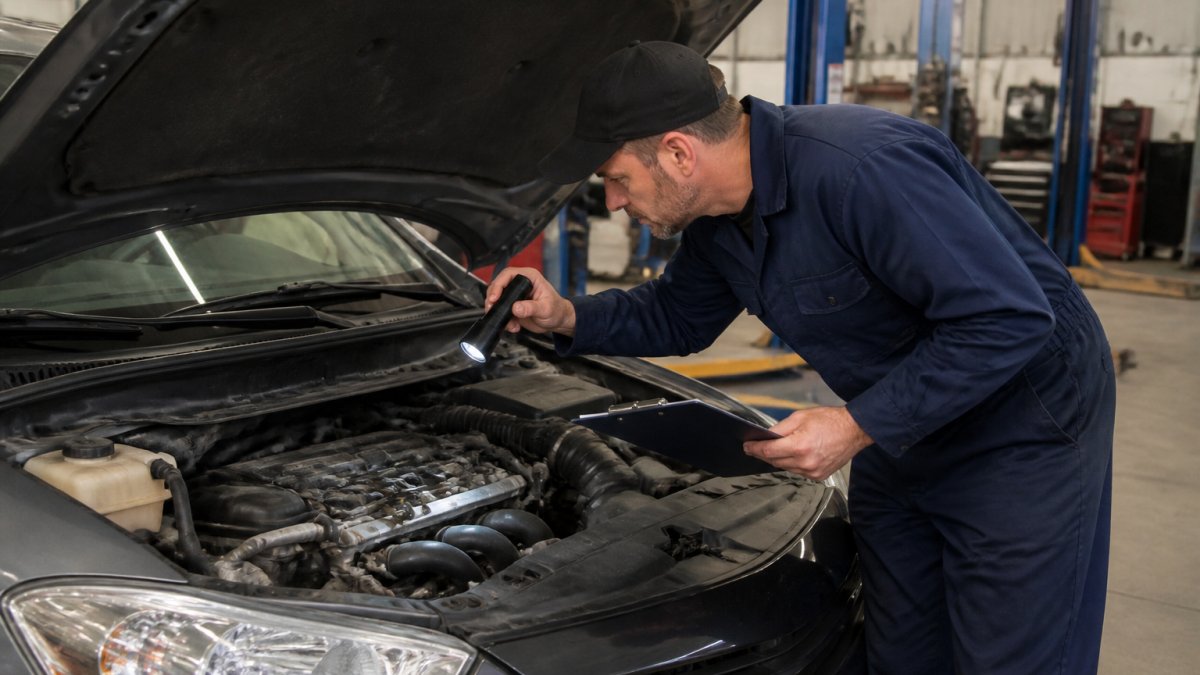
The engine bay tells you how well the car was maintained. Look for fresh stains, wet spots, and worn parts.
- Check for fluid leaks under the engine and around the transmission
- Inspect belts and hoses for cracks or fraying
- Look at the coolant, oil, and brake fluid levels and colors
- Check the battery terminals for corrosion
A small leak today can become a repair bill tomorrow. If you see fresh stains on the driveway or under the car, ask what was recently serviced.
Interior, Electronics, and Safety Systems
The interior shows how hard the car was used, and the electronics show what is about to fail.
- Look for worn seats, stains, and strange odors
- Test every window, lock, and seat adjustment
- Turn on the dashboard and check for warning lights
- Test the air conditioning and heating
Warning lights that stay on after startup are one of the clearest used car red flags. Some are cheap to fix. Others point to transmission or emissions problems that are not.
Common Used Car Red Flags You Should Never Ignore
Some problems are deal-breakers, and others are just bargaining chips. The difference is not the symptom itself but what it usually means and how expensive it is to resolve.
| Red flag | Likely cause | Urgency | Action |
|---|---|---|---|
| Mismatched paint or uneven panel gaps | Prior collision repair, possibly with hidden frame damage | Safety-critical if frame is involved | Walk away unless a body shop confirms the frame is straight |
| Fresh fluid leaks or wet spots under the engine or transmission | Active seal, gasket, or line failure | Negotiation point if slow; safety-critical if brake or transmission fluid | Get a quote before you make an offer |
| Warning lights that stay on after startup | Stored fault codes, sensor failure, or emissions issue | Depends on the code | Have the code read before you commit |
| Jerky shifting or delayed gear engagement | Worn transmission internals or low fluid | Safety-critical | Walk away unless the seller agrees to a transmission shop diagnosis |
| Brake squeal, vibration, or a soft pedal | Worn pads, warped rotors, or air in the brake lines | Safety-critical | Budget for immediate brake service or walk away |
| Rough idling or unusual engine noises | Ignition, fuel, or internal engine wear | Negotiation point if minor; safety-critical if knocking | Get a compression or leak-down test |
| Rust in structural areas | Corrosion in rockers, subframe, or floor pans | Safety-critical | Walk away |
| Odometer reading inconsistent with wear | Odometer rollback or cluster replacement | Legal and safety risk | Walk away and report the discrepancy |
A few patterns are worth memorizing. A soft or spongy brake pedal almost always means air or moisture in the hydraulic system, and that is not a “get to it later” repair.
Never accept “it just needs a sensor” as an explanation for a warning light. A transmission code and a loose gas cap can look identical on the dashboard. Have the code read before you commit.
Model-Specific and Environmental Risks
Two categories of risk do not show up on a generic checklist but matter a great deal in a cold, salt-heavy climate.
- Hybrid and EV battery health. Ask for the battery state-of-health reading from a dealer or a qualified technician. Capacity loss is gradual and expensive to reverse, and a used hybrid with an unknown battery history is a real financial risk.
- Flood damage. Check for musty odors, fogged interior glass, rust on seat brackets, and silt under the carpet or in the spare tire well. Flood-damaged vehicles are frequently cleaned and resold, and electrical gremlins can appear months later.
- Road-salt corrosion. Inspect brake lines, fuel lines, and the subframe, not just the body panels. Salt accelerates corrosion in exactly the places a casual walkaround misses.
- Winter tire and wheel condition. Check for curb rash, bent rims, and mismatched tire brands, which often signal a hard previous life.
If any of these risks are present and undocumented, treat them as a reason to walk away rather than a bargaining chip.
How to Check Used Car History Before You Commit
A vehicle history report is not optional. It is the fastest way to spot accident damage, odometer tampering, and ownership problems that a visual inspection cannot reveal.
To check used car history, pull a report using the vehicle identification number (VIN). Then verify the seller’s registration matches the name on the report.
- Confirm the VIN on the dashboard matches the paperwork
- Check for accident damage, salvage titles, and insurance claims
- Look for odometer rollback or inconsistent mileage records
- Confirm the number of previous owners
In Alberta, AMVIC-licensed businesses must follow specific rules when buying and selling vehicles (Internet selling and sales to remote consumers). You can review the AMVIC consumer resources on vehicle purchases to understand your rights before you sign anything.
Ask the seller for the maintenance history before you see the car. Sellers with a clean record will have receipts ready. Sellers without one usually hesitate, and that hesitation tells you something.
What a Pre-Purchase Car Inspection Covers (and What It Doesn’t)
A pre-purchase car inspection is a paid, independent check of a vehicle’s condition by a qualified mechanic before you buy. It covers the body, mechanical systems, and safety items, but it is not a guarantee against every future failure.
Here is what a professional inspection typically includes:
| Area | What Gets Checked | What It Misses |
|---|---|---|
| Exterior | Rust, dents, paint, panel gaps | Hidden frame damage under trim |
| Engine | Leaks, belts, hoses, noises | Internal wear without teardown |
| Transmission | Shifting, fluid, leaks | Long-term durability |
| Brakes | Pads, rotors, pedal feel | Future wear rate |
| Tires | Tread, wear pattern, pressure | Age-related cracking (sometimes) |
| Electronics | Warning lights, accessories | Intermittent faults |
What to Expect During a Professional Inspection
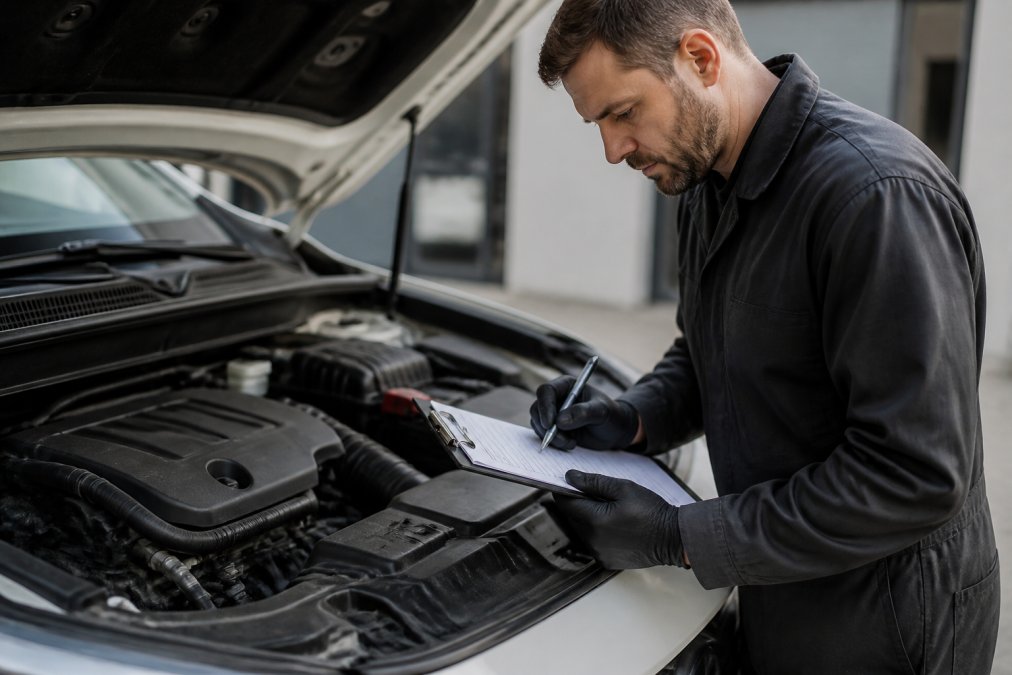
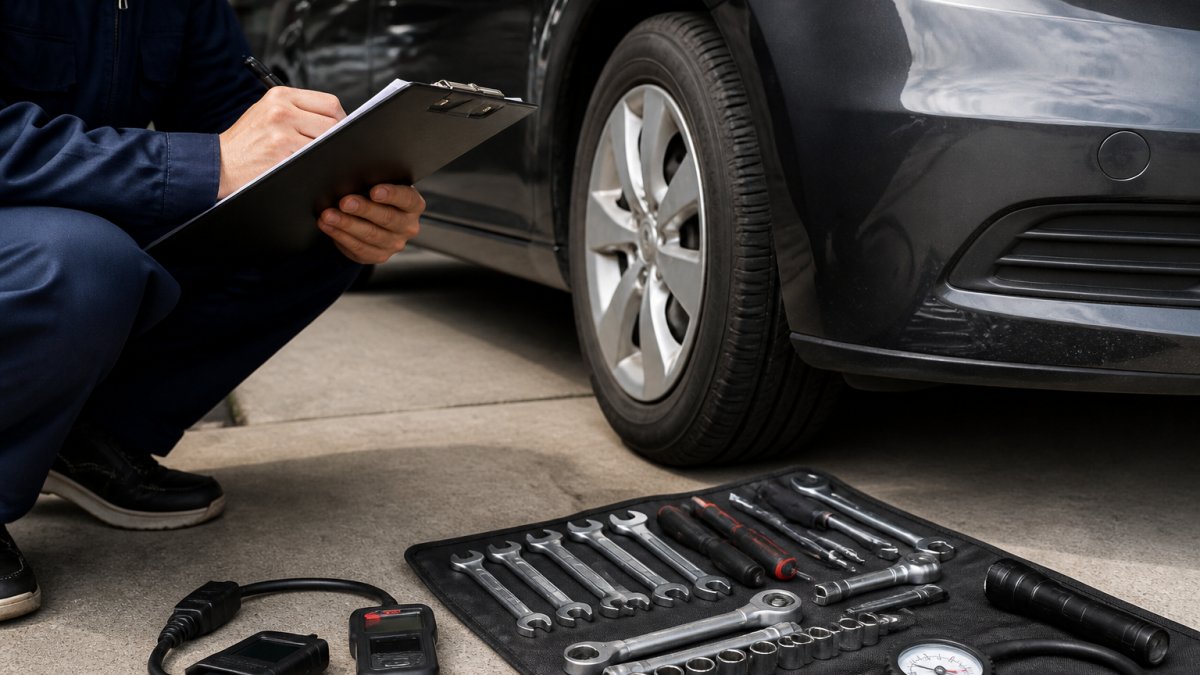
A proper inspection takes time and follows a set process. At Vehicleinspectionservices, our mobile service brings a journeyman-certified mechanic to your location, so you do not have to move the car to a shop.
Expect the mechanic to:
- Walk the body and note every dent, scratch, and rust spot
- Check the engine bay for leaks, worn belts, and hose cracks
- Test the brakes, tires, and suspension
- Scan for diagnostic trouble codes
A written report is what you use to negotiate. Without one, you are guessing.
Test-Drive Checks and Diagnostic Scanning
A test drive reveals problems a stationary inspection cannot. Drive for at least 15 minutes, and include city streets and a stretch of highway if you can.
Watch and listen for:
- Rough idling at stoplights
- Jerky shifting or delayed gear shifts
- Slipping gears under acceleration
- Whining or grinding from the transmission
- Brake squeal or vibration when stopping
A diagnostic scan reads stored trouble codes from the car’s computer. Ask for a scan during the inspection. Some issues only show up as a stored code, even when no warning light is on.
When to Walk Away: Inspection Costs and Negotiation
Walking away is a valid outcome. A used car inspection exists to protect your money, not to talk you into a purchase. The trick is knowing which findings are fatal and which are simply leverage.
Walk-Away Triggers
Walk away if you find any of the following:
- Structural rust or frame damage
- Active transmission problems, especially delayed or harsh engagement
- Multiple warning lights with no clear cause
- Odometer inconsistencies or title issues
- A seller who refuses an independent inspection
These are not negotiation points. They are exit signs.
Using the Report to Negotiate
If the issues are minor or moderate, use the inspection report to negotiate. A written list of needed repairs gives you a clear number to work from, and it shifts the conversation from opinion to evidence.
A practical approach:
- Get a written repair estimate for each documented defect from a shop you trust.
- Add the estimates together to get a total repair exposure.
- Decide in advance what percentage of that total you are willing to absorb. Many buyers aim to have the seller cover the majority of safety-related items.
- Present the report and the estimate, not a vague complaint.
- Be prepared to walk away if the seller will not move. The inspection fee is already spent; the purchase price is not.
What an Inspection Costs and Why It Pays for Itself
A pre-purchase inspection is a paid service, and pricing depends on the vehicle type, the level of detail, and whether the inspection is mobile or shop-based.
When you request a quote, ask what is included: a written report, photos, a diagnostic scan, and a test drive are the items that matter most. If a provider will not put findings in writing, the report cannot be used to negotiate.
A Simple Decision Framework
- Safety-critical defect with no clear fix: walk away.
- Safety-critical defect with a known, quoted fix: negotiate the price down by at least the repair cost.
- Cosmetic or minor mechanical issue: use it as a bargaining chip, but do not let it kill an otherwise sound vehicle.
- Seller refuses an independent inspection: walk away. There is no good reason to refuse one.
An inspection report is a negotiating tool, not just a safety check. A documented list of repairs often pays for the inspection itself.
For pricing on a mobile pre-purchase, insurance, or AMVIC inspection, contact Vehicleinspectionservices directly. Pricing depends on the vehicle and location, and we will give you a clear quote before we book.
Frequently Asked Questions
What are the most common problems found during a used car inspection?
Exterior damage like dents, scratches, and rust is frequent, along with mismatched paint from prior repairs. Fluid leaks, worn belts and hoses, and brake issues such as squealing or a soft pedal are also common. Transmission problems like jerky shifting or delayed engagement often appear. Inside, worn seats, strange odors, and warning lights on the dashboard are typical. These used car red flags can signal hidden mechanical problems that may lead to costly repairs if overlooked.
How do I check a used car’s history before buying it?
Start by requesting the vehicle identification number (VIN) and obtaining a history report from a Canadian provider like CARFAX Canada or the provincial registry. This reveals accident records, odometer readings, liens, and ownership changes. Cross-check the VIN on the dashboard and door jamb to ensure it matches documents. Look for branded titles (salvage, rebuilt) that indicate past write-offs. A pre-purchase car inspection from a certified mechanic can also uncover hidden damage that history reports might miss.
Should I get a pre-purchase inspection before buying a used car?
Yes. A pre-purchase car inspection by a journeyman-certified mechanic can reveal issues that a test drive and visual check miss, such as frame damage, early transmission wear, or electrical faults. In Alberta, mobile services like Vehicleinspectionservices bring the inspection to your location, saving time. The cost is minimal compared to potential repair bills. It also gives you negotiating power and peace of mind, especially for high-mileage or older vehicles.
Can a used car pass inspection with mechanical problems?
It depends on the type of inspection. A basic safety inspection may only check roadworthiness items like brakes, lights, and tires, so a car with engine or transmission issues could still pass. However, a thorough pre-purchase inspection will catch those hidden problems. In Alberta, AMVIC inspections focus on specific compliance areas, not overall mechanical health. Always ask what the inspection covers and consider a comprehensive mechanical check to avoid buying a vehicle with costly issues.