
Table of Contents
- Car Inspect vs Mr Torque: An Overview
- Feature Comparison: Car Inspect vs Mr Torque
- AMVIC Certified Mobile Mechanic Services
- Mobile Pre-Purchase Inspection Cost Breakdown
- On-Site Fleet Maintenance Services
- Pros and Cons of Each Provider
- Which One Should You Choose?
- Frequently Asked Questions
Last Updated: October 7, 2026
Car Inspect vs Mr Torque: An Overview
Choosing between Car Inspect and Mr Torque comes down to what you need: a mobile pre-purchase vehicle inspection or a shop-based maintenance appointment.
This comparison gives used-vehicle buyers and fleet operators an evidence-based look at how the two providers differ on features, certification, pricing, and on-site fleet maintenance.
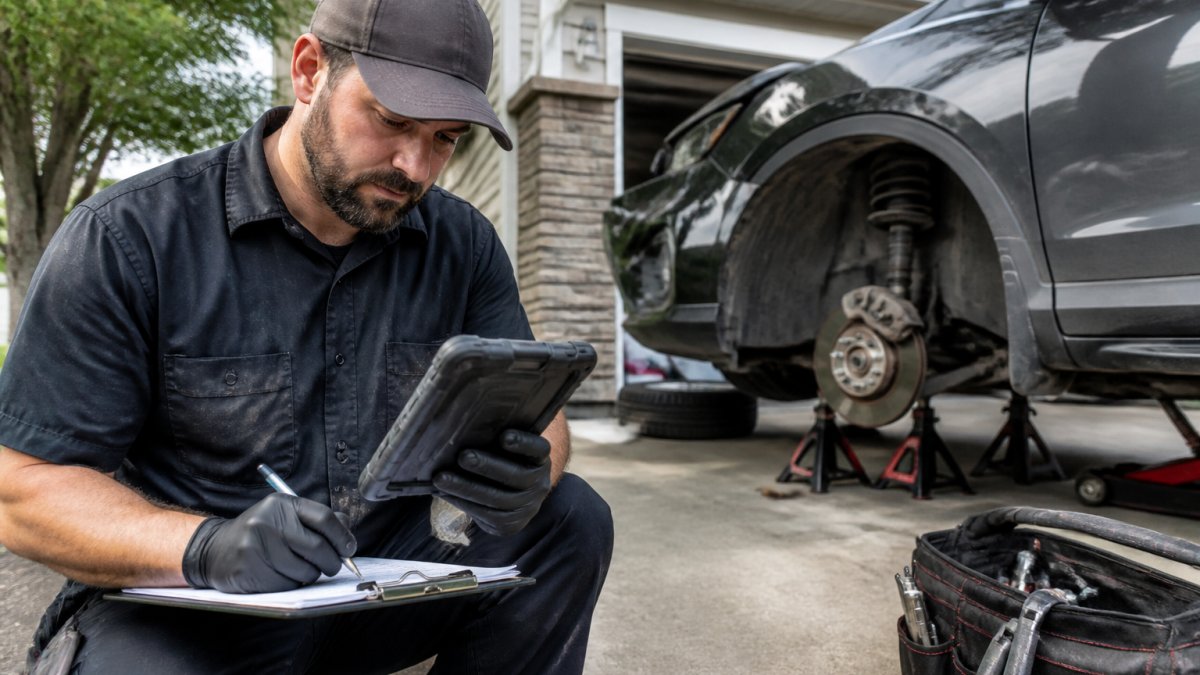
How We Compared Them
We compared the two providers on five factors: service model, certification, inspection scope, pricing transparency, and coverage area, using what each publicly states about its services rather than marketing claims. This is a category comparison, not a hands-on test, our goal is a clear framework for judging the trade-offs yourself.
Feature Comparison: Car Inspect vs Mr Torque
Car Inspect offers mobility and inspection depth; Mr Torque offers shop capacity and routine maintenance volume. The longer version depends on whether you need someone to come to the vehicle or are happy to drive it in.
| Feature | Car Inspect | Mr Torque |
|---|---|---|
| Service model | Mobile, on-site at the seller’s or owner’s location | Fixed workshop; vehicle must be brought in |
| Certification focus | Journeyman mechanic; provincial licensing through AMVIC for sales- and inspection-related businesses | Shop technicians working under the business’s own supervision |
| Pre-purchase inspection | Core service, built around a buyer’s decision | Available as a shop appointment, not the primary offering |
| Brake and wheel bearing checks | Yes, performed on site | Yes, performed on a hoist |
| Road test | Typically included as part of the inspection route | Usually performed in the shop’s immediate area |
| Diagnostic scan | Handheld OBD-II scan for stored and pending codes | Shop-grade scan tool, often with live data |
| Written report | Inspection summary with findings, often with photos | Repair estimate and invoice; report format varies |
| Fleet and multi-vehicle work | Yes, scheduled at the fleet’s own yard | Yes, but vehicles cycle through the shop |
| Service area | Mobile coverage within a set radius; travel may apply | Single location; customer handles the drive |
| Booking lead time | Usually days, depending on route and weather | Usually days, depending on bay availability |
The pattern is consistent: mobile providers serve buyers who cannot move the vehicle; shop-based providers serve owners who can. A mobile inspection answers “should I buy this vehicle, and what will it cost me?” A shop appointment answers “what is wrong with the vehicle I own, and when can you fix it?”
What a Pre-Purchase Inspection Actually Covers
A pre-purchase inspection is not a provincial safety inspection. A safety inspection confirms a vehicle meets the minimum standard to be registered and driven; a pre-purchase inspection is a buyer’s risk assessment, and its scope should be spelled out before you book.
A typical mobile pre-purchase checklist covers:
- Underbody and structure, rust perforation, frame condition, prior collision repair, undercoating that may hide damage
- Brakes, pad and rotor thickness, caliper operation, parking brake function, line condition
- Wheel bearings and suspension, play at each corner, CV boots, ball joints, tie rod ends, strut and shock condition
- Engine and drivetrain, fluid condition and level, leaks, belt and hose condition, mounts, exhaust
- Electrical and electronics, battery health, charging system, lights, windows, locks, infotainment, warning lamps
- Diagnostic scan, stored, pending, and permanent trouble codes, plus readiness monitors
- Road test, shifting, braking, steering feel, vibration, alignment pull, unusual noises
- Tires, tread depth, uneven wear, date codes, matching set
- Fluids and filters, coolant, brake fluid, transmission fluid, oil, cabin and engine air filters
A mobile inspection generally cannot put the vehicle on a lift, limiting underbody visibility and leaving some findings to be confirmed later on a hoist. A shop-based inspection has the opposite trade-off: better access underneath, but the vehicle has to get there.
Deliverables and Follow-Up
This is where the two models diverge most.
A mobile pre-purchase inspection should produce a written summary with photos of anything flagged, a severity rating (minor, monitor, or repair before purchase), and a rough repair estimate to factor into your offer.
A shop appointment typically produces a repair estimate and an invoice.
Booking and Service-Area Realities
Mobile coverage is route-based: a provider working a set radius can usually fit an inspection in within a few days, but a vehicle outside it may need a travel fee or scheduled trip. Confirm the radius, travel charge, and cancellation policy in writing.
Shop availability is bay-based: lead times stretch when the shop is busy, and a pre-purchase inspection is often lower priority than a paying repair. If you are in a private sale with a deadline, ask for the earliest slot and get it confirmed.
Before you book either service, ask three questions: What is included, what is excluded, and what do I receive in writing? The answers tell you more about value than the headline price does.
AMVIC Certified Mobile Mechanic Services
An AMVIC certified mobile mechanic holds provincial certification and performs inspections at the customer’s location instead of a shop bay.
Mr Torque operates as a traditional repair shop, so its work happens at its own facility. Car Inspect and similar providers bring the inspection to the seller’s driveway, workplace, or roadside.
AMVIC licensing and consumer protection information
If you are buying privately, confirm the mechanic’s certification before booking. Ask for the technician’s credential and the business’s AMVIC status in writing.
Mobile Pre-Purchase Inspection Cost Breakdown
Mobile pre-purchase inspection cost depends on vehicle type, inspection scope, and travel distance. There is no single flat rate, a basic mechanical check on a compact car costs less than a full inspection on a heavy-duty truck or RV. Rather than publish a number that will be wrong for most readers, here is how to read a quote and compare providers on equal terms.
The Three Pricing Structures You Will See
- Flat-rate packages priced per vehicle class, with travel included within a set radius. Easiest to compare, but check what the package excludes, a scan, a road test, or photos are sometimes add-ons.
- Base fee plus travel where the inspection is fixed and mileage is added beyond a set distance. Ask for the per-kilometre rate and the free radius in writing.
- Hourly rates for custom or extended inspections, such as fleet units or modified vehicles. Ask for the estimated hours before you approve the work.
What Drives the Price Up or Down
- Vehicle class, a compact car sits at the low end; a heavy-duty truck, an RV, or a trailer with multiple axles sits at the high end.
- Travel distance, the further the mechanic drives, the more the trip costs, whether bundled or billed separately.
- Scope, a mechanical-only check costs less than a full inspection that adds a diagnostic scan, a road test, and a written report with photos.
- Access, a vehicle parked on gravel, in a tight underground garage, or on a busy roadside takes longer and may carry a surcharge.
- Timing, same-day or after-hours requests usually cost more than a slot booked a few days out.
- Fleet volume, multiple vehicles at one location typically cost less per unit, because travel is shared.
How to Compare Two Quotes Fairly
Put both quotes side by side and check that they cover the same things:
- Is travel included, and within what radius?
- Is a diagnostic scan included, or is it extra?
- Is a road test included?
- Do you get a written report, and does it include photos?
- Is there a phone walkthrough with the mechanic?
- What is the cancellation and rescheduling policy?
- Is the price fixed, or can it change on site?
A quote that looks cheaper often excludes two or three of these. A quote that looks higher may already bundle them.
The Value Calculation Buyers Should Actually Run
A pre-purchase inspection is a small cost against the risk of hidden mechanical issues, the fee against the repair you avoid.
Consider a used vehicle priced in the mid-teens. A four-corner brake and rotor service, a wheel bearing replacement, or a timing belt service can each run into four figures at a shop once parts and labour are counted.
For fleet operators, the logic is the same.
Skipping a pre-purchase inspection to save the fee is a false economy. A missed brake or wheel bearing problem can cost several times the inspection price to fix after purchase, and you have no recourse once the sale is final.
Getting a Written Quote
For current rates, check the provider’s website directly. Vehicleinspectionservices lists its service pricing on request, and we recommend a written quote before you commit, naming the vehicle, scope, travel radius, deliverables, and total.
AMVIC licensing and consumer protection information
On-Site Fleet Maintenance Services
On-site fleet maintenance services bring scheduled inspections and repairs to a business’s own yard or lot, so vehicles stay in service instead of sitting in a shop queue.
Mr Torque handles fleet work through its shop locations, so vehicles must be driven in and may wait for a bay.
The trade-off is depth. Complex repairs that need a lift or specialized equipment still belong in a shop.
Pros and Cons of Each Provider
Each provider has real strengths and limits worth knowing before you book.
Car Inspect
- Pros: mobile service at the seller’s or owner’s location, inspection-focused, works well for pre-purchase and fleet checks
- Cons: mobile coverage depends on scheduling and travel distance, and heavy repairs still need a shop
Mr Torque
- Pros: established shop network, handles a broad range of repair work, familiar to many owners
- Cons: you must bring the vehicle in, and inspection-specific services are a smaller part of what it does
Which One Should You Choose?
Choose Car Inspect if you need a mobile pre-purchase inspection, safety inspection, or on-site fleet work and cannot or will not move the vehicle. Choose Mr Torque if you need a full repair requiring a shop lift and are happy to drive in. The pick depends on whether mobility or shop capacity matters more.
For most used-vehicle buyers, mobile inspection is often preferred. For owners with a straightforward repair, a shop is often simpler.
Match the provider to the job. Mobile for inspections and fleet work, shop for heavy repairs.
Frequently Asked Questions
How often should a full service be done on a car?
Most manufacturers recommend a full service every 12,000 to 16,000 kilometers or once a year, whichever comes first. If you drive in heavy traffic or extreme conditions, shorten that interval. A full service typically includes oil and filter changes, fluid checks, brake inspection, tire rotation, and a multi-point safety check. Following the schedule in your owner’s manual helps prevent breakdowns and keeps your warranty valid.
What is the difference between a mobile mechanic and a shop-based inspection?
A mobile mechanic brings tools and equipment to your location, whether that’s your home, office, or the seller’s address. Shop-based inspections require you to drive the vehicle to a fixed facility. Mobile service saves you time and lets you inspect a used vehicle where it sits, which is especially useful for pre-purchase checks. The depth of the inspection depends on the provider’s checklist, not the location.
Are mobile vehicle inspections AMVIC certified?
AMVIC certification applies to the mechanic and the inspection facility, not the mobile format itself. A mobile mechanic who holds AMVIC certification can perform compliant inspections on-site. Always ask to see proof of certification before booking. Vehicleinspectionservices, for example, is an AMVIC inspection provider with journeyman-certified mechanics, so you can trust the inspection meets Alberta standards.
What should be included in a pre-purchase vehicle inspection?
A thorough pre-purchase inspection covers engine and transmission function, brake wear, suspension and steering components, tire condition, fluid levels and leaks, battery health, lights, and a diagnostic scan for stored trouble codes. The inspector should also check for frame damage or rust. You should receive a written report with photos. This helps you negotiate or walk away from a problematic vehicle.
How do I verify if a mobile mechanic is qualified for my vehicle type?
Ask for their journeyman certificate and confirm they have experience with your vehicle’s make and model, especially for trucks, RVs, or trailers. Check online reviews and ask for references. A reputable mobile mechanic will happily provide credentials and explain their diagnostic process. Vehicleinspectionservices employs journeyman-certified mechanics with a decade of experience across Alberta, covering cars, trucks, RVs, and trailers.
Buying a used vehicle or managing a fleet means you need inspection answers you can trust, not a guess. Vehicleinspectionservices brings journeyman-certified mechanics to your location across Alberta, with pre-purchase, insurance, and AMVIC inspections, plus a complimentary Courtesy Check on every visit. Get started with Vehicleinspectionservices and book an on-site inspection that protects your purchase.