
Last Updated: October 30, 2026
Quick Summary
A pre-purchase inspection covers every major system that determines whether a used vehicle is safe, roadworthy, and worth the asking price, including exterior and structural integrity, interior and electrical systems, engine and drivetrain, brakes, steering, suspension, tires, fluids, leaks, and exhaust. Each finding is documented in a written inspection report, and the inspection takes roughly one to two hours on most passenger vehicles.
- An inspection differs from a safety inspection because its purpose is negotiation and risk assessment, not minimum compliance.
- Mark every checklist item as pass, monitor, or repair, and photograph anything marked monitor or repair.
- An inspection does not dismantle the vehicle, predict future failure, verify history or ownership, or certify compliance.
- Have the vehicle cold when the inspector arrives so cold-start behavior can be observed.
- Price safety and maintenance findings using local repair quotes, then subtract them from the asking price.
Table of Contents
- What a Pre-Purchase Inspection Covers: The Major Systems
- The Used Car Inspection Checklist by Vehicle Area
- What a Pre-Purchase Inspection Does Not Cover
- How Long Does a Pre-Purchase Inspection Take?
- Pre-Purchase Inspection Cost in Alberta
- AMVIC Inspection Requirements and Pre-Purchase Inspections
- How to Interpret Inspection Findings and Decide Next Steps
- Book Your On-Site Pre-Purchase Inspection
- Frequently Asked Questions
What a Pre-Purchase Inspection Covers: The Major Systems
A pre-purchase inspection covers every major system that determines whether a used vehicle is safe, roadworthy, and worth the asking price.
A pre-purchase inspection is a documented, independent assessment of a used vehicle’s mechanical and structural condition, performed before you commit to buying. It differs from a safety inspection because its purpose is negotiation and risk assessment, not minimum compliance.
Exterior, Body, and Structural Integrity
The exterior pass can include paint depth readings and panel-gap measurements, which may expose repainted panels and repaired collision damage that a fresh coat of wax hides. Frame rails and unibody structure can be checked for bends, weld repairs, or crush-zone distortion, because structural integrity cannot be restored once compromised. Rust gets close attention at rocker panels, wheel arches, and the floor pan, where corrosion spreads from inside out.
Interior, Dashboard, and Electrical Systems
Inside the cabin, an inspection can cover dashboard warning lights, stored diagnostic trouble codes, and the readiness monitors that may reveal whether someone recently cleared the computer to hide a fault. Interior electronic functions such as power windows, seats, climate control, infotainment, cameras, and safety features like airbag status and seatbelt pretensioners can be tested. A dashboard light that stays dark during the bulb-check phase is a warning sign, not a convenience.
The Used Car Inspection Checklist by Vehicle Area
A used car inspection checklist organizes the inspection by vehicle area so nothing gets skipped. Inspections can be worked top to bottom, outside in, with each item recorded as pass, monitor, or repair.
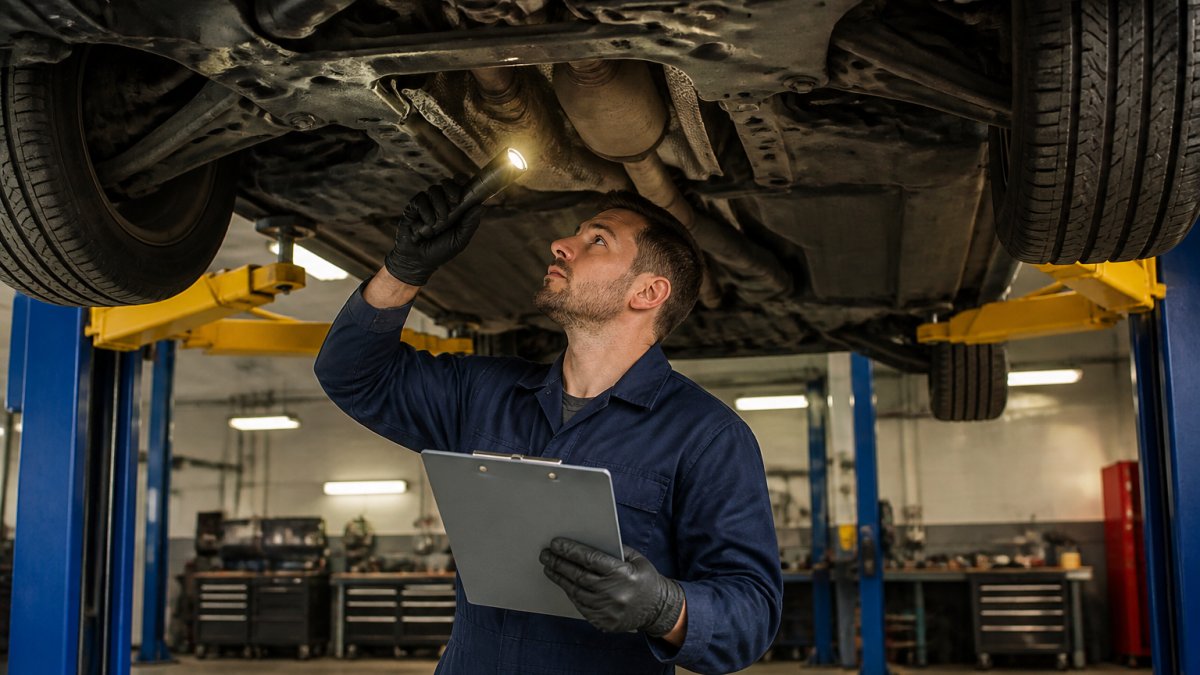
How to use this checklist
Work through each area in order and mark every item as pass, monitor, or repair. “Pass” means the item is serviceable now. “Monitor” means it is serviceable but approaching a limit or showing a symptom worth watching. “Repair” means it needs attention before the vehicle is roadworthy or before you accept the asking price. Photograph anything you mark as monitor or repair, and note the location and symptom.
Exterior and body
- Paint depth readings across panels to detect repaint and body filler
- Panel gaps and shut lines for consistency
- Frame rails, unibody structure, and crush zones for bends or weld repairs
Interior and electrical
- Dashboard warning lights during the bulb-check phase
- Stored diagnostic trouble codes and readiness monitors
- Power windows, seats, mirrors, and locks
Engine and engine bay
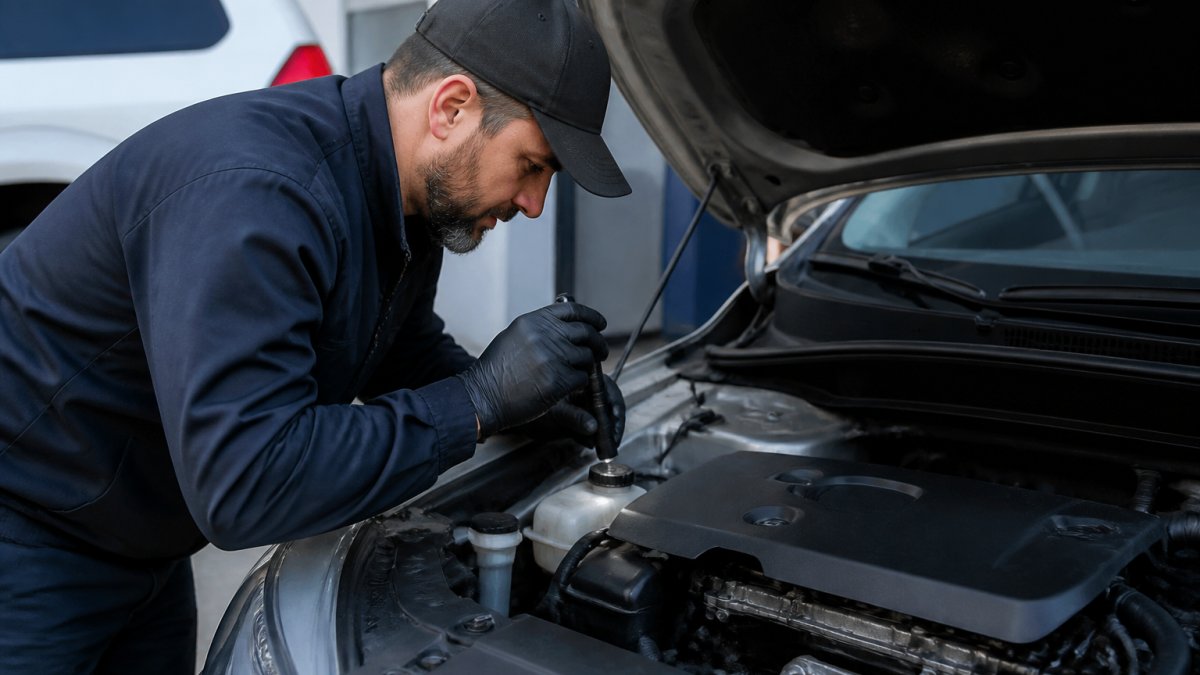
- Fluid levels and condition: oil, coolant, brake, power steering, washer
- Leaks at the valve cover, oil pan, timing cover, and coolant hoses
- Belt and hose condition, including cracks and glazing
Transmission and drivetrain
- Fluid color and smell
- Shift quality through the gears, including downshifts
- Torque converter behavior and clutch engagement
Brakes, steering, suspension, tires, and wheels
- Pad and rotor thickness against specification
- Rotor scoring, caliper seizure, and soft or long pedal feel
- Play in tie rods, ball joints, and steering rack
Fluids, leaks, and exhaust
- Underbody leaks and seepage at seals and gaskets
- Coolant condition and radiator and hose integrity
- Exhaust manifold, pipes, muffler, and hangers for leaks and rust
Frame and structural integrity
- Frame rails and unibody for bends, cracks, and weld repairs
- Floor pan and rocker panels for corrosion
- Suspension mounts and subframe attachment points
| Vehicle Area | What We Check | Why It Matters |
|---|---|---|
| Exterior and body | Paint depth, panel gaps, frame, rust | Reveals hidden accident damage |
| Interior and electrical | Warning lights, codes, electronics | Exposes cleared faults and failing modules |
| Engine and powertrain | Fluids, leaks, scan data, shift quality | The costliest repair category |
| Brakes and suspension | Pad and rotor wear, joints, struts | Directly affects safety |
| Tires and wheels | Tread depth, sidewall, build dates | Signals maintenance habits |
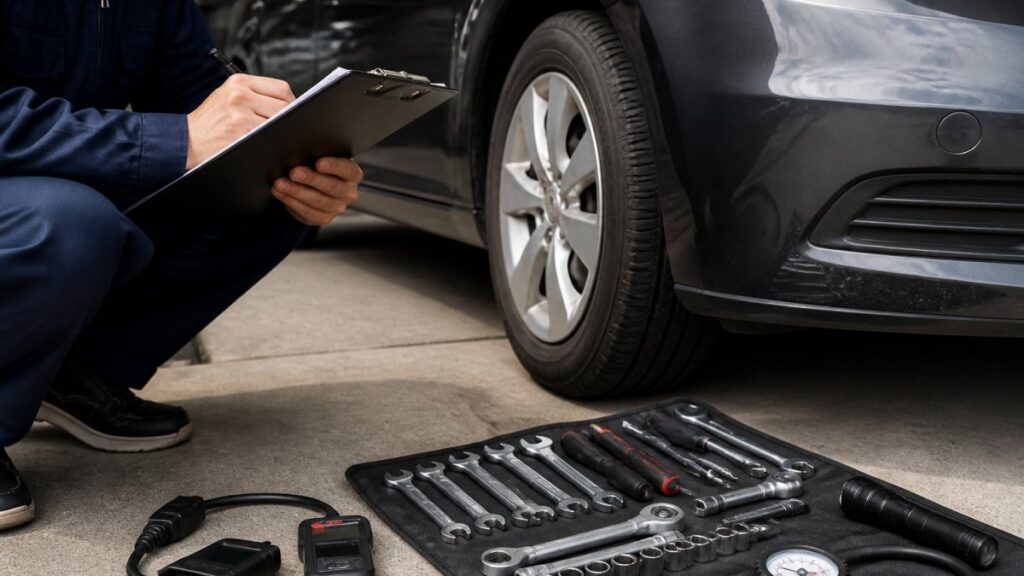
Print this checklist and bring it to the inspection. Ask the technician to note the location and symptom for every item marked monitor or repair, and to state which items could not be tested. That can turn a pass-or-fail report into a negotiating document.
What a Pre-Purchase Inspection Does Not Cover
A pre-purchase inspection is a condition assessment, not a guarantee. Understanding its limits is as important as understanding what it checks, because unrealistic expectations lead buyers to skip follow-up work or overpay for protection they already have. Here is what a typical inspection does not cover, and why.
It does not dismantle the vehicle
An inspector works with the vehicle assembled. That means anything sealed inside a component can escape detection on the day: a failing clutch pack inside a sealed transmission, a stretched timing chain behind a cover, a failing fuel pump inside the tank, or a wheel bearing that only howls at highway speed. A compression or leak-down test can flag cylinder problems, but it will not reveal a cracked piston ring land.
It does not predict future failure
An inspection reports condition at the moment of inspection. A brake pad with 4 mm of lining left is serviceable today and due soon; the report should say so, but it cannot tell you whether the alternator will fail next month. Components that pass on the day can fail later, and no inspector can warranty that outcome. That is the difference between an inspection and a warranty: an inspection describes current condition, while a warranty transfers future repair risk to a provider for a defined term and price.
It does not verify history, identity, or ownership
An inspection does not confirm the odometer reading, uncover a rolled-back cluster, verify a clean title, or check for liens, stolen status, or outstanding recalls. Those are separate checks. In most provinces, a vehicle history report and a lien search are available through provincial or private services, and a recall check can be run through the manufacturer using the VIN.
It does not certify compliance
A pre-purchase inspection is not a safety inspection, and it is not a regulatory compliance inspection. A safety inspection certifies that a vehicle meets the minimum standards required to be plated and driven, and it is performed under provincial rules. A pre-purchase inspection is voluntary, buyer-focused, and aimed at negotiation and risk assessment. Passing one does not mean the vehicle will pass a safety inspection, and failing one does not mean it is unsafe to drive.
It does not cover every system with equal depth
Some systems are checked visually and by scan tool; others are checked by measurement and road test. Expect deeper coverage of brakes, tires, steering, suspension, fluids, and diagnostic codes, and lighter coverage of items that require disassembly or extended driving. If a specific concern matters to you, such as a hybrid battery’s state of health or a diesel’s injector balance, say so before the inspection so the technician can allocate time and equipment.
An inspection report is a snapshot, not a warranty. If the seller offers a warranty, read what it covers, the term, the deductible, and who performs repairs. An inspection and a warranty solve different problems.
What to do with the limits
Use the report to price risk, not to eliminate it. If the inspection flags an item as “monitor,” ask the technician what symptom to watch for and roughly how soon it may need attention. If it flags a “repair,” get a written quote before negotiating. And if a major system could not be tested, treat that as an open question and price it accordingly rather than assuming it is fine.
How Long Does a Pre-Purchase Inspection Take?
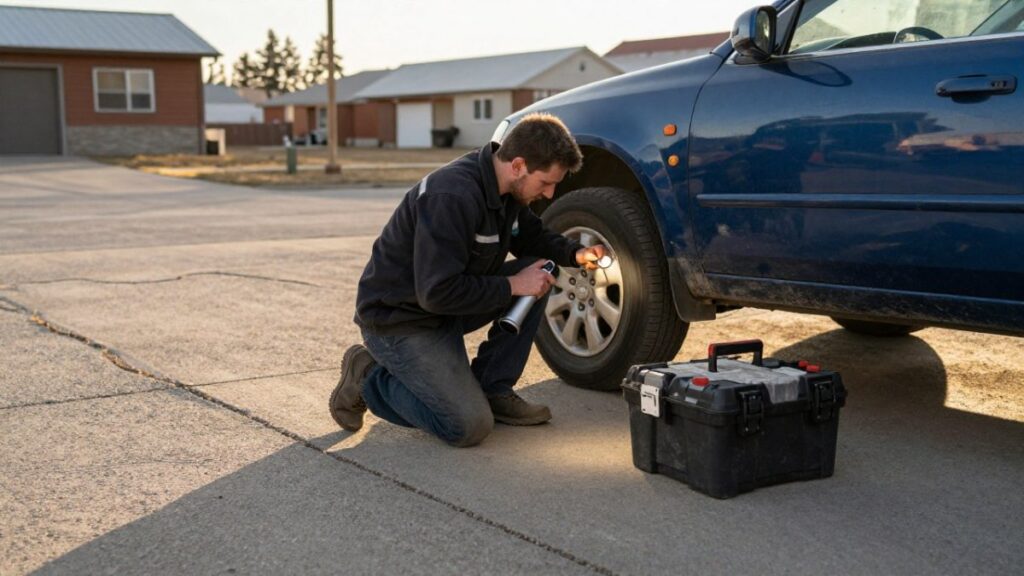
A thorough pre-purchase inspection takes roughly one to two hours on most passenger vehicles, longer on trucks, diesels, and performance cars with more systems to test. Preparation matters: have the vehicle cold when the inspector arrives so cold-start behavior can be observed, provide the keys and any service records, and confirm the seller will allow a lift or ramp check. Mobile inspections save the drive to a shop but still need safe, level ground and enough space to work around the vehicle.
Pre-Purchase Inspection Cost in Alberta
Pricing for a pre-purchase inspection in Alberta depends on vehicle type, location, and how detailed a report you want. For current prices or a quote, contact Vehicleinspectionservices directly. For current prices, contact Vehicleinspectionservices directly.
AMVIC Inspection Requirements and Pre-Purchase Inspections
AMVIC licensing governs vehicle sales in Alberta, and a pre-purchase inspection is not the same thing as an AMVIC-required inspection. Sellers and dealers have specific obligations under AMVIC rules, and buyers benefit from understanding which inspections are regulatory and which are voluntary. Read AMVIC Inspection Explained: What’s Included & Why It Matters for what an AMVIC inspection includes and why it matters.
How to Interpret Inspection Findings and Decide Next Steps
Inspection findings fall into three buckets: safety items that must be repaired before the vehicle is roadworthy, maintenance items that are due or overdue, and cosmetic issues that affect price but not safety. Price the safety and maintenance items using local repair quotes, then subtract them from the asking price, or ask the seller to complete the repairs before closing. If the report shows structural damage or a major powertrain fault, walk away. For a fuller framework on weighing the cost against the risk, consider the questions covered above when you review the inspection report.
Book Your On-Site Pre-Purchase Inspection
Buying a used vehicle in Alberta without an independent inspection is a gamble you do not need to take. Journeyman-certified mechanics can come to your location, work through the major systems, and provide a written report you can negotiate with. Contact Vehicleinspectionservices to learn what the pre-purchase inspection service includes and how to schedule it. Get started with Vehicleinspectionservices and buy your next vehicle with the facts in hand.
Frequently Asked Questions
What is included in a standard pre-purchase vehicle inspection?
A standard pre-purchase inspection covers the major mechanical and safety systems: engine and engine performance, transmission and gears, brakes, steering, suspension, tires and wheels, fluids and leaks, exhaust and emissions, plus exterior body condition, frame and structural integrity, and interior electronics. Many inspectors also include a road test. The inspection report lists worn or broken components and gives you a clear picture of the vehicle’s mechanical condition before you negotiate.
How much does a pre-purchase inspection cost in Alberta?
Pricing for a pre-purchase inspection in Alberta depends on the vehicle type, the depth of the inspection, and whether mobile service is requested. Rather than quote a fixed number, ask the provider for a quote based on your specific vehicle and location. Many buyers treat a pre-purchase inspection as essential due diligence.
How long does a pre-purchase inspection take?
The duration of a pre-purchase inspection depends on the vehicle and the scope. A basic inspection may be shorter, while a comprehensive inspection with a road test can take longer. Confirm the expected duration when you book. Knowing how long a pre-purchase inspection takes helps you schedule the seller’s time and plan your decision.
Does a pre-purchase inspection include a road test?
Many comprehensive inspections include a road test, but not all do. A road test lets the mechanic assess transmission shifting, engine performance under load, brake feel, steering response, and unusual noises or vibrations. If a road test is important to you, ask before booking. Some inspections may be limited if the vehicle is not insured or roadworthy, so clarify this upfront.
What happens if a pre-purchase inspection reveals major issues?
If the inspection reveals major issues, you have several options: negotiate the price down to reflect the repair cost, ask the seller to fix the problems before purchase, or walk away. The inspection report gives you documented evidence to support your position. Major findings like frame damage, transmission problems, or severe rust are often deal-breakers. Use the report to make an informed decision rather than relying on the seller’s word.
Can a mechanic tell if a car has been in an accident?
A mechanic can often spot signs of accident damage during a pre-purchase inspection: mismatched paint, uneven panel gaps, overspray, frame repairs, or replaced structural components. A thorough visual inspection of the body condition and frame, combined with a vehicle history report, improves the chances of detecting past damage. However, no inspection can guarantee a vehicle has never been in an accident, especially if repairs were done well. The inspection findings should be weighed alongside the vehicle history.
Who pays for a pre-purchase inspection?
The buyer typically pays for a pre-purchase inspection. It is a service you commission to protect your own interests before purchasing a used vehicle. Some sellers may agree to split the cost or provide a recent inspection report, but the standard practice is that the buyer covers the fee. Treat the cost as part of your overall purchase budget and ask for a quote before committing.
What are the AMVIC inspection requirements for sellers?
AMVIC licensing governs vehicle sales in Alberta, and certain inspections may be required depending on the transaction. AMVIC inspection requirements can include a mechanical fitness assessment for vehicles being sold by licensed businesses. If you are buying or selling a used vehicle, confirm the current AMVIC inspection requirements with a licensed inspector. A pre-purchase inspection is separate from an AMVIC inspection but can complement it by giving you a detailed condition report.
The gap between a car that looks clean and one that is actually sound is where money disappears. Let our team close that gap before you sign. Contact Vehicleinspectionservices to arrange an on-site inspection at your location.