

Last Updated: October 23, 2026
Quick Summary
To inspect a used car engine, start with a cold-engine visual check of the engine bay for leaks, rust, and suspiciously clean surfaces, then check oil and coolant condition, belts, hoses, and battery. Finish with an OBD-II scan and a warm-engine test drive, and walk away from milky oil, heavy sludge, or loud knocking.
- A freshly steam-cleaned engine bay is a red flag because it can hide fluid leaks.
- Milky oil or oily coolant signals internal damage and means you should walk away.
- Pull spark plugs to spot oil fouling, coolant, or heavy carbon deposits.
- Read stored, pending, and permanent codes, and never clear codes on a car you are inspecting.
- Incomplete readiness monitors suggest the battery was disconnected or codes were cleared.
Table of Contents
- Start With a Cold-Engine Visual Inspection of the Engine Bay
- Your Used Car Engine Inspection Checklist: Oil, Coolant and Leaks
- How to Check a Used Engine Without Starting It
- Belts, Hoses, Battery and Wiring: The Parts Buyers Skip
- Signs of Engine Problems in a Used Car: What Should Make You Walk Away
- Using an OBD-II Scanner for Used Car Inspection
- The Warm-Engine Test Drive and What to Listen For
- Frequently Asked Questions
Start With a Cold-Engine Visual Inspection of the Engine Bay
Learning how to inspect a used car engine starts before you turn the key.
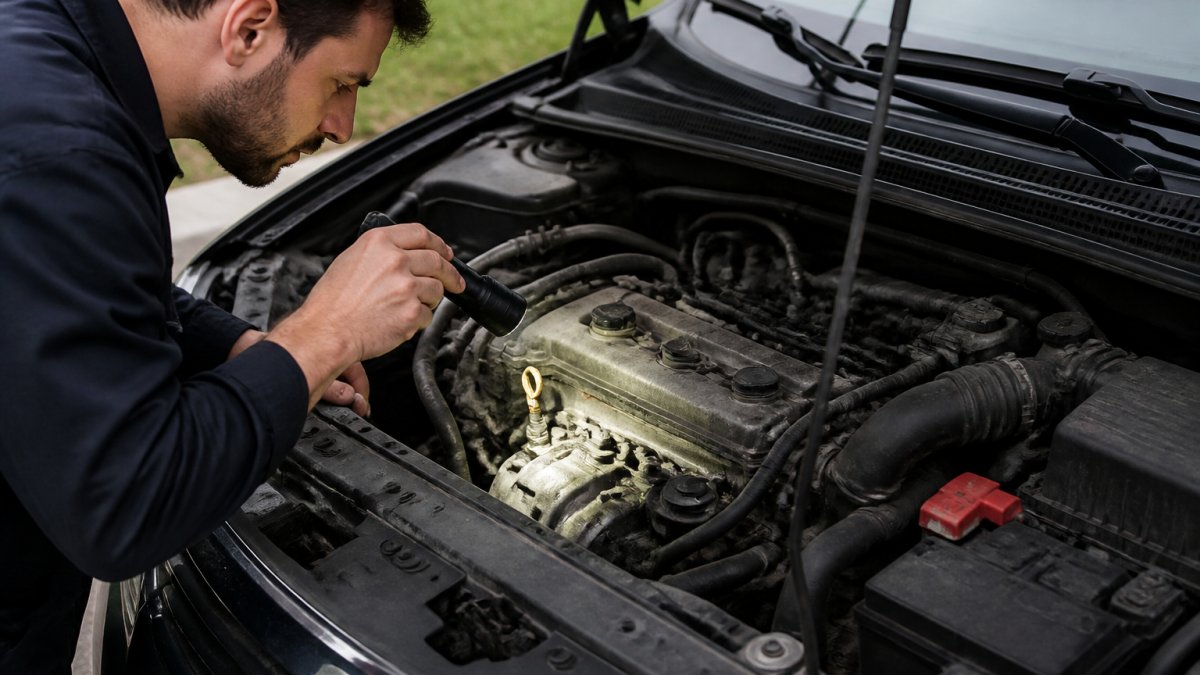
Open the hood and let your eyes adjust. Look for fresh drips under the car and dark patches on the ground. Then scan the engine bay itself.
- Check for rust, corrosion, and white scale on metal parts
- Look for oil residue around the valve cover and seals
- Smell for burnt oil or a sweet, syrupy odor
A freshly detailed engine bay is a red flag, not a bonus. Sellers clean engines to hide fluid leaks and buildup.
A steam-cleaned engine bay can mask active oil leaks and coolant residue. If the engine looks suspiciously spotless on an older car, ask why it was cleaned.
Used car engine inspection is the process of checking an engine’s fluids, seals, belts, and running behavior before you buy. Do it cold first, then warm.
Your Used Car Engine Inspection Checklist: Oil, Coolant and Leaks
The oil and coolant tell you the most about engine condition. Pull the dipstick and check both level and color. Clean oil looks amber and clear.
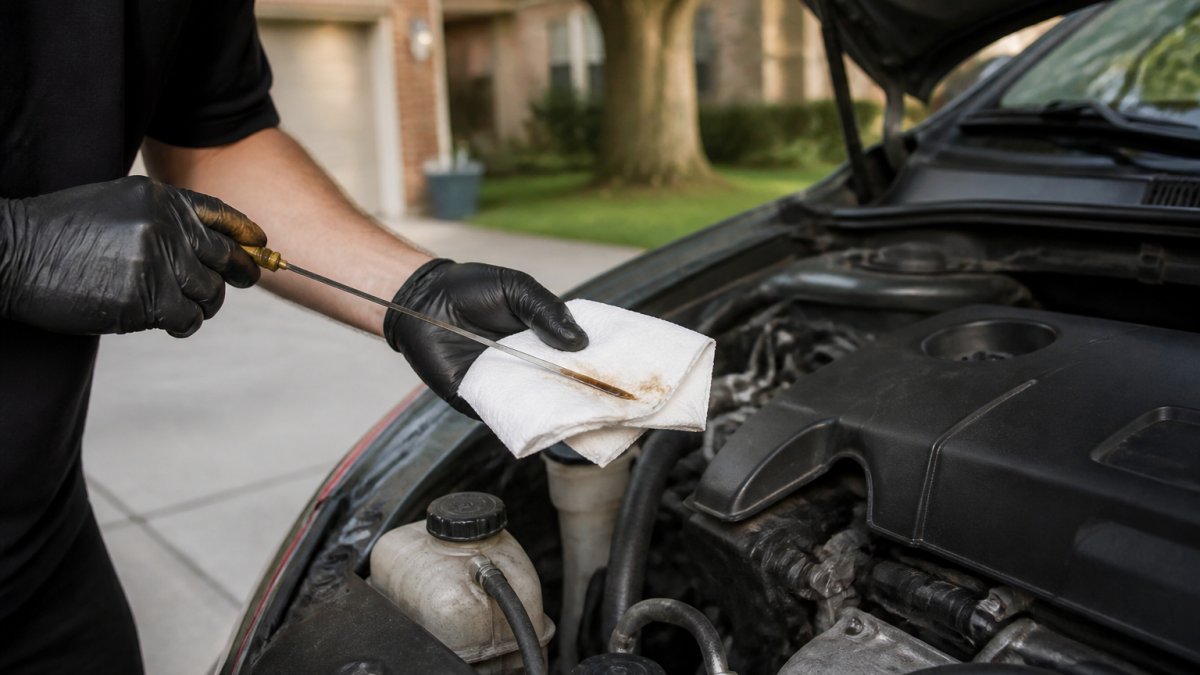
Use this checklist to record what you find:
- Oil level between the min and max marks
- Oil color amber to dark brown, no milky foam
- Coolant level at the cold fill line
Milky oil or oily coolant points to coolant mixing with oil, a sign of internal engine damage. Walk away from that car.
How to Check a Used Engine Without Starting It
A car that won’t start isn’t automatically a deal-breaker, but it changes what you can check. Without a running engine, you’re limited to static clues: whether the engine turns freely, whether fluids are contaminated, and whether the seller’s story matches what you see. Most buyers give up here; a careful static check still tells you plenty.
First, confirm the engine turns by hand
If you can reach the crank bolt, usually behind the passenger-side front wheel or under a splash shield, use a breaker bar and socket to turn the engine clockwise. You’re checking for resistance and smoothness, not speed.
- Turns smoothly with steady resistance: good sign. Compression is likely present in all cylinders.
- Turns partway then locks: possible internal damage, a broken timing component, or a hydro-locked cylinder. Stop and walk away.
- Won’t turn at all: could be seized, or could be a stuck accessory. Either way, treat it as a major unknown.
Never force a crank bolt counterclockwise, and never turn an engine by the cam bolt or accessory pulley, you can jump timing or damage components.
Check the plugs and fluids for internal clues
Pull one or two spark plugs and read the tips:
- Oil-fouled plugs (black, wet) suggest worn rings or valve guides.
- Coolant on the plug tips points to a head gasket or cracked head.
- Heavy carbon or ash deposits can indicate rich running or oil burning.
Then check the oil for metal flakes or a burnt smell, and look at the coolant for oil sheen or rust. Milky oil or oily coolant is a sign of coolant mixing with oil, internal damage that usually means a rebuild or replacement engine.
Compression and leak-down testing: what’s involved
A compression test measures how much pressure each cylinder builds when cranked. A leak-down test measures how well each cylinder holds pressure. Both require a gauge, a warm engine, and access to the spark plug holes.
- Compression test: remove all spark plugs, disable ignition and fuel, and crank the engine with the gauge in each hole. Compare cylinders, most manufacturers allow about 10-15% variation between the highest and lowest. A single low cylinder points to rings, valves, or a head gasket.
- Leak-down test: bring each cylinder to top dead center on its compression stroke and apply compressed air through the spark plug hole. Listen for air escaping at the intake, exhaust, or oil filler, each location points to a different failure.
These tests are best done by a mechanic with the right equipment. A compression test guide from a reputable automotive source explains what the numbers mean.
A no-start engine can still be inspected, but the limits are real. If the engine won’t turn by hand, shows contaminated fluids, or the seller blocks testing, the risk is usually too high for a typical buyer.
Wiring, connectors, and the check-engine light
Even without a start, turn the key to the run position and watch the dash. A check-engine light that stays on with the key turned, before cranking, means the computer has power and is reporting a fault.
Trace the wiring and sensor connectors for brittle insulation, taped repairs, or loose plugs. Rodent damage is common in cars that sit, and it can be expensive to repair.
Belts, Hoses, Battery and Wiring: The Parts Buyers Skip
Buyers focus on oil and forget the parts that leave them stranded.
Press each belt with your thumb. Cracks, glazing, or a shiny surface mean replacement is due. Squeeze the hoses: they should feel firm, not spongy, and show no bulges or cracks.
Check the battery terminals for white corrosion and loose clamps. Then trace the wiring and sensor connectors for brittle insulation, taped repairs, or loose plugs.
Bring a small flashlight and a rag. Shine light along the back of the engine where leaks hide, and wipe the dipstick clean before the second reading for an accurate oil level.
Signs of Engine Problems in a Used Car: What Should Make You Walk Away
Some findings are deal-breakers. Others are bargaining chips. Knowing the difference saves you from an expensive mistake.
Walk away from these signs of engine problems in a used car:
- Milky oil or oily coolant, which signals internal damage
- Heavy sludge under the oil cap or in the valve cover
- Blue smoke from the tailpipe, a sign of burning oil
Minor seepage at an old gasket is common and can be priced into the deal. Active leaks, contamination, and strange noises are not. When in doubt, a professional inspection gives you an objective answer.
Using an OBD-II Scanner for Used Car Inspection
An OBD-II scanner turns warning lights into real codes, but the codes alone don’t tell you whether to walk away. The value is in reading stored codes, pending codes, and readiness monitors together, then asking why they look the way they do.
Plug the scanner into the port under the dash, usually within reach of the driver’s seat, and turn the key to the run position without starting the engine.
What the codes actually mean
- Stored codes are faults the engine computer has already confirmed. A P0301, for example, means cylinder 1 misfire was detected more than once.
- Pending codes are faults seen once but not yet confirmed. They often precede a stored code and can point to an intermittent problem the seller may not know about.
- Permanent codes are emissions-related faults the computer keeps until it verifies the repair over several drive cycles. They can’t be cleared with a scan tool, so they’re harder to hide.
Look up each code by its exact number rather than the generic description on the scanner screen. A misfire code (P0300-P0308) points to ignition, fuel, or compression issues; a lean code (P0171) can mean a vacuum leak or a failing fuel pump. The code tells you where to look, not what to replace.
Readiness monitors: the tell that codes were just cleared
Readiness monitors are the engine computer’s self-tests for systems like catalytic converter, oxygen sensor, EVAP, and misfire. After a battery disconnect or a code clear, these monitors reset to “not ready” and only complete after a specific drive cycle.
- If most monitors are “not ready,” the battery was recently disconnected or codes were cleared, possibly to hide a fault.
- If only one or two monitors are incomplete, the car may simply not have been driven enough since the last service.
- If all monitors are complete and no codes are stored, that’s a good sign, but it doesn’t rule out a problem the computer hasn’t seen yet.
A common pattern is a seller clearing codes right before a viewing. If you see incomplete monitors on a car that’s been driven regularly, ask when the battery was last replaced and whether any work was done recently.
If the seller won’t let you plug in a scanner, treat that as a red flag. A scan takes two minutes and doesn’t alter the car. Refusing it suggests there’s something to hide.
If the scan shows stored misfire or lean codes, budget for a proper diagnosis before you make an offer, or walk away.
The Warm-Engine Test Drive and What to Listen For
Start the engine cold and listen. Then drive it and listen again. The warm-engine test drive reveals noises, smoke, and warning lights that a parked check can’t.
Watch for these during the drive:
- Knocking, ticking, or rattling that changes with speed
- Blue or white smoke from the exhaust
- A check-engine light that comes on under load
Let the car idle after the drive and watch the temperature. A cooling system that can’t hold steady is a problem waiting to happen. If anything feels off, get a second opinion before you hand over money.
Frequently Asked Questions
How do you check if a used car engine is in good condition?
Start with a cold visual inspection of the engine bay: look for oil leaks around the valve cover, fresh coolant residue, corroded battery terminals and cracked belts or hoses. Pull the dipstick to check oil level and condition, and confirm the coolant is clean rather than milky or rusty. Then scan for stored diagnostic codes, test-drive the car until it reaches operating temperature, and listen for knocking, ticking or misfires. A used car engine that starts cleanly, idles smoothly and shows no warning lights after a proper drive is usually in reasonable shape, but only a compression test or a mechanic’s inspection confirms internal condition.
Can an OBD-II scanner help inspect a used car engine?
Yes. An OBD-II scanner for used car inspection shows stored and pending trouble codes, freeze-frame data and readiness monitor status. Readiness monitors matter as much as the codes: if a seller recently cleared the codes, several monitors will read ‘not ready,’ which is a red flag that problems may have been hidden. A basic code reader costs little and plugs into the port under the dash, but it will not reveal mechanical wear. Use it to confirm the check-engine light story matches reality, then book a professional inspection if anything looks off.
How can you inspect a used engine before starting it?
A cold engine tells you more than a warm one. Open the hood before the seller starts the car and check that the engine is actually cold to the touch, since sellers sometimes warm up a rough starter in advance. Look for oil residue under the valve cover and around the oil pan, check coolant level and colour in the reservoir, inspect belts for glazing or cracks, and look for corrosion on battery terminals and sensor connectors. Smell the oil on the dipstick for fuel or burnt notes. Any fresh fluid on the ground beneath the car is worth asking about before you turn the key.
What engine noises are warning signs in a used car?
Deep knocking from the lower engine, especially under acceleration, can point to worn bearings and is expensive to fix. A rhythmic ticking that speeds up with RPM may be lifter or valve train wear. Whining from the front often means a failing belt tensioner or accessory pulley, while hissing can indicate a vacuum or coolant leak. Misfire codes paired with a shaking idle suggest ignition or compression problems. Some noises are minor, but knocking and heavy ticking are reasons to walk away or insist on a mechanic’s inspection before you commit.
Buying a used car is stressful enough without surprises under the hood. Vehicleinspectionservices brings journeyman-certified mechanics to your location for on-site pre-purchase, insurance, and AMVIC inspections, so you get an objective read before you commit. Our mobile service saves you a trip to a shop, and our decade of experience in Alberta means we know what to look for. Contact us to book your inspection and buy with confidence.
