

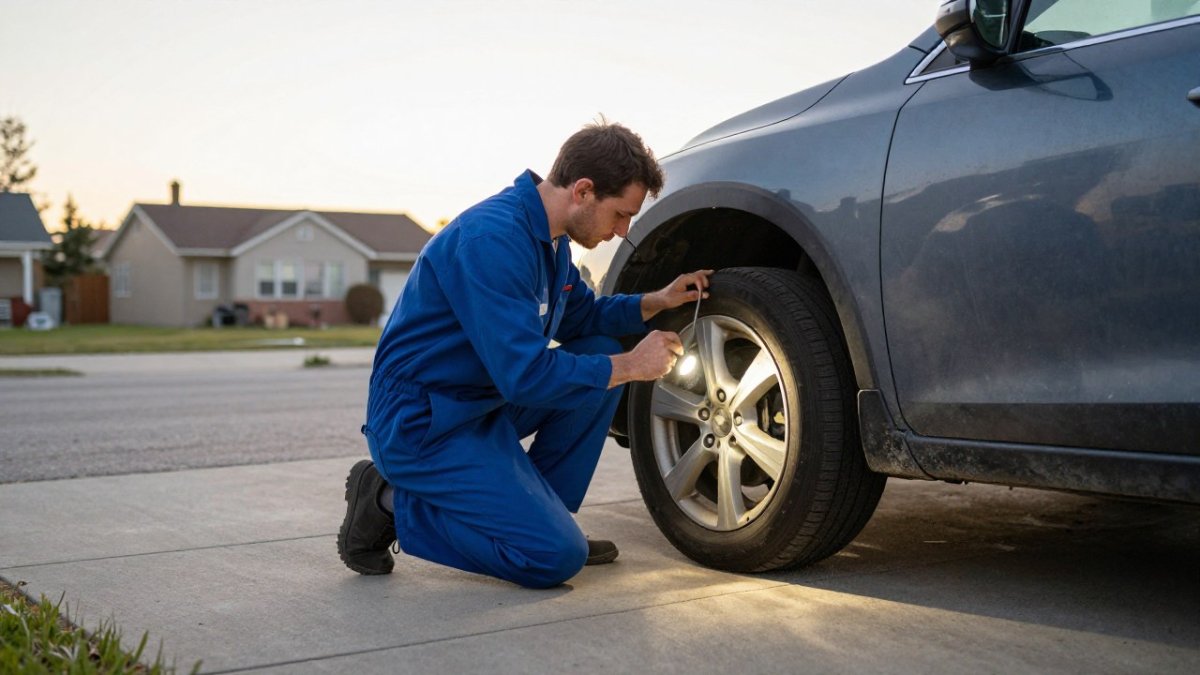
Quick Summary
The best way to catch minor car issues is to check your vehicle regularly, using a five-minute weekly walk-around, a fifteen-minute monthly check and a step-by-step fluid check. Early detection keeps repairs cheaper, faster and safer than waiting for something to break.
- Do a five-minute walk-around each week, checking tires, leaks, lights and engine sounds.
- Run a fifteen-minute monthly check covering tire pressure, tread depth and battery terminals.
- Record the date, mileage and any unusual symptom so a technician has concrete details.
- Never ignore a warning light, since it is often the only early signal you will get.
- Stop driving if brakes, steering or engine temperature show a serious problem.
Table of Contents
- Why Minor Car Issues Are Easier and Cheaper to Fix Early
- Build a Weekly and Monthly Early-Detection Routine
- How to Check Car Fluids Step by Step
- Car Warning Signs and Symptoms You Should Never Ignore
- Car Noises and Their Meanings
- Normal Behaviour Versus a Real Early Warning Sign
- Booking Your Next Inspection With Vehicleinspectionservices
- Frequently Asked Questions
Why Minor Car Issues Are Easier and Cheaper to Fix Early
Last Updated: November 15, 2026
Most drivers wait until something breaks before they pay attention to their car. That habit costs money.
Small issues tend to stay small only for so long.
Alberta makes this more important. Extreme cold, icy roads and sudden temperature swings put extra strain on batteries, fluids and tires.
Here is what early detection usually saves you:
- Repair costs: A fluid top-up or a single worn part costs far less than an engine or transmission repair.
- Time off the road: A planned service fits your schedule. A breakdown does not.
- Safety: Failing brakes or steering problems are easier to fix before they put you in danger.
- Resale value: A well-kept vehicle with a documented service history sells for more.
Watch out: Ignoring a warning light because the car still drives normally is one of the most common and costly mistakes.
Build a Weekly and Monthly Early-Detection Routine
A routine turns vague worry into a simple habit. You do not need special tools for most of it. You only need a few minutes and a consistent schedule. The goal is to compare your vehicle against its own normal baseline, not against a generic checklist, so you notice what has changed since last week.
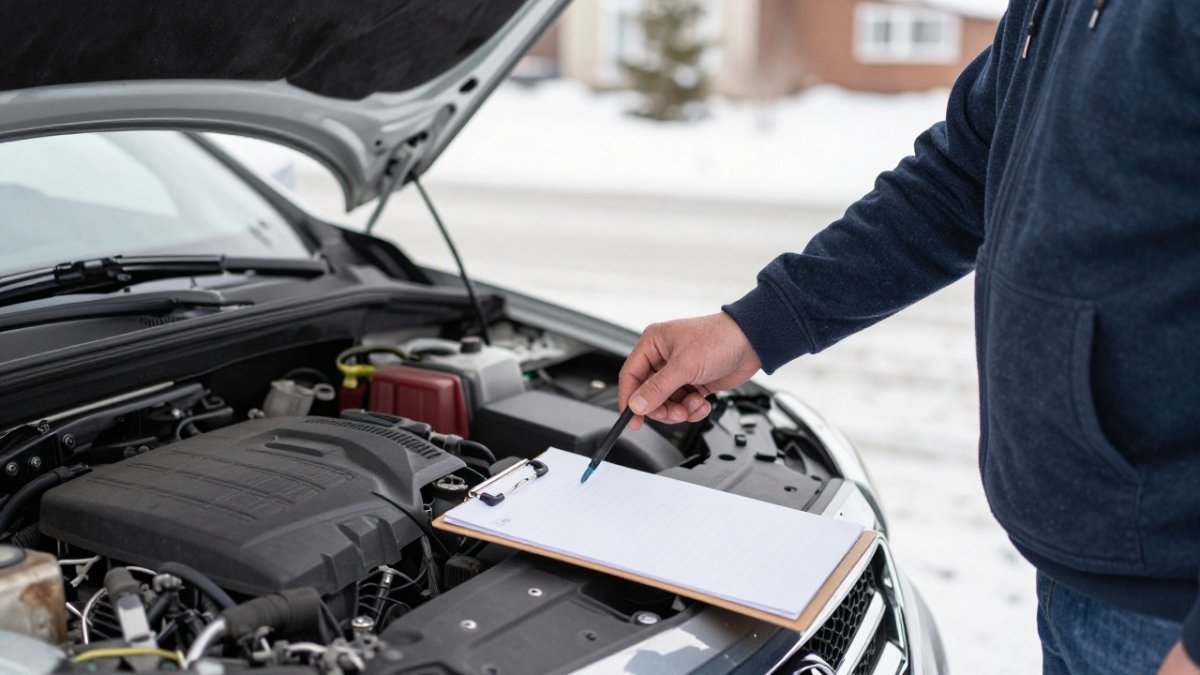
The weekly five-minute walk-around
Do this at the same time each week, ideally in daylight and on level ground. Work in the same order every time so you do not skip a step:
- Walk to the rear passenger corner and circle the car clockwise. At each corner, glance at the tire sidewall and the ground beneath it.
- Check each tire for a visible bulge, cut, or object stuck in the tread. A tire that looks low but holds pressure may have a slow puncture.
- Look at the ground under the engine and transmission area. A fresh spot is a leak until proven otherwise. Note the color and approximate size.
- Test the lights with a wall or a helper. Headlights, brake lights, turn signals, and hazards. A single dead brake light is easy to miss from the driver’s seat.
- Listen at idle for ten seconds with the radio off. A new tick, hiss, or rattle is easier to catch in a quiet weekly check than in traffic.
Record the date, mileage, and anything unusual in a notebook or phone note. A photo of a fluid spot next to a coin for scale is more useful than a description alone.
The monthly fifteen-minute check
Set a recurring reminder. The monthly check goes deeper than the walk-around but still stays within what a beginner can do safely:
- Tire pressure, including the spare. Use the placard on the driver’s door jamb, not the number molded on the tire sidewall. Check when tires are cold.
- Tread depth. Use the tread-wear indicators built into the grooves, or a quarter inserted upside down. If the tread is level with the indicator, plan replacement.
- Uneven wear pattern. Run your hand across the tread. A feathered or cupped pattern points to alignment or suspension wear.
- Wiper blades and windshield. Look for cracks, streaks, or a chattering edge. Top up winter-rated washer fluid.
Seasonal additions before cold weather
Before the first hard freeze, add a battery load test, confirm the block heater cord and outlet work, and check that the winter tires are mounted and correctly inflated.
Watch out: A weekly walk-around is not a substitute for a professional inspection. If you find a fluid spot, a bulging tire, or a light that will not come on, treat it as a finding to act on, not a box to tick until next week.
How to Check Car Fluids Step by Step
Fluids are the easiest place to catch a problem early. Most checks take under five minutes. Always park on level ground and let the engine cool first, unless your owner’s manual says otherwise.
- Engine oil: Pull the dipstick, wipe it clean, reinsert it fully, then pull it out again. The oil should sit between the two marks. Note the colour too. Dark oil is normal, but milky or gritty oil needs a closer look.
- Coolant: Check the overflow reservoir when the engine is cold. The level should sit between the minimum and maximum lines. Never open a hot radiator cap.
- Brake fluid: Look at the reservoir under the hood. A level that drops steadily between checks can point to a leak or worn pads.
- Washer fluid: Top it up. Use a winter-rated mix in cold weather so it does not freeze in the reservoir.
- Power steering fluid (if equipped): Check the reservoir level and look for dark or foamy fluid.
- Transmission fluid (if equipped): Many newer vehicles have sealed transmissions. Follow the owner’s manual for the correct method.
What a low level usually means: A fluid that is low but not empty may be using up slowly, which is normal in some engines. A fluid that drops between checks is leaking until proven otherwise.
Car Warning Signs and Symptoms You Should Never Ignore
Some signs need prompt attention. Others can wait for a planned visit. The difference is not the symptom itself but the pattern: how new it is, how fast it is changing, and whether it affects a system you rely on to stop or steer. Use the triage framework below to decide what to do next, then log the symptom so a technician has something concrete to work with.
Triage: stop, book soon, or monitor
| Tier | What it looks like | What to do |
|---|---|---|
| Stop driving | Brake pedal sinks or feels soft; steering pulls hard or feels loose; engine temperature gauge climbs into the red; smoke or a burning smell; a flashing check-engine light with rough running | Pull over safely, turn off the engine, and arrange a tow or roadside service. Do not drive on. |
| Book soon | Steady check-engine light; battery light; slow cranking; a new vibration at speed; a fluid level that keeps dropping; grinding when braking | Reduce speed, avoid long trips, and book service within a few days. |
| Monitor and log | A single new rattle over bumps; a faint tick at cold start that fades; a minor oil seep with a stable level | Record it, check the relevant fluid, and re-check in a week. Escalate if it grows. |
How to document an intermittent symptom
Problems that disappear before a mechanic sees them are the hardest to diagnose. A short log closes that gap. For each event, note:
- Date and mileage.
- Conditions: cold start or warm engine, outside temperature, road surface, speed, turning or braking.
- The symptom: the sound, smell, vibration, or warning light, and how long it lasted.
- What made it stop: releasing the brake, accelerating, or nothing.
A phone voice memo recorded at the moment is often more useful than a written description later. Say the speed, the road, and what you hear. Bring the log to the appointment; a technician can often match a pattern to a known fault faster than a one-line complaint allows.
Reading warning lights and codes without overdiagnosing
A steady check-engine light usually means the onboard computer has stored a diagnostic trouble code. Those codes point to the system that needs attention, not always the exact part.
A code is a starting point, not a diagnosis. A misfire code, for example, can come from a spark plug, an ignition coil, a vacuum leak, or a fuel-delivery fault.
Watch out: A flashing check-engine light is different from a steady one.
Normal behavior versus a real early warning sign
Not every change is a problem. Cars make some noise and behave differently in cold weather. The difference lies in whether a change is new, growing, or repeating against your vehicle’s own baseline.
Normal behavior usually includes a slightly slower start on very cold mornings, a brief dash light on startup that goes out, and a faint tick from the engine as it warms.
When you are unsure, log it and watch for a pattern.
Car Noises and Their Meanings
Sounds often give the first warning. Note when the noise happens: cold start, braking, turning, or at speed.
- Squealing when braking: Often worn brake pads with built-in wear indicators.
- Grinding when braking: Pads are likely worn through. Get this checked promptly.
- Knocking from the engine: Can signal low oil or a serious internal issue. Stop and check oil right away.
- Rattling over bumps: Often a loose heat shield, exhaust clamp or suspension bolt.
A simple way to document a noise is to record it on your phone. Say the speed, the road surface and the weather. This gives a mechanic far more to work with than “it makes a sound.”
Normal Behaviour Versus a Real Early Warning Sign
Not every change is a problem. Cars make some noise and behave differently in cold weather. The difference lies in whether a change is new, growing or repeating.
Normal behaviour usually includes:
- A slightly slower start on very cold mornings.
- A brief dash light that appears on startup and goes out.
- A faint tick from the engine as it warms up.
A real early warning sign usually includes:
- A symptom that is new and does not go away.
- A symptom that gets worse each time you drive.
- A change in how the car responds, such as hesitation or a rough idle.
When you are unsure, document the symptom. Note the date, the conditions and how often it happens.
Watch out: Basic checks have limits. They can catch leaks, low fluids and obvious wear. They cannot confirm the internal health of an engine or transmission.
Booking Your Next Inspection With Vehicleinspectionservices
Early detection works best with a professional eye on your vehicle. Vehicleinspectionservices offers on-site mobile inspections across Alberta.
You can also review our inspection services to see what each visit covers before you book. For drivers in Alberta, our winter vehicle checkup guidance explains what to prioritize before the cold season.
When you are ready, contact us to arrange a visit. For a fuller picture of what a professional inspection involves, see our pre-purchase inspection guide.
Frequently Asked Questions
What are the early signs that something is wrong with your car?
The most common early signs are a warning light that stays on, a change in how the car brakes, steers or accelerates, a new smell such as burning oil or sweet coolant, and fluid spots under the vehicle. Vibration through the steering wheel or a pull to one side can also point to tire or alignment problems. Any sign that appears suddenly, gets worse, or affects safety should be checked promptly rather than monitored for weeks.
How often should I check my car for problems?
A quick walk-around and dashboard check once a week takes only a few minutes and catches most changes early. Once a month, check engine oil, coolant, washer fluid, brake fluid and tire pressure, including the spare if you have one. Record what you find in a notebook or phone note so you can spot trends, such as oil level dropping between checks, which is more useful than a single reading.
What should I check if a warning light comes on?
First, note whether the light is steady or flashing and whether any other symptoms appear. Check the owner’s manual to confirm what the symbol means. A flashing engine light or a red warning light usually calls for stopping safely and arranging service. A steady amber light can often wait for a scheduled visit, but book a diagnostic scan and record a fault code, which a basic OBD-II reader can help you retrieve, so the mechanic has a starting point.
When should I take my car to a mechanic?
Book a visit soon if a warning light stays on, you notice a new noise, a fluid leak continues, the car overheats, the brakes feel different, or the car starts slowly or behaves unpredictably. Keep a short log of when the symptom happens, such as cold starts, braking or highway speeds, and share it with the technician. If the car is unsafe to drive, stop and arrange towing rather than risking a larger failure.