
Last Updated: November 17, 2026
Quick Summary
The five most common reasons cars fail alberta inspections are worn brakes, tires below the tread limit or poorly aligned, cracked windshields or worn wipers, burnt-out lights or electrical faults, and steering, suspension, leak or frame problems. Most of these come from normal wear that drivers stop checking.
- Worn brake pads, scored rotors and uneven braking are the most common cause of failure.
- Measure tread depth with a gauge at several points on each tire, not just the outer edge.
- Uneven tire wear usually signals an alignment problem, so fix alignment before replacing tires.
- Test every light, including brake lights and turn signals, with a helper before your inspection.
- Keep the written inspection report after a fail and get failed items in writing before authorizing repairs.
Table of Contents
- Why Alberta Vehicle Inspections Fail So Often
- Reason 1: Worn Brake Pads, Rotors and Uneven Braking
- Reason 2: Tires Below the Tread Limit or Poorly Aligned
- Reason 3: Cracked Windshields and Worn Wiper Blades
- Reason 4: Burnt-Out Lights and Electrical Faults
- Reason 5: Steering, Suspension, Leaks and Frame Damage
- Pre-Inspection Vehicle Maintenance Checklist and What Happens After a Fail
- Booking Your Next Alberta Inspection With Confidence
- Frequently Asked Questions
Every winter and summer, Alberta drivers face the same frustrating moment: their car fails a safety inspection over something small they never noticed. At Vehicleinspectionservices, the same five problems come up again and again across alberta inspections. Knowing them ahead of time can save you a failed inspection, a second trip, and a lot of stress.
Why Alberta Vehicle Inspections Fail So Often
Most failures are not surprises to the mechanic. They come from wear items that drivers simply stop checking. Brakes, tires, glass, lights and steering parts all wear down slowly, so the change feels gradual.
A common mistake is assuming a car that drives fine will pass. Inspectors look at specific measurements and conditions, not how the car feels on the road. Alberta’s cold winters, road salt and gravel can speed up wear, which is why these five areas show up so often.
Reason 1: Worn Brake Pads, Rotors and Uneven Braking
Brakes are the most common reason vehicles fail. Pads wear thin, rotors become scored or warped, and uneven braking pulls the car to one side.
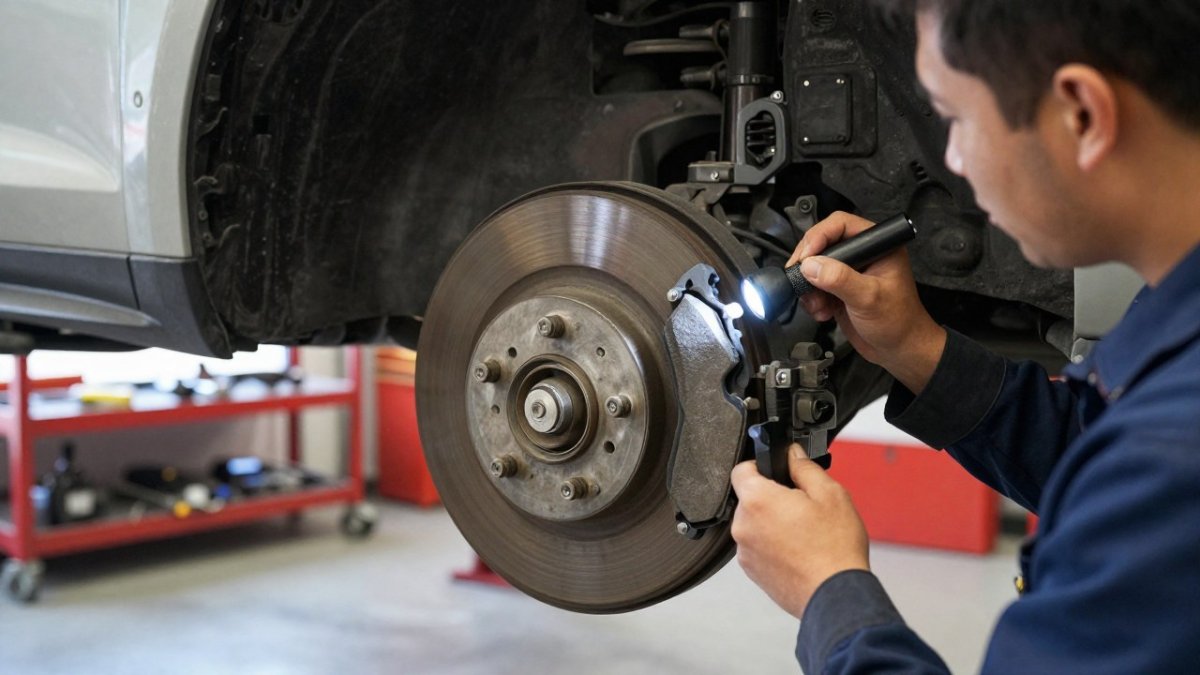
- Pads that are worn close to the backing plate
- Rotors with deep grooves, cracks or heavy scoring
- Pulling or vibration when braking
- Brake fluid that is low or dirty
Watch out: A squeal or grinding noise often means the pads are already past their safe limit. Waiting until the inspection to find out can turn a simple pad job into a rotor replacement.
Reason 2: Tires Below the Tread Limit or Poorly Aligned
Tires are checked for tread depth, even wear, sidewall condition and matching. Worn tires lose grip on wet and icy roads, and uneven wear often points to an alignment problem that an inspector will flag.
- Tread depth below the legal minimum in the tire’s main grooves
- Bulges, cuts or exposed cords in the sidewall
- Uneven wear across the tread, a sign of alignment or suspension trouble
- Mismatched tire sizes or types that affect handling
- Cuts, punctures or repairs that compromise the tire’s structure
Tread depth is measured against a minimum set by the applicable inspection standard, so a tread depth gauge gives a more reliable answer than a visual check. Confirm the current requirement with the official Alberta inspection standard or your inspection provider. Measure at several points across each tire, not just the outer edge.
A simple coin test can give a rough reading, but a gauge gives a more accurate answer. If you can see the wear bars molded into the tread grooves sitting flush with the surface, the tire is at or near the limit and should be replaced before inspection.
Watch out: Uneven wear across a tire often means the alignment is out, and replacing the tire without correcting the alignment will just wear the new one the same way. Have the alignment checked if you see inner- or outer-edge wear.
Tire pressure also matters. Under-inflated tires wear faster on the shoulders and can affect handling during the road test portion of an inspection. Check pressures cold against the placard on the driver’s door jamb, not the maximum printed on the sidewall.
Reason 3: Cracked Windshields and Worn Wiper Blades
A windshield must give the driver a clear view. Cracks, deep chips in the driver’s line of sight and worn wipers can all cause a failure.
- Cracks that run across the driver’s sightline
- Chips or pits in the wiper path
- Wiper blades that streak, skip or leave gaps
- A washer system that does not spray properly
Small chips are often cheap to fix before they spread. Once a crack grows, the glass usually needs replacing.
Reason 4: Burnt-Out Lights and Electrical Faults
Every light on the car must work. This includes headlights, high beams, brake lights, turn signals and the license plate light. A single burnt bulb is one of the easiest failures to avoid.
- Headlights that are dim, yellowed or uneven
- Brake lights or turn signals that do not work
- Loose wiring or fault warning lights on the dash
- Electrical equipment that cuts out or flickers
Test every light with a helper before your inspection. It takes five minutes and prevents an avoidable fail. For a full pre-winter check of lighting and electrical readiness, see why a winter vehicle checkup is essential in Alberta.
Reason 5: Steering, Suspension, Leaks and Frame Damage
These are the failures drivers often feel but do not see. Worn steering and suspension parts make the car wander, bounce or clunk over bumps.
- Loose or worn tie rods, ball joints or bushings
- Shocks or struts that leak fluid or no longer control the car
- Fluid leaks from the engine, transmission or brakes
- Rust or frame damage that affects structural integrity
Frame rust is especially common on Alberta vehicles that see road salt every winter. Inspectors check for rust that weakens the structure, not just surface rust.
Pre-Inspection Vehicle Maintenance Checklist and What Happens After a Fail
Use this checklist a week before your appointment so there is time to fix anything you find:
- Brake pads and rotors look and feel normal, with no grinding or pulsing
- Tread depth is above the legal minimum on all four tires, measured with a gauge
- No cracks in the windshield’s driver’s sightline and no chips in the wiper path
- Wiper blades clear the glass cleanly and the washer sprays properly
- All headlights, high beams, brake lights, turn signals and the license plate light work
- No warning lights on the dash
- No visible fluid leaks under the car
- Steering feels tight and the car tracks straight
- Seat belts latch and retract correctly
- Horn works
What happens after a fail: The inspector gives you a written inspection report listing each defect that caused the failure. That report is your record, so keep it. Check the timeframe stated on the report for completing repairs and re-inspection. Ask the shop to note on the report or a repair invoice exactly what was fixed, because the re-inspection focuses on the failed items and clear documentation speeds that up.
Repair costs vary by vehicle and by defect. Get the failed items in writing before authorizing repairs so you can compare quotes.
If you disagree with a finding, ask for the specific measurement or condition behind it, such as the tread reading or the play in a tie rod, and seek clarification from your inspection provider. The goal is to understand exactly what failed and why.
Before booking, check these common failure points and the fix for each, using the article’s guidance.
| Problem | Cause | Fix |
|---|---|---|
| Worn brake pads or rotors | Pads worn near backing plate; rotors scored | Replace pads; resurface or replace rotors |
| Tires below tread limit | Normal wear over time | Replace tires; measure with a tread gauge |
| Uneven tire wear | Alignment or suspension problem | Get alignment checked before replacing tires |
| Cracked windshield | Cracks spread across driver’s sightline | Repair small chips early; replace glass if cracked |
| Burnt-out lights | Failed bulbs or faulty wiring | Test every light with a helper before inspection |
| Steering or suspension wear | Worn tie rods, ball joints or shocks | Inspect and replace worn parts |
Booking Your Next Alberta Inspection With Confidence
Most failures are preventable with a little attention before alberta inspections day. Work through the checklist, fix the small problems early, and you will walk in knowing what to expect.
If you want a professional check before you book, Vehicleinspectionservices can come to you. If a failed item needs fixing before re-inspection, you can get on-site repair and maintenance help instead of going to a shop. Our on-site team covers pre-purchase, insurance and AMVIC inspections. Get started with Vehicleinspectionservices and drive into your inspection with confidence. You can learn how to book an on-site car safety inspection step by step.
Frequently Asked Questions
What are the most common reasons a car fails an Alberta inspection?
The most frequent Alberta inspection failures involve worn brake pads and rotors, tires below the legal tread limit, cracked or chipped windshields that obstruct the driver’s view, burnt-out or misaligned lights, and steering or suspension components with excessive play. Fluid leaks and worn wiper blades also cause failures. Checking each of these items before your appointment is the most reliable way to avoid a failed report and a repeat inspection fee.
Can worn tires cause a vehicle to fail an inspection?
Yes. Tires must meet the minimum tread depth requirement and must not show bulges, exposed cords, or uneven wear that indicates an alignment or suspension problem. Inspectors also check that tires on the same axle are reasonably matched. Measuring tread depth with a penny or a gauge before your inspection helps you decide whether replacement is needed.
What happens if a vehicle fails an Alberta inspection?
A failed inspection produces a written report listing each defect that must be corrected. For most inspection types you then have a set period to complete the repairs and have the vehicle reinspected. Repair costs vary widely depending on the defect, the vehicle and the parts required, so get a written estimate before authorizing work. Ask your inspection provider about any reinspection fee and what it covers.
How can I prepare my car for an Alberta inspection?
Walk around the vehicle with a checklist covering tire tread, brake warning lights, headlights, signal lights, windshield condition, wiper blades, washer fluid, and any visible fluid leaks. Check that the horn, mirrors and seatbelts work, and look for rust or damage to the frame. Fixing small items such as a burnt bulb or worn wiper blade before the appointment costs little and removes easy failure points from your report.