
Table of Contents
- What a Courtesy Vehicle Check Actually Includes
- Courtesy Check vs. Full Inspection: What’s the Difference?
- How to Catch Minor Car Issues Early With a Courtesy Check
- When to Get a Courtesy Check (and How Long It Takes)
- AMVIC Inspection Requirements and Where a Courtesy Check Fits
- Reading Your Vehicle Health Report Without the Upsell Pressure
- Frequently Asked Questions
Last Updated: September 21, 2026
What a Courtesy Vehicle Check Actually Includes
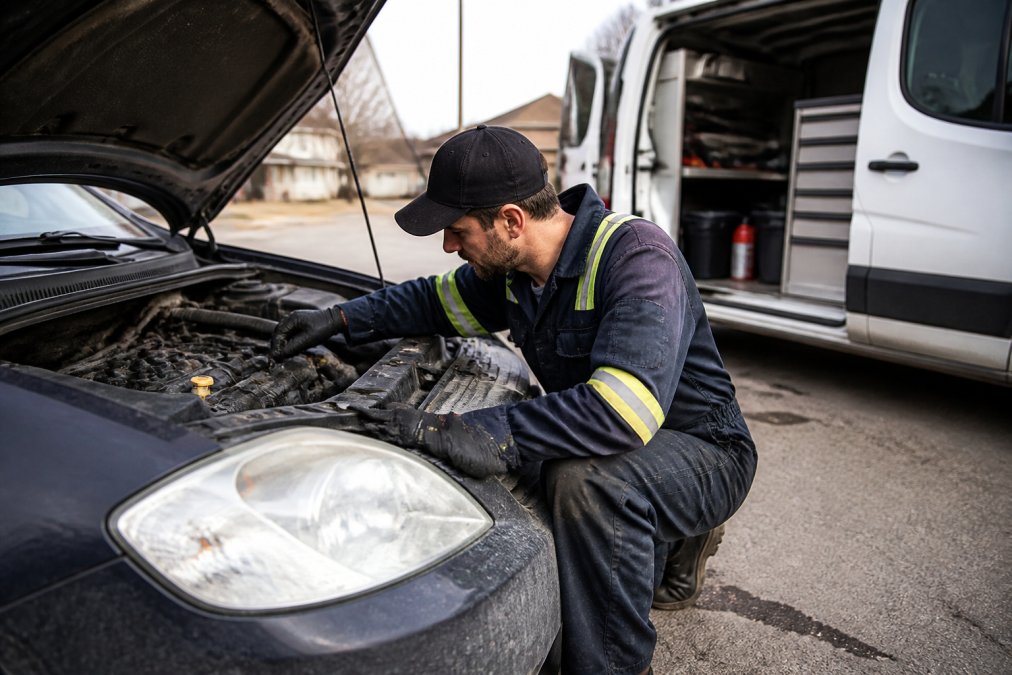
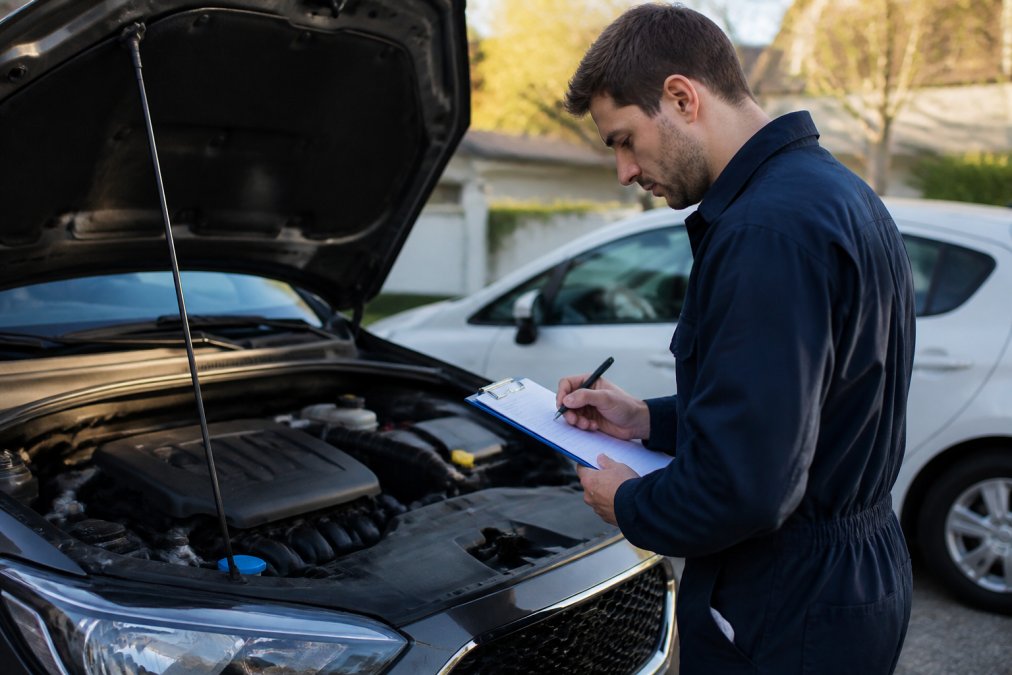
A courtesy vehicle check is a free, quick visual inspection of your car’s key safety and maintenance points, usually completed in about 15 to 30 minutes. It covers fluid levels, tire condition, brakes, lights, belts, hoses, and the battery, but it does not replace a full paid inspection. At Vehicleinspectionservices, our journeyman-certified mechanics run courtesy checks as part of our on-site service across Alberta.
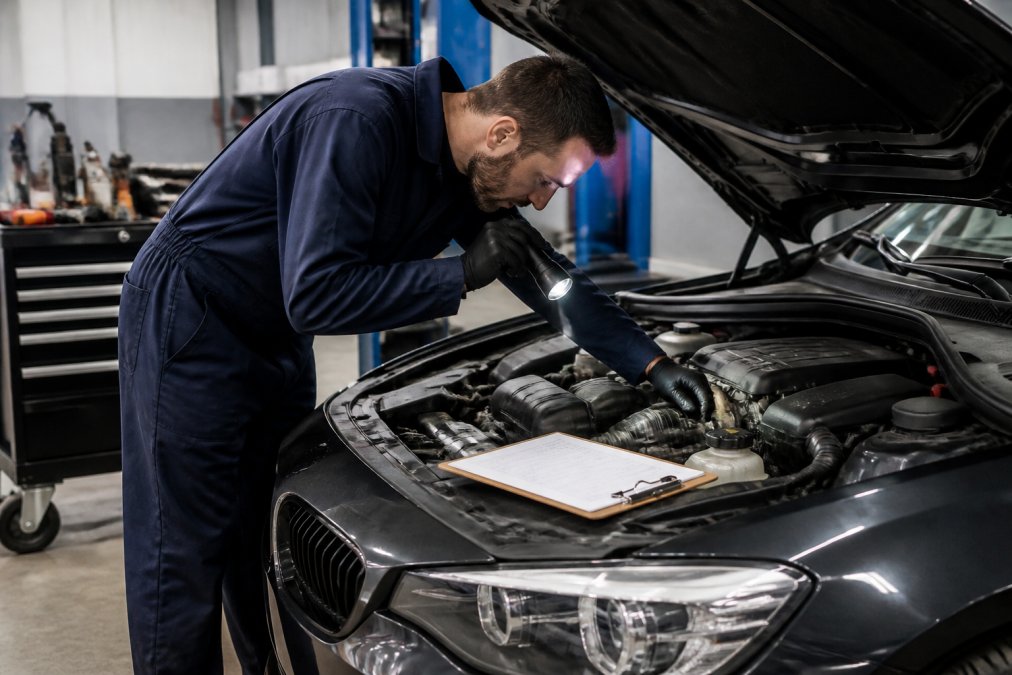
Most drivers picture a courtesy vehicle check as a vague “quick look.” It’s more structured than that. A good technician follows a set list, notes what’s fine and what’s wearing down, and hands you a written or digital summary.
Under-Hood and Fluid Checks
The under-hood inspection is where a courtesy check earns its keep. Your technician checks:
- Engine oil level and color
- Coolant strength and level in the overflow tank
- Brake fluid moisture content
- Windshield washer fluid
- Power steering fluid on hydraulic systems
- Belts and hoses for cracks, glazing, or soft spots
- Air filter condition
Fluid levels tell a story. Low coolant with no visible leak can point to a slow gasket seep. Dark, gritty oil suggests a missed oil change interval. These are the small clues that catch problems early.
Tires, Brakes, and Undercarriage
Tires, brakes, and the undercarriage get the second pass. This is where wear and tear shows up first.
- Tire tread depth measured in millimetres
- Tire pressure checked against the door-jamb spec
- Tire pressure monitoring system status
- Brake pad thickness at each wheel
- Suspension components for play or leaks
- Chassis lubrication points
- Undercarriage check for rust, damage, or fluid drips
A common mistake is trusting the dashboard light alone. Tire pressure monitoring systems flag big losses, not slow leaks. A tread depth gauge catches cupping and uneven wear that a light never will.
Courtesy Check vs. Full Inspection: What’s the Difference?
A courtesy check is a free visual scan. A full inspection is a paid, documented, multi-point assessment with measurements, a diagnostic scan, and a written report. The two serve different purposes, and the gap between them is mechanical, not just administrative.
Here’s the plain version:
| Feature | Courtesy Check | Full Inspection |
|---|---|---|
| Cost | Free | Paid |
| Time | 15-30 minutes | 1-3 hours |
| Scope | Visual, top-level | Full system check |
| Diagnostic scan | No | Yes |
| Written report | Sometimes | Always |
| Best for | Routine peace of mind | Buying, insurance, AMVIC |
A courtesy check is a snapshot. A full inspection is a medical chart. The difference shows up in what each one can physically detect.
What a courtesy check can see: surface wear on belts and hoses, fluid levels in reservoirs, tread depth at the tire shoulder, brake pad thickness through the wheel spokes, visible leaks, and obvious rust on exposed undercarriage panels.
What it cannot see without disassembly or a scan tool:
- Frame and structural rust hidden behind plastic cladding or undercoating
- Transmission wear, a courtesy check reads the fluid level and color, not clutch pack condition or solenoid health
- Head gasket failure in its early stage, when the only sign is a slow coolant loss or a faint sweet smell in the exhaust
- Wheel bearing play that only shows under load at highway speed
- ABS and airbag fault codes stored in modules the technician never queries
- Pending emissions codes that haven’t yet triggered the dashboard light
- Compression and leak-down results that reveal ring or valve wear
That list is why a courtesy check tells you almost nothing about hidden frame rust or a failing transmission when you’re buying a used truck next week.
Treating a free courtesy check as a substitute for a pre-purchase inspection is the single most expensive mistake used-car buyers make. A courtesy check will not catch frame damage, transmission wear, or a failing head gasket.
The Upsell Transparency Question
Because a courtesy check is free, it is often used as a lead-generation tool. That is not automatically a problem, but it changes how you should read the findings. A trustworthy technician separates three categories in the report:
- Monitor, wearing but within spec, recheck at the next interval
- Service soon, approaching the end of its useful life, plan and budget
- Address now, a safety or reliability risk that should not wait
How to Catch Minor Car Issues Early With a Courtesy Check
Catching minor car issues early comes down to frequency and attention. A courtesy check every oil change interval gives your technician a baseline to compare against.
Watch for these early signals between checks:
- New noises on cold start
- A soft or spongy brake pedal
- Vibrations at highway speed
- A flickering engine management light
- Puddles under the car after parking
- A/C that takes longer to cool
Ask your technician to photograph anything they flag. A photo of a worn belt or a low brake pad gives you a real reference point for the next visit, instead of relying on memory.
When to Get a Courtesy Check (and How Long It Takes)
A courtesy check takes 15 to 30 minutes and fits best around these moments:
- Before a long road trip
- After a big temperature swing
- Before winter and before summer
- Every oil change interval
- Before listing a car for sale
Seasonal Inspection Variations
Most guides treat a courtesy check as the same list year-round. It isn’t. What a technician should prioritize changes with the season, because the failure modes change with it.
Winter check (before the first hard freeze):
- Battery, cold cranking capacity drops sharply as temperature falls, and a battery that starts fine at 15°C can fail at -20°C. A load test, not just a voltage reading, tells you whether it will survive the season.
- Antifreeze strength, measured with a refractometer or hydrometer. Too weak a mix and the block can crack; too rich and heat transfer suffers.
- Winter tires, tread depth and compound. All-seasons stiffen below roughly 7°C and lose grip.
- Block heater cord, continuity and condition, so it actually works on the morning you need it.
- Undercarriage and brake lines, road salt accelerates corrosion on exposed lines and fittings.
Summer check (before the first heat wave):
- Cooling system, coolant level and strength, radiator fins for debris, and the condition of the upper and lower hoses. Heat stress finds a weak hose.
- A/C performance, vent temperature and system pressure. A system that is “a bit weak” in spring is often dead by July.
- Tire pressure, heat raises pressure and can push an already-high tire over spec; check against the door-jamb rating, not the sidewall maximum.
- Battery, heat is harder on battery life than cold, even though cold is what exposes a weak one.
For Used Car Buyers: Courtesy Check vs. Pre-Purchase Inspection
This is the most common point of confusion, and it matters. A courtesy check and a pre-purchase inspection (PPI) are not the same service at different price points. They answer different questions.
Use the checklist below before you commit:
- Ask for a full pre-purchase inspection, not a courtesy check
- Confirm the technician is journeyman-certified
- Request a written report with measurements
- Check for frame rust and prior accident repair
- Verify the odometer against service records
- Ask about the oil change interval history
AMVIC Inspection Requirements and Where a Courtesy Check Fits
AMVIC inspection requirements apply to licensed automotive businesses in Alberta that buy, sell, or repair vehicles. A courtesy check does not satisfy an AMVIC inspection. Only a licensed provider can issue an AMVIC inspection report, and Vehicleinspectionservices is an AMVIC inspection provider.
Here’s the split:
- Courtesy check: free, visual, no paperwork filed
- AMVIC inspection: paid, documented, filed with the regulator
- Insurance inspection: paid, meets the insurer’s specific list
- Pre-purchase inspection: paid, buyer-focused, no regulator filing
A courtesy check is a maintenance tool. An AMVIC inspection is a legal document. Never let one stand in for the other when a sale, insurance policy, or safety standard is on the line.
Reading Your Vehicle Health Report Without the Upsell Pressure
Your vehicle health report should be short, specific, and free of pressure. A good report lists what was checked, what passed, what’s wearing, and what needs attention now versus later.
- The report lists a problem but no measurement
- Every item is flagged “urgent”
- No photo or part number is offered
- The recommendation changes when you say no
- The technician won’t show you the part in person
Frequently Asked Questions
What does a courtesy check mean?
A courtesy check is a free, visual inspection a shop performs to spot obvious wear before it becomes a breakdown. It covers fluid levels, tire tread depth, brake pad thickness, battery condition, wiper blade integrity, and lighting system function. It is not a diagnostic scan or a safety inspection. Think of it as a quick health snapshot of your vehicle, not a full medical exam.
What is the difference between a courtesy check and a full vehicle inspection?
A courtesy vehicle check is a short visual review of easy-to-reach components. A full inspection includes a diagnostic scan, brake fluid moisture testing, suspension components check, belt and hose inspection, and a written vehicle health report. Full inspections are what you need for a pre-purchase decision or an AMVIC inspection requirements assessment, while a courtesy check suits routine preventative maintenance.
How long does a courtesy vehicle check take?
Most courtesy checks take 15 to 30 minutes. The time depends on whether the technician also does an undercarriage check or a tire pressure monitoring review. A full inspection with a diagnostic scan takes longer, often 60 to 90 minutes. If you are booking a courtesy check before a road trip, allow extra time in case the technician finds something worth a closer look.
Do I need an AMVIC-licensed technician for a courtesy check?
No. A courtesy check is a voluntary visual review, so it does not require an AMVIC-licensed technician. AMVIC inspection requirements apply to formal inspections tied to sales, insurance, or registration. That said, having a journeyman-certified mechanic perform even a basic courtesy vehicle check means the person spotting wear and tear knows what they are looking at, which matters when you are deciding whether a minor issue needs attention.