

Last Updated: November 22, 2026
Quick Summary
The most common used truck mechanical issues are engine oil leaks and overheating, transmission slipping or harsh shifting, drivetrain wear, worn suspension and brakes, and structural rust on the frame. Check each one carefully during a cold start, a test drive and an underbody inspection before you buy any used truck.
- Check for oil leaks, blue exhaust smoke and a rising temperature gauge on a cold engine.
- Shift through every gear on a test drive and note any slipping or harsh shifts.
- Press firmly on frame rails and cab corners, since soft or flaking metal is a dealbreaker.
- Look for a sinking brake pedal, grooved rotors and worn shocks that keep the body rocking.
- Scan for stored and pending codes, because a deleted emissions system is a red flag.
Table of Contents
- Why Used Trucks Develop Mechanical Problems
- Used Truck Engine Problems to Look For
- Used Truck Transmission Problems and Drivetrain Wear
- Suspension, Steering, Brakes and Rust Damage
- Diesel Checks, Emissions Systems and Normal Wear Versus Serious Faults
- Used Truck Inspection Checklist: Red Flags and Repair Cost Ranges
- Booking Your Used Truck Pre-Purchase Inspection in Alberta
- Frequently Asked Questions
Why Used Trucks Develop Mechanical Problems
Most used trucks carry the wear of their previous owners, and that history shows up under the hood and underneath the frame. A truck that towed heavy loads, idled for hours on a job site, or spent winters on Alberta roads will age differently from one that only commuted.
Many buyers focus on the paint and the interior. The real costs usually sit in the engine, drivetrain, suspension and frame. The problems that cost the most are often the ones a quick walk-around never reveals.
Used Truck Engine Problems to Look For
Engine trouble often announces itself early, but only if you know where to look. Start with a cold engine, since some faults only appear once the metal warms up and expands. A rough idle, hard starting or a knocking sound that fades after a few minutes deserves a closer look before you agree to any price.
Oil leaks, excessive oil consumption and gasket failure
Oil on the engine block, around the valve cover or under the truck is a common sign of a worn gasket or seal. A light seep may be manageable, but a steady drip or puddle means repair work. Check the dipstick for oil level and colour, and ask the seller when the oil was last changed.
Excessive oil consumption is harder to spot. If the dipstick shows a low level shortly after a fill-up, or there is blue-tinged smoke from the exhaust, the rings or valve seals may be worn.
Overheating and cooling system faults
A truck that runs hot, or a temperature gauge that climbs on a test drive, points to a cooling system problem. Look for coolant stains around hoses, a cracked radiator, or a reservoir that looks low. Ask whether the cooling system has been flushed, and when the water pump and thermostat were last replaced.
Overheating can cause serious engine damage, so treat any sign of it as a reason to pause. A mechanic can pressure-test the cooling system and check for combustion gases in the coolant, which points to a head gasket issue.
Used Truck Transmission Problems and Drivetrain Wear
The transmission and drivetrain take a beating on trucks used for towing and hauling. During your test drive, shift through every gear and pay attention to how the truck behaves.
Drivetrain wear shows up as clunking when you accelerate or come off the throttle, vibration at highway speeds, or a whining noise that changes with speed. Check the transmission fluid too. It should be reddish and smell clean. Dark, burnt-smelling fluid usually means the transmission has been overworked or neglected.
Transmission repairs are among the most expensive on any truck, so a thorough check here is worth your time.
Suspension, Steering, Brakes and Rust Damage
These four areas share one trait: the damage is usually visible or measurable before it becomes expensive, which makes them the best place to separate a fair deal from a money pit. Work through them in order, because a fault in one often masks a fault in another.
Suspension and steering wear
Bounce each corner of the truck firmly and release. A body that keeps rocking more than one or two cycles points to worn shocks or struts.
Check springs for cracked leaves, sagging on one side, or broken clamps. On coil-spring front ends, look for a truck that sits noticeably lower on one corner.
Towing and plowing can accelerate front-end wear on high-mileage trucks. Ask whether the truck ever carried a plow; the front suspension and frame mounts take a beating that a Carfax-style report will not show.
Brakes
Brake condition is easy to grade. Pads that are worn down are due for replacement. Rotors with deep grooves, a pronounced lip at the edge, or blue heat spots have been overheated.
Feel for pulsation through the pedal, which points to warped or unevenly worn rotors.
On heavier trucks, air-brake systems need a separate check: listen for leaks after shutdown, confirm the low-pressure warning works, and look for slack adjuster travel beyond the marked limit. Air-brake faults are a compliance issue as much as a mechanical one.
Rust and underbody damage
Rust is the most location-dependent item on this list. Trucks that spent winters on salted roads, common across the Prairies and eastern provinces, age very differently from dry-climate trucks. Surface rust on a fender or bed side is cosmetic.
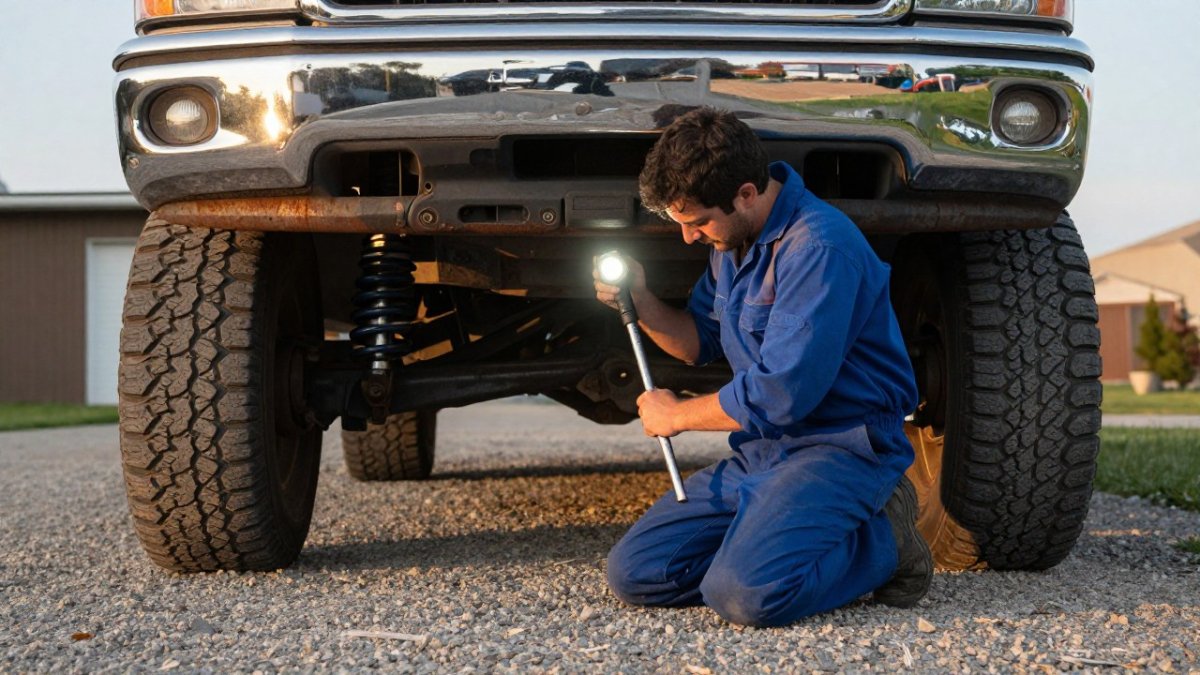
Get under the truck with a bright flashlight and press firmly with a screwdriver handle on suspect areas.
Watch out: fresh undercoating or black paint sprayed over the frame can hide active rust. Look for overspray on adjacent parts and for rust bleeding through seams, a common trick to dress up a truck before sale.
Severity ranking for this group
Treat these as dealbreakers until a mechanic says otherwise: soft or perforated frame metal, a sinking brake pedal, air-brake leaks, and steering with visible play at the wheel. Treat these as negotiable wear: worn shocks, glazed pads, surface rust on body panels, and a light seep from an old shock. The middle ground, worn ball joints, grooved rotors, and rust at cab corners, is repairable but should be priced into your offer.
Diesel Checks, Emissions Systems and Normal Wear Versus Serious Faults
Diesel trucks reward a different inspection routine than gas trucks, and most buyer guides skip the specifics. The gap is worth claiming: a diesel that passes a casual walk-around can still need injectors, a turbo, or emissions work that runs into five figures.
Cold-start and injector checks
Insist on starting the engine cold, not after the seller has warmed it up. A diesel that fires within a few seconds and settles into a steady idle is a good sign.
Listen for a sharp knock or a misfire-like shake at idle. On common-rail diesels, a cylinder contribution test or injector balance readout from a scan tool is the fastest way to grade injectors.
Watch out: a seller who has already warmed the truck before you arrive may be masking a cold-start fault.
Turbo and intake checks
A turbo that whines loudly, produces little boost, or leaves oil residue in the intake piping is a candidate for rebuild or replacement. Check for play in the compressor wheel by removing the intake hose if the seller permits, and look for oil in the intercooler piping. Blue smoke under load combined with low power often points to turbo seals. A boost gauge or scan-tool live data reading is more reliable than seat-of-the-pants judgment.
Emissions systems
Modern diesel emissions equipment, the diesel particulate filter (DPF), diesel oxidation catalyst, selective catalytic reduction (SCR) system, and exhaust gas recirculation (EGR), is a frequent source of used-truck trouble.
Scan for stored and pending codes before you buy. A truck that has been deleted, DPF removed, EGR blocked, or SCR tuned out, is a red flag: it may fail emissions inspection, may not pass a provincial safety check, and can create insurance and resale problems.
Normal wear versus serious faults
Not every symptom is a dealbreaker. Normal wear on a used diesel includes minor oil seepage from aged seals, some turbo whistle under load, occasional DPF regeneration cycles, and a slightly rough cold idle that smooths out.
A useful rule: if a fault affects safety, drivability, or the engine’s core systems, fuel, air, oil, coolant, or emissions, treat it as serious until a qualified diesel technician says otherwise. A scan-tool report and a compression or cylinder contribution test are the two checks that separate a tired diesel from a failing one.
Used Truck Inspection Checklist: Red Flags and Repair Cost Ranges
Use this checklist during your own review, and bring it along when you book a professional inspection:
- Oil leaks or puddles under the engine, or oil on the dipstick that looks milky
- Blue or white smoke from the exhaust, or black smoke under acceleration
- Temperature gauge rising, coolant stains, or a low reservoir
- Slipping gears, harsh shifts, or burnt-smelling transmission fluid
- Clunking, vibration or whining from the drivetrain
- Pulling steering, loose wheel play or uneven tire wear
- Soft spots, flaking or holes in the frame, rocker panels or cab floor
- Warning lights, including check engine or emissions-related indicators
- Maintenance records that are missing or incomplete
Repair costs vary widely by truck model, parts availability and shop rates. Ask for a written estimate from a qualified mechanic before you rely on any repair number in your negotiation.
Use these red flags as a quick reference during your own review, and check the repair cost guidance before relying on any number in your negotiation.
| Red flag | What it may mean | Next step |
|---|---|---|
| Oil leak or milky dipstick | Worn gasket or seal, possible head gasket issue | Check oil level and colour, ask when oil was changed |
| Blue or white exhaust smoke | Worn rings or valve seals | Have a mechanic investigate before buying |
| Temperature gauge climbing | Cooling system fault | Pressure-test the cooling system |
| Slipping gears or harsh shifts | Transmission problem | Shift through every gear on a test drive |
| Clunking or whining from drivetrain | Drivetrain wear | Test at varied speeds and throttle inputs |
| Soft frame metal or flaking rust | Structural rust damage | Treat as a dealbreaker until a mechanic clears it |
| Repair costs | Vary by model, parts and shop rates | Get a written estimate before negotiating |
Booking Your Used Truck Pre-Purchase Inspection in Alberta
A checklist helps you spot warning signs, but a professional inspection tells you what those signs mean. Before you book, read What Is a Pre-Purchase Car Inspection and Why It Matters to see what the inspection covers.
Our journeyman-certified mechanics at Vehicleinspectionservices offer on-site pre-purchase inspections across Alberta. For current pricing and availability, visit book a mobile pre-purchase inspection on our website, or contact us directly for a quote before you commit to a purchase. Early detection of problems can help you avoid an expensive repair after the sale is final.
Frequently Asked Questions
What are the most common mechanical problems in used trucks?
The most common issues in used trucks include engine oil leaks, excessive oil consumption, overheating from cooling system faults, worn transmission components, suspension and steering wear, brake wear, and rust on the frame and underbody. Many of these faults are visible or audible during a careful inspection. A pre-purchase inspection by a qualified mechanic can identify these problems before you commit, which helps you avoid costly repairs after the sale.
Is a used truck pre-purchase inspection worth it?
A pre-purchase inspection is usually worth the cost because it reveals hidden faults that a test drive will not show, such as early gasket failure, transmission slipping, or frame corrosion. Pricing depends on the inspection scope and your location, so contact Vehicleinspectionservices for a current quote. The inspection also gives you a documented condition report that you can use to negotiate the purchase price or walk away from a truck with serious problems.
What noises are red flags when test-driving a used truck?
Clicking or popping when turning can point to worn CV joints or steering components. Knocking from the engine under load may indicate bearing wear. Grinding or whining during shifts suggests transmission problems, and clunking over bumps often signals worn suspension parts. Squealing or grinding when braking means brake pads or rotors need attention. Note when each noise occurs, because the conditions help a mechanic narrow down the cause.
Should you buy a used truck with a check engine light on?
A check engine light is not automatically a dealbreaker, but it should never be ignored. The light can indicate something minor, such as a loose fuel cap or a failing sensor, or something serious, such as a misfire or emissions system fault. Have a mechanic read the stored diagnostic codes and determine the cause before buying. The repair cost depends on the fault, so get a diagnosis before negotiating the price.