
Last Updated: November 1, 2026
Quick Summary
An out-of-province inspection is a mandatory safety examination proving a vehicle brought in from outside Alberta meets provincial mechanical fitness standards before it can be registered here. Inspectors check brakes, steering, suspension, lighting, tires, seat belts, and the vehicle identification number against your documentation.
- Bring proof of ownership, previous registration or title, photo ID, and import documents if applicable.
- An inspection certificate is valid for a limited window, so book your registration appointment in the same week.
- Ask upfront whether re-inspection is charged separately, since this is a common surprise.
- Common failure points include worn brakes, tired suspension, cracked CV joint boots, and lighting faults.
- EVs skip exhaust, fuel, and oil checks but face scrutiny of the high-voltage system and charging components.
Table of Contents
- What an Out-of-Province Inspection Covers in Alberta
- The Alberta Out-of-Province Vehicle Inspection Checklist
- Out-of-Province Inspection Documents Alberta Requires
- The Alberta Out-of-Province Inspection Validity Period
- What the Alberta Out-of-Province Inspection Cost Covers
- Common Failure Points and How EVs Differ From Gas Vehicles
- Book a Mobile Out-of-Province Inspection
- Frequently Asked Questions
What an Out-of-Province Inspection Covers in Alberta
An out-of-province vehicle inspection is a mandatory safety examination that proves a vehicle brought in from outside Alberta meets provincial mechanical fitness standards before it can be registered here (Out-of-province vehicle inspections). This guide from Vehicleinspectionservices breaks down exactly what inspectors check, what paperwork you need, and how to avoid a failed inspection.
Systems and Components on the Inspection Form
The inspection form is a long checklist, and a technician works through it system by system. The core components include:
- Brake system: pads, rotors, lines, fluid condition, and parking brake operation
- Steering system: tie rods, ball joints, play in the steering wheel
- Suspension components: shocks, struts, springs, and bushings
- Lighting and signals: headlights, brake lights, turn signals, hazards
- Tire tread depth and overall tire condition
- CV joint boots, exhaust system, fuel system, and oil leaks
- Seat belts, mirrors, windshield integrity, and the electrical system
- Vehicle identification number verification against documentation
When the Inspection Is Required
Whether an out-of-province inspection is required depends on where the vehicle was last registered and the current provincial rules, so check with the provincial registry before you buy. If you’re unsure whether your situation triggers the requirement, check with the provincial registry before you buy. Buying first and discovering the inspection requirement later is a common and expensive mistake.
The Alberta Out-of-Province Vehicle Inspection Checklist
Knowing the general categories of an out-of-province vehicle inspection in advance tells you where to focus your prep. We group the checks into four buckets: safety-critical systems, structural and body condition, documentation, and electronics. Safety-critical items are the ones most likely to fail a vehicle, so start there.
Pre-Inspection DIY Checks You Can Do at Home
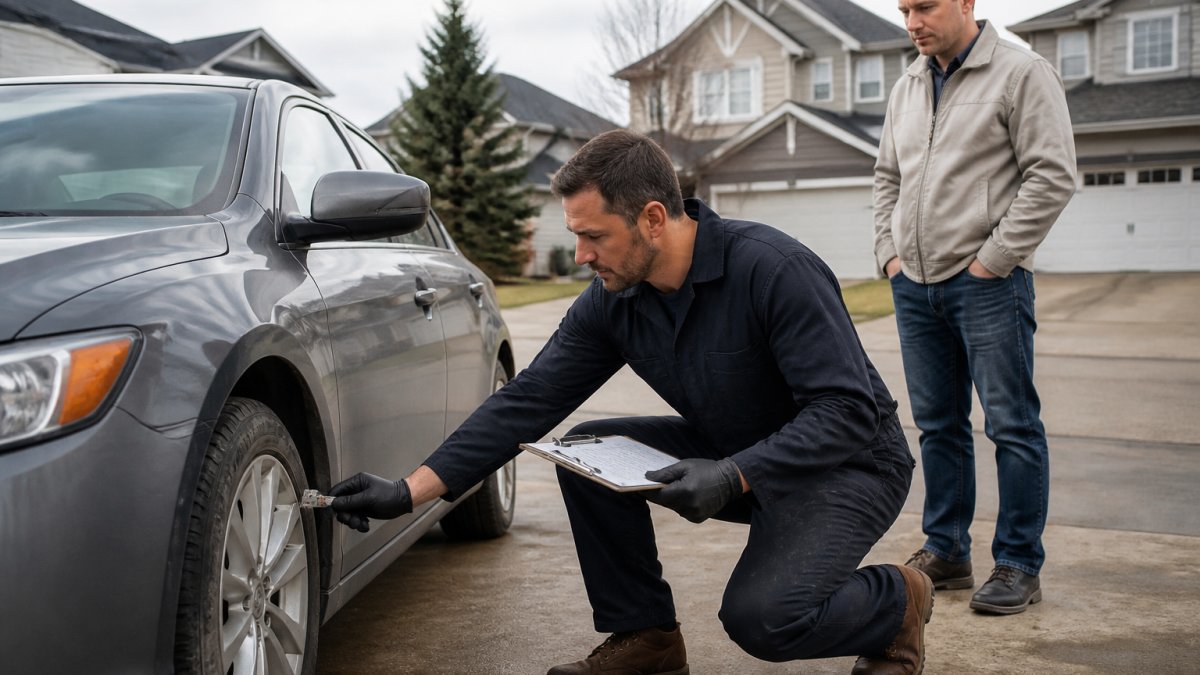
A few simple checks at home catch problems before they cost you a re-inspection fee. Walk around the vehicle with a flashlight and check every light, including the license plate lamp. Press on each corner to feel for worn suspension. Look at tire tread depth with a gauge or a coin. Check for fluid spots under the car after it sits overnight. Test the parking brake on a slight incline. If anything looks borderline, address it before the inspection rather than after. Our used car inspection checklist walks through the full set of self-checks in more detail.
Out-of-Province Inspection Documents Alberta Requires
The out-of-province inspection documents Alberta requires are straightforward, but missing one delays your registration. Bring the following to your appointment:
- Proof of ownership, such as a bill of sale or transfer document
- The vehicle’s current registration or title from its previous jurisdiction
- Valid photo identification
- The vehicle identification number, visible on the dashboard and door jamb
- Any import documentation if the vehicle came from outside the country
If you’re buying privately, ask the seller for the previous registration document before you commit, because a seller who can’t produce clean ownership paperwork is a red flag.
Bring these items to your appointment so a missing document doesn’t delay your registration.
| Document | Note |
|---|---|
| Proof of ownership | Bill of sale or transfer document |
| Current registration or title | From the previous jurisdiction |
| Valid photo identification | Required at the appointment |
| Vehicle identification number | Visible on dashboard and door jamb |
| Import documentation | Only if vehicle came from outside the country |
The Alberta Out-of-Province Inspection Validity Period
The validity period of an out-of-province inspection is limited, so timing matters. An inspection certificate is valid for a limited window after it is issued, so confirm the exact expiry date on your certificate with the inspection facility. If you don’t complete your registration within that window, you may need a fresh inspection. This is why we recommend booking the inspection close to your registration appointment rather than weeks in advance. Ask the inspection facility for the exact expiry date on your certificate and put it in your calendar. A certificate that expires before you register means paying for the inspection twice, which is an avoidable cost.
How the Validity Window Interacts With Insurance
A common pain point is what happens to your insurance coverage during the transition period. Insurance coverage during the transition can vary, so confirm the terms with your insurer or broker before you cancel your old policy. Do not let your old coverage lapse before the new policy is bound. If the inspection fails and repairs are needed, the clock on your certificate keeps running, so schedule repairs immediately and ask the facility whether a re-inspection resets the validity window or whether the original expiry still applies.
Do not cancel your previous province’s insurance until your new policy is confirmed in writing. A gap in coverage can follow you and affect future premiums.
Book your inspection and your registration appointment in the same week. If the certificate is valid for 14 days, you want the registration slot already on the calendar so a failed item doesn’t push you past the expiry.
What the Alberta Out-of-Province Inspection Cost Covers
Pricing for an out-of-province inspection depends on the vehicle, the location, and how much work is involved. For current prices or a quote, contact us. We quote each job individually, because pricing depends on your vehicle and the work involved.
Ask upfront what the inspection fee includes and whether any re-inspection is charged separately, since this is one of the most common surprises on a failed inspection. For a clear quote before you commit, contact our team for pricing and service details.
What Drives the Price Up or Down
- Vehicle type: Different vehicles can require different amounts of work.
- Location: Travel to your location can affect the quote, so confirm the details before booking.
- Condition: A vehicle with obvious defects may need more time, which can affect the quote.
Budget for the inspection fee plus a contingency for repairs. A $200 CAD inspection that turns into a $600 CAD brake job is still cheaper than discovering the problem after you’ve registered and the certificate has expired.
Common Failure Points and How EVs Differ From Gas Vehicles
Common failure points on inspections include worn brakes, tired suspension, cracked CV joint boots, and lighting faults. Where EVs differ is the drivetrain. An electric vehicle has no exhaust system, fuel system, or engine oil to check, so those lines on the form are marked not applicable. What replaces them is scrutiny of the high-voltage electrical system, battery mounting, and charging components. For a deeper look at what an Alberta inspection includes, read our guide to the AMVIC inspection and what it covers.
Book a Mobile Out-of-Province Inspection
Booking a mobile out-of-province inspection means a journeyman-certified mechanic comes to your location, whether that’s your driveway, your workplace, or a seller’s address. At Vehicleinspectionservices, we bring on-site inspections and repairs directly to vehicle owners across Alberta, so you don’t have to drive to a shop. Our journeyman-certified mechanics complete the work, and we include a complimentary courtesy check to flag anything else worth knowing. Ready to get your vehicle registered? Book a mobile out-of-province inspection or get in touch with our team to schedule a time that works for you.
Frequently Asked Questions
What is an out-of-province vehicle inspection in Alberta?
It is a mechanical fitness check required when you bring a vehicle into Alberta from another province, territory, or country and want to register it here. A technician works through an inspection form covering the brake system, steering system, suspension components, lighting and signals, exhaust system, fuel system, tire tread depth, and structural condition. A vehicle that meets the applicable safety standards can be issued a certificate of inspection, which you then present to the provincial registry to complete registration.
When do I need an out-of-province inspection in Alberta?
You need one when registering a vehicle that was previously registered outside Alberta, including vehicles from other provinces, territories, and other countries. Whether this inspection applies depends on the vehicle’s registration history, so confirm with the provincial registry. If you are unsure whether your specific situation triggers a mandatory inspection, confirm with the registry before booking, because the rules depend on where the vehicle was last registered rather than where you bought it.
What documents do I need for an out-of-province inspection in Alberta?
Bring the vehicle registration or proof of ownership from the previous jurisdiction, valid identification, and the vehicle identification number. If the vehicle was imported, have the import documentation ready. Missing paperwork is one of the most common reasons an inspection appointment gets delayed, so gather everything before the technician arrives.
How long is an Alberta out-of-province inspection valid?
A completed out-of-province inspection is valid for a limited window, so plan to register the vehicle soon after it passes. Ask the inspection facility to confirm the expiry date on your certificate, and book your registry appointment before that date.
What happens if my vehicle fails an out-of-province inspection?
If the vehicle does not pass, the failed items need to be repaired before the vehicle can be re-inspected and certified. Budget for a repair timeline between the first inspection and the re-inspection. A pre-purchase inspection before you buy is the cheapest way to avoid discovering fail criteria after you have already paid for the car.
Can I register my vehicle in Alberta before it passes inspection?
Generally, a valid inspection certificate is needed before the vehicle can be registered, so confirm the current requirements with the provincial registry. If you are buying a used vehicle privately, build this sequence into your timeline so you are not left without a registrable vehicle. Ask the seller for any existing inspection paperwork, though a fresh inspection is still required.
Bringing a vehicle into Alberta shouldn’t mean weeks of back-and-forth with a shop. Vehicleinspectionservices sends a journeyman-certified mechanic to your location, completes the inspection on-site, and gives you a clear picture of what your vehicle needs before you register. Get started with Vehicleinspectionservices and book your mobile inspection today.
