
Quick Summary
The most common car maintenance mistakes in Alberta are skipped oil changes, neglected tire pressure, ignored dashboard warning lights, and delayed brake and fluid checks. Cold winters, potholes and salt make small neglect more expensive, so routine checks catch problems early. Most of these mistakes are easy to prevent once you know what to watch for.
- Check tire pressure monthly, including the spare, since cold Alberta weather lowers it.
- Roughly 1 psi drops for every 10 degrees Celsius of cooling, so check pressures in winter.
- Oil changes depend on driving conditions, and frequent short trips in winter call for more frequent checks.
- A steady check engine light needs diagnosis soon, while a flashing one means misfiring and needs prompt attention.
- Do not drive with low oil pressure, overheating or a failing brake warning; shut down and get help.
Table of Contents
- What Are the Most Common Car Maintenance Mistakes to Avoid?
- Car Maintenance Checklist: The Routine Items Drivers Skip
- How Often to Change Engine Oil and What Happens When You Wait
- How to Check Tire Pressure and Why Underinflated Tires Cost You
- Dashboard Warning Lights Meaning: Which Ones Need Immediate Attention
- Brakes, Fluids and Fuel: Mistakes That Turn Small Problems Expensive
- Which Maintenance Tasks You Can Safely Do Yourself and Which to Leave to a Mechanic
- Book Your On-Site Inspection Before the Next Small Problem Becomes a Big One
- Frequently Asked Questions
What Are the Most Common Car Maintenance Mistakes to Avoid?
Most car trouble starts with a small habit ignored for months, not a sudden breakdown.
Alberta makes these mistakes more costly. Winter temperatures drop sharply, potholes and salt damage roads, and cold short trips strain batteries and engines. A minor spring fix can become a major repair by January.
Most of these patterns are easy to prevent once you know what to watch for.
- Skipping routine checks that catch problems early
- Delaying oil changes, which wear the engine faster than expected
- Ignoring tire pressure, which affects safety, fuel use and tire life
- Overlooking warning lights that signal a developing problem
- Neglecting brakes and fluids, where small leaks become expensive failures
Car Maintenance Checklist: The Routine Items Drivers Skip
Most drivers think of maintenance as one big service appointment. For the full routine tailored to Alberta conditions, see the complete preventative maintenance guide.
A basic car maintenance checklist should include:
- Engine oil level and condition
- Tire pressure and tread depth, including the spare
- Brake fluid, coolant and washer fluid levels
- Battery terminals for corrosion
- Lights, wipers and visible belts or hoses
Winter readiness is the item drivers skip most often. Our Winter Vehicle Inspections service covers this in detail.
Alberta drivers who skip routine checks in winter face the most risk. Our guide on why a winter vehicle checkup is essential in Alberta explains what those checks look for and why timing matters.
Checking these items regularly helps prevent surprises at the worst possible time.
Watch out: Do not assume a battery is fine because the car starts.
How Often to Change Engine Oil and What Happens When You Wait
Engine oil lubricates moving parts, carries heat away and keeps dirt in suspension.
Your owner’s manual lists the recommended service interval for your specific vehicle.
| Driving Pattern | Typical Change Interval | Why It Matters |
|---|---|---|
| Highway, moderate temperatures | Follow the owner’s manual | Oil runs under ideal conditions |
| Frequent short trips in winter | Check more often | Engine rarely fully warms up, so moisture builds |
| Towing or heavy loads | Check more often | Engine works harder and heats oil faster |
| Dusty or gravel roads | Check more often | Dirt contaminates oil quickly |
A common mistake is treating the oil change interval as a fixed date. Check the oil level and condition monthly.
Wait too long and sludge builds up, engine components wear faster, and in serious cases the engine can seize.
How to Check Tire Pressure and Why Underinflated Tires Cost You
Tire pressure is one of the simplest checks you can do, and one of the most ignored.
To check tire pressure:
- Check the cold tire pressure, ideally before driving or after the car has sat for a few hours
- Find the recommended pressure on the driver’s door sticker or in the owner’s manual
- Use a reliable gauge and compare each tire, including the spare
- Inflate or release air to match the recommended pressure
- Recheck after adjusting, then replace the valve cap
Underinflated tires wear faster on the outer edges, reduce fuel efficiency, increase stopping distances and overheat, which can lead to tire failure at highway speeds.
Many newer vehicles have a tire-pressure monitoring system (TPMS). If the TPMS light comes on, do not ignore it.
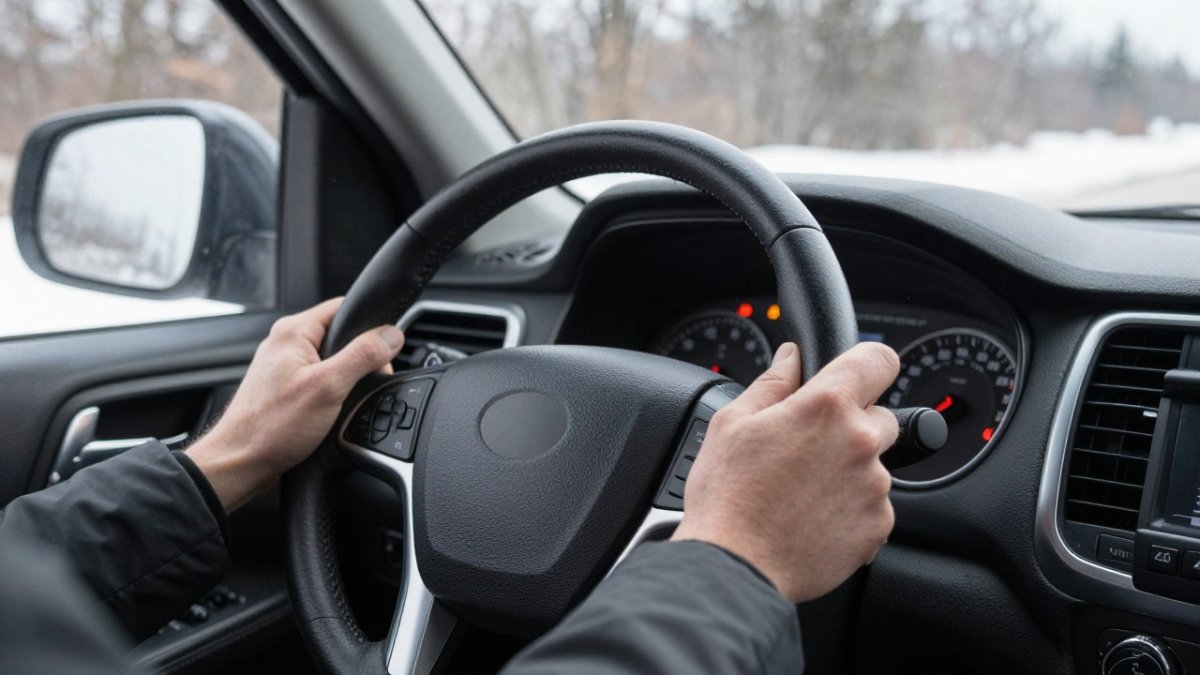
Dashboard Warning Lights Meaning: Which Ones Need Immediate Attention
Dashboard lights report problems, but they are not all equal. For guidance on catching minor issues before they escalate, read how to catch minor car issues early in Alberta.
Stop driving and shut down safely
- Oil pressure warning (oil can symbol): Pull over as soon as it is safe and turn off the engine. Low oil pressure can starve bearings and camshafts within minutes. Check the oil level only after the engine is off and the car is on level ground. If the level is fine and the light stays on, do not restart; have it towed.
- Engine temperature warning (thermometer in liquid): Pull over, shut off the engine and let it cool. Overheating can warp a cylinder head or blow a head gasket. Do not open the coolant reservoir while hot. Once cool, check the coolant level and look for leaks; if the light returns, tow it.
- Brake warning (circle with exclamation or the word BRAKE): If the parking brake is fully released and the light stays on, treat it as a hydraulic fault. A soft or sinking pedal means do not drive. Check the brake fluid level only as a diagnostic; a low level usually means a leak, not a top-up problem.
- Battery or charging warning: The alternator may not be charging. If the car is already running and the light comes on, drive directly to a service location if it is close and safe, and turn off unnecessary electrical loads. If the light is accompanied by dimming lights or a dead battery, stop and arrange a boost or tow.
Inspect soon, but you can usually drive to a shop
- Steady check engine light: A fault has been detected. A steady light is not an emergency, but do not let it sit for weeks. Have the code read and diagnosed. A common pattern is a loose gas cap or an oxygen sensor, but the code only points to a system, not a part.
- TPMS light: Check and correct tire pressure as described in the tire section. If the light stays on after pressures are correct, have the sensors checked.
- Maintenance reminder: Schedule service at your convenience, but do not stretch it indefinitely.
- Washer fluid, coolant, or brake fluid low reminders: Top up and look for the cause. A repeated low coolant light usually means a leak.
Monitor and note
- A light that appears once and goes away can still be a developing problem. Note the conditions (cold start, uphill, after a car wash) and have it checked at the next service.
- Unusual noises, smells, or vibrations are symptoms, not lights, but they belong in the same triage. A grinding noise under braking is a stop-driving symptom. A faint fuel smell after refueling is an inspect-soon symptom. A new vibration at highway speed is a monitor-and-check symptom.
Watch out: A flashing check engine light is not the same as a steady one.
Warning lights are easiest to act on when you catch them early.
Brakes, Fluids and Fuel: Mistakes That Turn Small Problems Expensive
Brakes: Squealing, grinding, pulling to one side or a soft pedal all signal wear or a fault.
Fluids: Brake fluid, coolant, transmission fluid and power steering fluid each protect a system. Low levels usually mean a leak.
Fuel: Putting the wrong fuel in a vehicle can damage the engine and fuel system.
Cost of neglect: A brake pad job is a routine repair.
Which Maintenance Tasks You Can Safely Do Yourself and Which to Leave to a Mechanic
Doing some maintenance yourself saves money and builds familiarity with your car. The mistake is treating DIY as a single skill level.
Beginner-safe checks and top-ups
- Checking and topping up washer fluid.
- Checking tire pressure and tread depth, including the spare.
- Inspecting and replacing wiper blades.
- Checking oil level on level ground with the engine off and cool enough to touch.
- Checking coolant and brake fluid levels by sight only, without opening a hot system.
These tasks are safe because they are checks or top-ups, not repairs.
Tasks that depend on the vehicle and your setup
- Battery replacement: On older, simple vehicles this is a beginner task. On newer vehicles with start-stop systems, complex electrical architecture, or a battery located under a seat or in the trunk, it can require registration or a memory saver. If the owner’s manual calls for a relearn procedure, leave it to a professional.
- Oil and filter changes: The task itself is straightforward, but the risks are a stripped drain plug, a cross-threaded filter, or an incorrect oil specification. If you do it, use the exact oil grade and filter listed in the owner’s manual and torque the drain plug to spec.
- Spark plugs: Access is the deciding factor. On some engines they are reachable in minutes; on others, intake components must come off. Cross-threading a plug in an aluminum head is an expensive mistake.
Leave to a mechanic
- Brake pads, rotors, calipers, and brake lines. Brakes are a safety system, and a mistake may not show up until a panic stop.
- Anything involving the fuel system, including fuel filters and injectors.
- Suspension, steering, and alignment work.
- Diagnosing a check engine light beyond reading the code. The code identifies a system, not the failed part.
- Air conditioning service. Refrigerant handling requires certified equipment.
- Any work that requires a lift or working under a car supported only by a jack.
Watch out: Working under a car held up only by a jack is one of the most dangerous DIY mistakes.
A practical rule: if the worst outcome of a mistake is a mess or a warning light, it is probably a beginner task.
Book Your On-Site Inspection Before the Next Small Problem Becomes a Big One
Most mistakes in this guide come down to one thing: problems that were visible early but went unaddressed. You can book a mobile mechanic in Calgary for an on-site inspection that comes to your location.
Vehicleinspectionservices offers on-site inspection and repair across Alberta, so you do not need to drive a vehicle with a problem to a shop.
Our team also provides a Complimentary Courtesy Check, which is a useful starting point if you are unsure what your car needs. For current prices or a quote, contact us directly.
Do not wait for a warning light to tell you something is wrong.
Vehicleinspectionservices: on-site inspections and repairs for Alberta drivers.
Frequently Asked Questions
What are the most common car maintenance mistakes?
The most frequent mistakes are skipping or delaying oil changes, ignoring tire pressure and tire-pressure monitoring system alerts, neglecting tire rotation, putting off brake inspections, failing to check fluid levels, using the wrong fuel or fluids, and ignoring dashboard warning lights. Each one is small on its own, but together they shorten the life of the vehicle and often lead to repairs that cost several times more than the routine service. Following the owner’s manual schedule and acting on warning signs early prevents most of them.
How often should you check your car’s oil?
Check engine oil level at least once a month and before any long trip, with the engine warm and the vehicle on level ground. Change the oil at the interval in your owner’s manual, which for many modern vehicles is longer than older rules suggested, but driving in cold Alberta winters, short trips or dusty conditions can shorten that interval. Using the correct oil viscosity and specification listed in the manual matters as much as the timing.
How can you tell when your brakes need attention?
Watch for squealing or grinding when braking, a pulling to one side, a soft or sinking pedal, longer stopping distances, or a vibration through the pedal or steering wheel. A brake warning light on the dashboard also needs prompt attention. Brake inspections are relatively inexpensive compared with replacing rotors or repairing damage from worn pads, so have them checked at each routine service or whenever you notice any of these signs.
Is it a mistake to ignore dashboard warning lights?
Yes. Red warning lights, such as oil pressure, coolant temperature or brake system, usually mean stop driving safely as soon as possible. Amber lights, such as check engine or tire-pressure monitoring, indicate a problem that should be diagnosed soon but may not require an immediate stop. Ignoring either type can turn a minor fault into engine or safety damage, so get the light checked as soon as you can.
