
Last Updated: November 4, 2026
Quick Summary
A preventative maintenance plan means servicing your vehicle on a set schedule before parts fail, and on Alberta roads the severe-duty schedule from your owner’s manual is often the sensible starting point because of salt, gravel, freeze-thaw cycles, and short winter trips. Book a seasonal inspection twice a year, ideally in October and April, to catch Alberta-specific problems before they compound.
- Most trips under 15 minutes, or under roughly 10 km in winter, point to severe duty.
- Tire pressure drops roughly one psi for every 5-6°C of temperature drop.
- Check tire pressure against the door-jamb placard, cold, before driving.
- Use a timer to switch the block heater on a few hours before departure.
- A soft, spongy brake pedal or grinding brakes means stop driving and book service.
Table of Contents
- Why Preventative Maintenance Matters More on Alberta Roads
- Building a Preventative Maintenance Schedule Around Mileage and Driving Conditions
- Seasonal Vehicle Fluid Checks That Keep an Engine Alive
- Winter Tire Pressure Guidelines and Cold-Weather Tire Care
- Engine Block Heater Maintenance for Deep Freeze Starts
- AMVIC Vehicle Inspection Requirements and When to Book a Professional
- DIY Checks Versus Work That Needs a Journeyman Technician
- Booking Your On-Site Preventative Maintenance Inspection
- Frequently Asked Questions
Why Preventative Maintenance Matters More on Alberta Roads
A preventative maintenance plan is the practice of servicing a vehicle on a set schedule, before parts fail, rather than waiting for a breakdown to force the issue. Alberta roads make that discipline more valuable than it is almost anywhere else, because the conditions here attack a car from several directions at once.
The core problem is not the cold itself. It is the combination of salt, gravel, freeze-thaw cycling, and short winter trips that never let the engine reach operating temperature.
What Road Salt, Gravel, and Freeze-Thaw Cycles Do to a Vehicle
Road salt accelerates corrosion on brake lines, subframes, and rocker panels. Gravel chips paint and takes out windshields. Freeze-thaw cycles work moisture into seams and then expand it, which is how small cracks become structural problems.
The result: a vehicle that looks fine can have a brake line rusting from the outside in, or a battery that cranks weakly at minus 25°C because it has been slowly losing capacity all winter. Neither shows up on a dashboard warning until it is a roadside problem. Transport Canada vehicle safety and recall information is a useful starting point for understanding what safety defects regulators track.
Building a Preventative Maintenance Schedule Around Mileage and Driving Conditions
The owner’s manual sets the floor, not the ceiling. Most manufacturers publish two schedules: a normal one and a severe-duty one. The normal schedule assumes mild weather, longer trips, and light loads. The severe-duty schedule shortens intervals for vehicles that do a lot of short trips, idle frequently, tow, or operate in extreme cold. Driving in cold climates often falls into that second category, so the severe-duty column is frequently a sensible starting point.
How to Classify Your Driving Pattern
Read the severe-duty definition in your own manual first, because the wording varies by manufacturer. Then classify your typical week against it rather than against your best week. A common pattern is a vehicle that does one long highway run on the weekend and five short cold-start trips on weekdays; that vehicle belongs in the severe-duty column even though the weekend trip looks easy on it.
Use these signals to decide which schedule applies:
- Trip length: most trips under 15 minutes, or under roughly 10 km in winter, point to severe duty.
- Cold starts: repeated starts below about -15°C without a block heater shorten oil life and stress the battery.
- Idling: remote-start warm-ups and long drive-thru waits count as severe duty in most manuals.
Matching Intervals to Mileage and Vehicle Age
Mileage and age change what you check, not just how often. A newer vehicle under warranty should follow the manual closely and keep records, because missed services can affect warranty coverage.
A practical way to think about it:
- Under 100,000 km: follow the severe-duty schedule for oil and filters, and inspect brakes and tires at every seasonal change.
- 100,000 to 200,000 km: add coolant, brake fluid, and transmission fluid to the review list, and have belts and hoses inspected rather than just glanced at.
- Over 200,000 km: expect wear items to fail on age as much as mileage; battery, suspension, and brake lines deserve a closer look each season.
These are planning guides, not overrides. The manual’s specified interval for your vehicle always wins, and a technician who can see the vehicle may recommend a shorter interval based on what the oil and components actually look like.
| Driving Pattern | Oil Change Approach | Extra Checks |
|---|---|---|
| Mostly short city trips | Severe-duty interval, check oil monthly | Battery, exhaust, brakes |
| Long highway commute | Standard interval | Tires, fluids |
| Towing or heavy loads | Severe-duty interval, shorter | Transmission fluid, coolant |
| Mostly parked in winter | Check fluids before storage and after | Battery, tire pressure |
Seasonal Vehicle Fluid Checks That Keep an Engine Alive
Fluid levels are the cheapest early-warning system a car has. Seasonal vehicle fluid checks should cover engine oil, coolant, brake fluid, transmission fluid, power steering fluid where applicable, and windshield washer fluid.
Coolant deserves special attention. The correct antifreeze concentration protects against both freezing and boiling, and a weak mix can slush up in a cold snap. Brake fluid absorbs moisture over time, which lowers its boiling point and softens pedal feel.
Watch out: topping up coolant with water to get home is fine as a stopgap, but leaving it that way dilutes the mixture and raises the freeze point. Checking fluid levels is also a good moment to look at the Canadian Centre for Occupational Health and Safety guidance on winter conditions if you are planning to work outdoors in the cold.
Winter Tire Pressure Guidelines and Cold-Weather Tire Care
Tire pressure drops as temperature falls, roughly one psi for every 5-6°C of temperature drop.
Winter tire pressure guidelines start with the vehicle’s door-jamb placard, not the number molded on the sidewall. Check pressure cold, before driving, and recheck after the first hard freeze.
Store off-season tires upright, out of direct sun, and away from ozone sources. If you want a full pre-winter once-over rather than piecemeal checks, a winter vehicle checkup covers the systems that cold weather stresses most.
Engine Block Heater Maintenance for Deep Freeze Starts
An engine block heater is not a luxury here; it is what makes a cold start possible on the worst mornings.
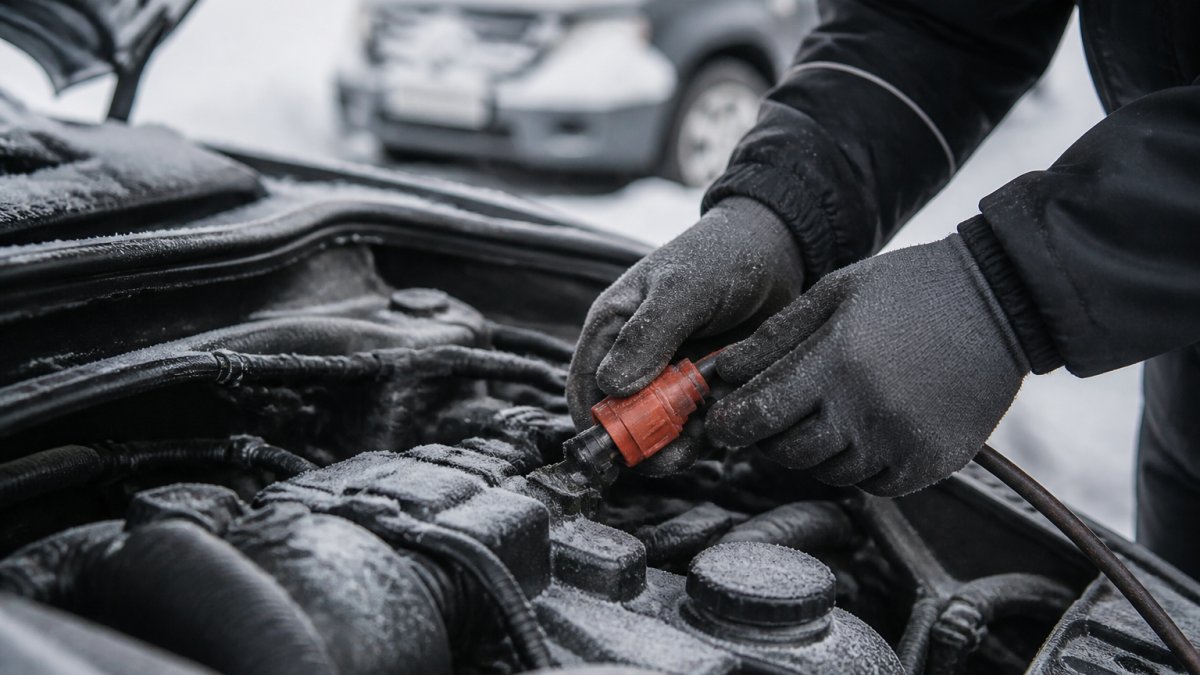
A timer that switches the heater on a few hours before departure saves electricity and still delivers a warm block. Combine that with a battery test before the season starts, and cold-weather starting stops being a gamble.
AMVIC Vehicle Inspection Requirements and When to Book a Professional
AMVIC vehicle inspection requirements apply to certain vehicle transactions in the province, and the rules are specific about what a compliant inspection covers.
Some checks are genuinely DIY: tire pressure, washer fluid, wiper blades, and a visual look at belts and hoses. If you are weighing the two, our guide on how to verify journeyman mechanic credentials explains what certification actually means and how to confirm it.
DIY Checks Versus Work That Needs a Journeyman Technician
Knowing where the line sits saves money and prevents expensive mistakes. A journeyman technician has completed a formal apprenticeship and passed certification, which matters when a repair involves safety systems. The boundary is not about difficulty; it is about consequence. A mistake with washer fluid is minor. A mistake with brake hydraulics or an airbag can be dangerous, which is why those systems are best left to a professional.
What You Can Safely Do Yourself
These checks need no hoist and carry little risk if you follow the manual:
- Tire pressure, tread depth, and a visual look for cuts or bulges
- Washer fluid top-up with a winter-rated formula
- Wiper blade replacement
Record what you did and when. A simple logbook or phone note with date, mileage, and item creates a service history that helps a technician and supports resale.
What Belongs With a Technician
These tasks need a hoist, diagnostic equipment, or training that most owners do not have:
- Brake inspection and pad or rotor replacement
- Wheel alignment after pothole or curb impacts
- Coolant system pressure testing and flush
Warning Signs That Mean Stop Driving and Book Service
Some guides describe tasks without explaining when a symptom has crossed from “watch it” to “park it.” These signs warrant prompt attention:
- A brake pedal that feels soft, spongy, or sinks toward the floor
- Grinding or metal-on-metal noise when braking
- A red brake warning light, or an ABS light that stays on
A common mistake is delaying a brake inspection because the car still stops. For a clear picture of what a formal inspection includes, read our breakdown of what an AMVIC inspection covers.
Watch out: if a brake or steering symptom appears after a hard pothole or curb impact, do not wait for the next scheduled service, because alignment and suspension damage can worsen quickly and affect tire wear and control.
Booking Your On-Site Preventative Maintenance Inspection
The easiest schedule is the one you actually keep. Book an on-site car safety inspection with a step-by-step guide to scheduling your appointment.
Here is how we would approach it:
- Pick two dates a year and put them in your calendar, ideally October and April.
- List what you have noticed: noises, warning lights, tire wear, starting difficulty.
- Gather your service records so the technician can see what was done and when.
- Confirm the appointment and location, including whether mobile service reaches you.
- After the inspection, note the recommended items and schedule anything deferred.
Keeping an Alberta car reliable is less about any single check and more about rhythm: fluids and tires each season, brakes and battery before the cold, and a professional inspection on a schedule you do not have to think about.
Frequently Asked Questions
What is included in a standard vehicle safety inspection?
A standard safety inspection covers brakes, tires and tread depth, steering and suspension, lights and signals, exhaust, seat belts, windshield condition, and fluid levels. A mechanic also checks for rust and structural damage underneath. In Alberta, an AMVIC inspection follows a defined checklist and produces a written report. Ask for that report before you buy or sell, and keep it with your maintenance records so you can track what was flagged and when it was fixed.
How often should I change my oil in extreme cold temperatures?
Follow the severe-duty interval in your owner’s manual rather than the standard one. Short trips, long idling, and temperatures well below freezing all count as severe duty, and most manufacturers shorten the oil change interval for those conditions. Many Alberta drivers land in the 5,000 to 8,000 kilometre range instead of the longer highway figure. Check the oil level monthly in winter and top up with the grade the manual specifies.
Why is an AMVIC-licensed inspection important for my vehicle?
AMVIC regulates vehicle sales in Alberta, and its inspection requirements give buyers and sellers a documented, standardized check of a vehicle’s condition. A licensed inspection confirms the vehicle meets the mechanical standards expected at the point of sale, which protects both sides if a dispute comes up later. It also gives you a written record of defects. When you sell privately, having that report ready can speed up the transaction and support your asking price.
What are the most common vehicle issues caused by extreme temperature fluctuations?
Freeze-thaw cycles are hard on Alberta vehicles. Common problems include cracked hoses and belts, battery capacity dropping in cold, tire pressure falling with temperature, fluid leaks from seals that contract overnight, and suspension damage from potholes that open up as frost leaves the ground. Windshield chips also spread faster when temperatures swing. A seasonal inspection in spring and fall catches most of these before they turn into a roadside breakdown or a larger repair bill.
How do I prepare my car for winter driving conditions?
Start with winter tires mounted before temperatures stay below 7°C, and check their pressure monthly since cold air lowers it. Test the battery, replace worn wiper blades, and switch to winter-rated washer fluid. Verify the block heater cord works and the coolant is mixed for the cold. Pack an emergency kit with a blanket, booster cables, a shovel, and a phone charger. Book a pre-winter inspection so a technician can catch weak belts, hoses, and brakes before the first deep freeze.
What maintenance tasks can I perform myself versus those requiring a journeyman mechanic?
You can handle tire pressure checks, fluid level top-ups, wiper blade swaps, light bulb replacements, and visual checks for leaks or worn tread. Leave brake work, suspension repairs, coolant flushes, transmission service, and anything involving the battery’s high-voltage system to a journeyman technician. If a warning light stays on or you hear a new noise, stop guessing and get it diagnosed. A mobile mechanic can run those checks at your home or workplace, which saves a trip to the shop.