
Table of Contents
- What AMVIC Certification Means for Insurance Inspections
- Step 1: Verify AMVIC Certification Through Official Channels
- Step 2: Confirm Journeyperson Credentials and Trade Certification
- Book Mobile AMVIC Inspection at Your Location
- Insurance Inspection Checklist: What to Expect
- Out-of-Province Vehicle Inspection Requirements
- Red Flags: How to Spot Unlicensed or Unqualified Inspectors
- Frequently Asked Questions
Last Updated: September 30, 2026
What AMVIC Certification Means for Insurance Inspections
Business Licensing vs. Technician Certification
AMVIC licenses the business, the repair shop or inspection service, confirming it operates legally in Alberta. However, a licensed business doesn’t guarantee every technician is certified. The technician must hold a separate journeyperson certificate in automotive service technician work, issued by Alberta’s apprenticeship system after completing formal training, work hours, and certification exams.
Insurers verify both: the business registration (accountability and coverage) and the technician’s journeyperson credentials (technical competence). A report signed by an uncertified technician may be rejected, even if the business is AMVIC-licensed.
Why This Matters for Insurance Claims
When you submit an inspection report, insurers verify: the business AMVIC registration, the technician’s journeyperson certification, and whether the report meets their specific standards. If either the business or technician fails verification, the insurer may reject the report and require a new inspection from a compliant provider, delaying coverage and costing you time and money.
The Insurance-Specific Inspection Standard
Insurance inspections have stricter documentation requirements than pre-purchase inspections.
Insurance inspections must include detailed findings on each system, specific measurements (brake pad thickness, tire tread depth), identification of safety concerns, the technician’s name and journeyperson number, business AMVIC registration number, and the inspection date and odometer reading.
Before booking, contact your insurer and ask what inspection form or standard they require and whether they have a preferred provider list. This prevents wasted inspections and ensures the technician knows exactly what documentation your insurer needs.
Step 1: Verify AMVIC Certification Through Official Channels
The fastest way to confirm AMVIC certification is to check Alberta’s Motor Vehicle Industry Council searchable database by inspector name, business name, or registration number. If someone appears in the registry, they’re legitimate; if not, they’re not AMVIC certified.
Ask the inspector directly for their registration number, a legitimate AMVIC certified inspector will provide it without hesitation. Call the business to confirm registration details with a manager or owner. Reputable shops keep this information readily available.
Step 2: Confirm Journeyperson Credentials and Trade Certification
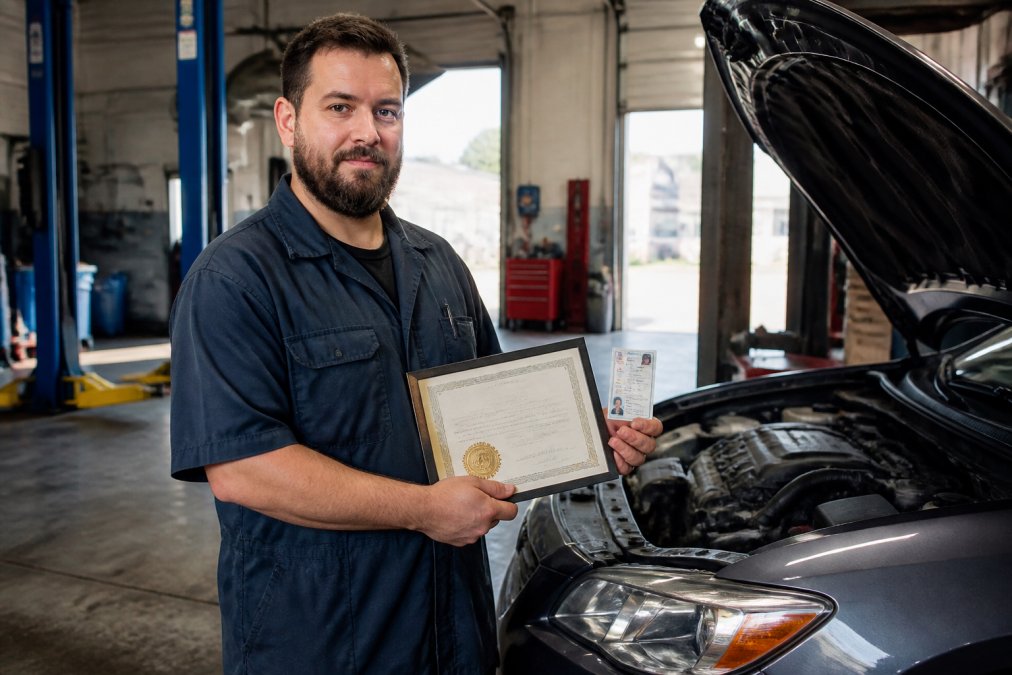
AMVIC certification alone doesn’t guarantee technical competence. Verify that the inspector holds a valid journeyperson certificate in automotive service technician work, a credential proving they’ve completed apprenticeship training, passed exams, and understand vehicle mechanics and safety systems.
Ask the inspector for their journeyperson certificate number, trade certification, and how long they’ve been certified. A qualified inspector will answer directly and provide documentation. Verify journeyperson status through Alberta’s apprenticeship registry, a five-minute check that protects you from hiring someone who looks qualified but isn’t.
Vehicleinspectionservices employs journeyman-certified mechanics with decade-long experience. Every technician on our team carries current credentials and can prove them on request.
Book Mobile AMVIC Inspection at Your Location
Mobile inspection services bring the inspector to you, saving time. When booking, confirm they’re AMVIC certified, perform inspections at your location, accommodate your schedule, and provide written reports insurers accept.
Discuss the scope of inspection with the technician. Insurance inspections typically cover:
- Mechanical systems (engine, transmission, brakes)
- Safety equipment (lights, wipers, horn)
- Structural integrity
- Fluid levels and condition
- Tire tread and condition
Mobile service means you don’t waste a day sitting in a shop waiting room. The inspector comes to your home, workplace, or wherever your vehicle is parked. This convenience doesn’t compromise quality, AMVIC certified inspectors deliver the same thorough work regardless of location.
Insurance Inspection Checklist: What to Expect
Knowing what inspectors check helps you understand the report and spot gaps. However, it’s equally important to understand what a ‘passing’ inspection actually covers, and what it does not.
What a Standard Insurance Inspection Covers
Most AMVIC-certified inspectors will assess these systems:
Engine and Transmission:
- Engine starts and runs smoothly
- No visible leaks from engine block, gaskets, or seals
- Oil level and condition acceptable (color, viscosity)
- Transmission shifts properly through all gears
- No grinding, slipping, or delayed engagement
Braking System:
- Brake pads have adequate thickness
- Rotors show no excessive wear, scoring, or warping
- Brake fluid level correct and fluid color acceptable
- Parking brake engages and holds
- No soft or spongy brake pedal (indicates air in lines or seal failure)
Electrical and Lighting:
- Headlights work on high and low beam
- Tail lights, brake lights, and turn signals function
- Wipers and washers operate
- Battery terminals clean, no corrosion
- Alternator charging system functional
Tires and Suspension:
- Tread depth meets legal minimum
- No bulges, sidewall damage, or uneven wear patterns
- Suspension components show no excessive wear or damage
- Steering feels responsive, no excessive play
- Shocks or struts not leaking
Safety Features:
- Seat belts secure, functional, and not frayed
- Airbags present (if equipped) and warning light not illuminated
- Horn sounds
- Emergency brake works
- Mirrors intact and adjustable
Body and Structural:
- No major rust or corrosion affecting structural integrity
- Frame shows no signs of collision damage or welding repairs
- Doors and windows operate smoothly
- Glass intact, no cracks in windshield
- Paint and body panels consistent (no signs of repainting that might indicate hidden damage)
What a Standard Inspection Does NOT Cover
This is where many vehicle owners get surprised. A passing inspection does not guarantee:
- Interior condition: Upholstery, dashboard, carpet, and trim are typically not assessed unless visibly damaged.
- Air conditioning or heating performance: Many inspectors note whether systems blow cold or hot but don’t diagnose refrigerant levels or compressor function in detail.
- Audio and infotainment systems: Radios, speakers, and touchscreen displays are often not tested.
- Sunroof or power window motors: These convenience features may not be fully evaluated.
- Paint thickness or clear coat condition: Cosmetic finish is not typically measured.
- Diagnostic trouble codes: Unless the check engine light is on, inspectors may not plug in a diagnostic scanner to check for stored or pending codes.
- Transmission fluid condition: Some inspectors check only the level, not the fluid’s age or condition.
- Coolant condition: Inspectors may verify the level but not test for proper freeze protection or contamination.
- Fuel system integrity: Leaks are noted, but fuel pump pressure and injector function are rarely tested during a standard inspection.
How to Read an Insurance Inspection Report
When you receive the report, look for these elements:
-
Clear Pass/Fail or Condition Statement: The report should explicitly state whether the vehicle passed inspection or if defects were found. Vague language like “appears acceptable” may not satisfy insurers who want definitive assessments.
-
Specific Measurements: For critical systems, numbers matter. Brake pad thickness in millimeters, tire tread depth in millimeters, and fluid levels should be documented, not just described as “good” or “acceptable.”
-
Defect Severity: Does the report distinguish between minor wear and safety-critical failures? For example, a small oil leak versus a major transmission leak should be clearly differentiated.
-
Technician Credentials: The report must include the technician’s name, journeyperson certificate number, and the date of certification. Without this, insurers may reject it.
-
Business Information: The AMVIC registration number and business license status should appear on the report header.
-
Odometer and Date: The vehicle’s mileage and inspection date must be recorded to establish a timeline.
Red Flags in Inspection Reports
Before submitting a report to your insurer, watch for these warning signs:
- Blank sections: If entire systems are not assessed, ask why. A complete inspection should address all major components.
- Handwritten notes only: Professional reports should be typed and formatted. Handwritten-only reports may not be accepted by insurers.
- No technician signature or credentials: If the report is unsigned or lacks certification information, it’s incomplete.
- Vague language: “Looks fine” or “No major issues” is not specific enough. Insurers want detailed findings.
- Missing measurements: Critical items like brake pad thickness and tire tread depth should be measured, not estimated.
- No date or odometer reading: These details establish the inspection’s validity and timing.
If your report has these gaps, contact the inspector and ask for a revised, complete version before submitting it to your insurer. A thorough, well-documented report increases the likelihood of acceptance and faster coverage decisions.
Out-of-Province Vehicle Inspection Requirements
If you’re buying a vehicle from outside Alberta, inspection rules change. Out-of-province vehicles require additional scrutiny because they may not meet Alberta standards or have unknown maintenance history.
Many insurers require a full mechanical inspection for out-of-province vehicles before coverage begins. This protects them from inheriting hidden problems. The inspection is more thorough than a standard pre-purchase check.
An AMVIC certified inspector can perform this work. They understand Alberta’s specific requirements and what insurers expect to see in reports. The inspection typically includes:
- Complete mechanical assessment
- Emissions system check
- Safety equipment verification
- Vehicle history cross-reference
Timing matters. Complete the out-of-province inspection before you finalize the purchase. If major issues emerge, you can negotiate price or walk away.
Red Flags: How to Spot Unlicensed or Unqualified Inspectors
Not everyone claiming to be an inspector actually holds AMVIC certification. Watch for these warning signs.
Frequently Asked Questions
How do I verify if a mechanic is authorized to perform AMVIC-certified inspections?
Check the official AMVIC registry through the regulatory body’s online database. Search the mechanic’s name or business license number to confirm active registration and authorization. Verify they hold current journeyperson credentials in automotive service technology. Ask for proof of their AMVIC inspection provider status before booking. Legitimate inspectors will have no problem providing this documentation.
What is the difference between an AMVIC inspection and an insurance inspection?
AMVIC inspections follow specific regulatory standards set by the automotive regulator and cover mandatory safety and mechanical integrity checks. Insurance inspections may have additional or different requirements depending on your insurer’s policy. An AMVIC-certified inspector can perform both types, but confirm with your insurance company that the inspection meets their specific requirements before scheduling.
How long is an AMVIC inspection certificate valid for insurance purposes?
AMVIC inspection certificates are typically valid for a set period determined by regulatory requirements. Insurance companies may have their own validity windows, so contact your insurer to confirm the timeframe they accept. Out-of-province inspections may have different validity periods, so verify requirements if your vehicle was inspected elsewhere.
Can I book a mobile AMVIC inspection instead of visiting a shop?
Yes. Many AMVIC-certified inspectors offer mobile service, bringing equipment directly to your location for convenience. When booking, confirm the inspector is AMVIC-certified and equipped to perform inspections on-site. Mobile inspections are ideal for busy professionals or those in remote areas. Ensure the inspector carries all necessary tools and can complete the full inspection at your location before committing to the appointment.