

Last Updated: October 25, 2026
Quick Summary
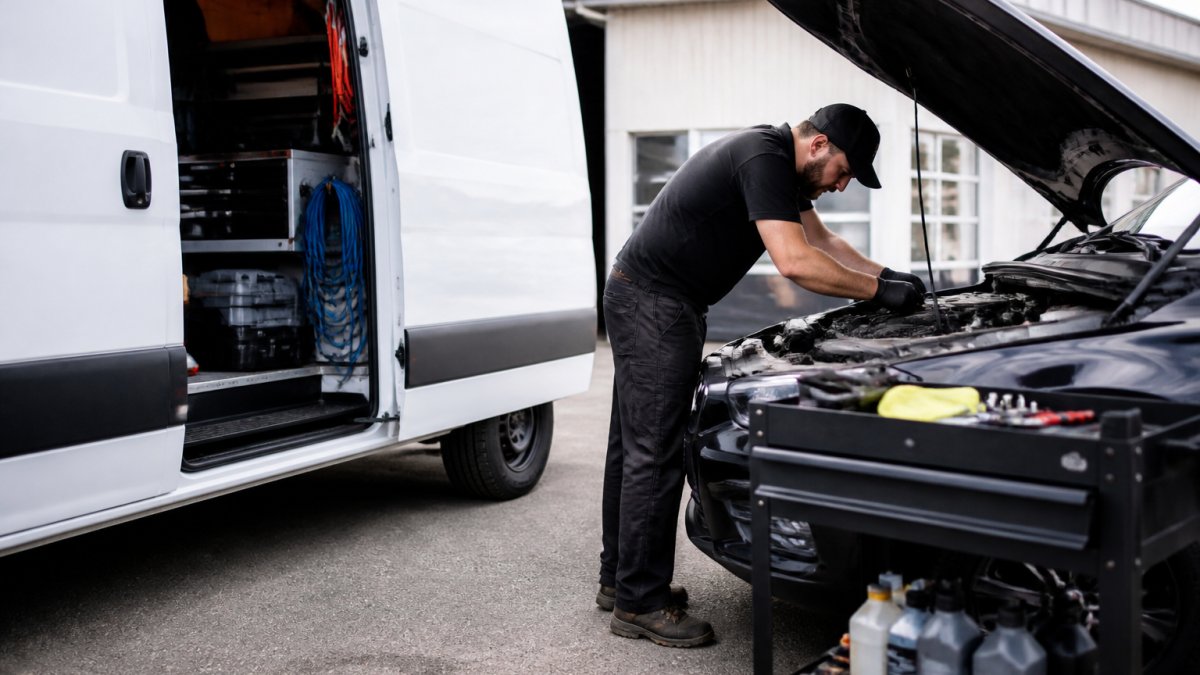
On-site vehicle maintenance means a journeyman-certified mechanic performs inspections, servicing, and repairs at your location instead of a fixed shop. The benefits start with zero travel time, since you never hand over your keys and wait in a lobby, and easier booking helps you keep to service intervals so small faults are caught early.
- A shop visit adds 15-30 minutes of driving each way plus drop-off, waiting, and a return trip.
- Track vehicle availability, technician response time, and downtime hours avoided per vehicle to build a fleet business case.
- Mobile service best fits oil changes, brake inspections, and pre-purchase inspections; alignments and major engine work need a shop.
- Before a visit, confirm access, a service window, site safety, and records so the mechanic starts with context.
- Request a quote before work begins, since pricing depends on your vehicle, the specific work, and your location.
Table of Contents
- What On-Site Vehicle Maintenance Actually Means
- 1. On-Site Vehicle Maintenance Saves Hours of Your Week
- 2. Early Fault Detection Prevents Costly Repairs
- 3. Mobile Mechanic Services Protect Vehicle Uptime and Fleet Productivity
- 4. A Vehicle Maintenance Checklist You Can Follow Anywhere
- 5. Mobile Mechanic vs. Repair Shop: Where Each One Wins
- 6. Car Service Cost: What Changes When the Mechanic Comes to You
- What On-Site Servicing Can and Cannot Do
- Frequently Asked Questions
What On-Site Vehicle Maintenance Actually Means
On-site vehicle maintenance is the practice of having a journeyman-certified mechanic perform inspections, servicing, and repairs at your location rather than at a fixed shop. At Vehicleinspectionservices, we bring the tools, diagnostic equipment, and parts to your driveway, office lot, or job site, which means the benefits of on-site vehicle maintenance start with the fact that you never hand over your keys and wait in a lobby.
The concept is straightforward: a fully equipped mobile unit arrives, performs the work to the same standard as a bay, and leaves. What changes is not the quality of the service, but the logistics around it. For anyone balancing a job, a family, and a vehicle that has to keep running, those logistics are where the real money and time are saved.
Below, we break down seven benefits, what the service can realistically handle, and where a traditional shop still wins.
1. On-Site Vehicle Maintenance Saves Hours of Your Week
The average service visit eats far more time than the work itself. A common mistake is measuring only the appointment length and ignoring the drive there, the drop-off, the wait, and the return trip. On-site vehicle maintenance collapses all of that into zero travel time.
Consider what a routine oil change and inspection actually costs you in a shop model:
- Drive to the shop: 15-30 minutes each way
- Drop-off and paperwork: 10-15 minutes
- Wait or arrange a ride: 30-90 minutes
- Return trip to collect the vehicle: 15-30 minutes
A mobile mechanic services appointment removes the commute and the waiting entirely. You keep working, and the vehicle comes back to you finished. For busy professionals, that recovered half-day is the single most tangible benefit.
2. Early Fault Detection Prevents Costly Repairs
A preventive maintenance schedule catches problems while they are cheap. A worn belt, low fluid levels, or a brake system component nearing its limit is a minor fix when spotted early and a major repair when it fails on the highway.
On-site servicing makes early detection more likely because it removes the friction that causes people to postpone service. When booking is easy and the mechanic comes to you, owners stick to service intervals instead of stretching them. That discipline is what protects your wallet.
Watch out: skipping a scheduled vehicle inspection because “it’s probably fine” is the most expensive habit in car ownership. Small faults compound quietly, and the bill arrives all at once.
3. Mobile Mechanic Services Protect Vehicle Uptime and Fleet Productivity
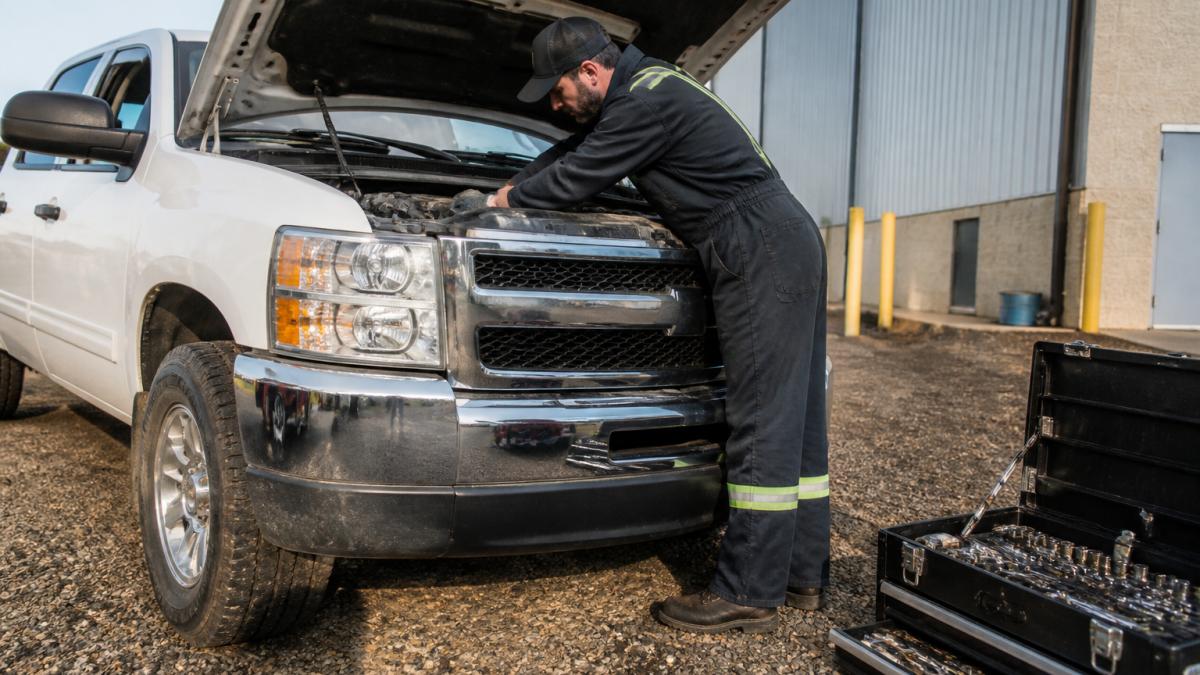
For commercial vehicles, downtime is the hidden cost. A truck sitting in a shop queue is not earning, and for a small fleet that lost day is harder to absorb than the repair bill itself. Mobile mechanic services change the math by servicing vehicles on site, often in sequence, without pulling them off the road for a full day.
The operational gain is measurable if you track the right numbers. Most fleet managers find three metrics tell the story:
- Vehicle availability, vehicles ready for service divided by total vehicles. Servicing on location keeps this high because vehicles are worked on where they already sit, not queued at a distant bay.
- Technician response time, the hours between a fault being reported and a qualified mechanic arriving. A mobile unit dispatched to your lot typically shortens the front end of that window because there is no drop-off, intake, or transport leg.
- Hours of downtime avoided per vehicle, compare the shop model (drive, drop-off, wait, collect) against an on-site visit where the vehicle is back in service the same shift. Multiply the avoided hours by the vehicle’s revenue-per-hour to get a cost figure you can defend to a finance team.
A common pattern is to schedule servicing around shift changes, loading windows, or quieter hours so the vehicle is available when it is actually needed. That is operational planning, not luck: you give the mechanic a service window, confirm the vehicle will be parked and accessible, and sequence multiple vehicles so one bay-side visit covers the whole fleet.
Track availability, response time, and downtime hours avoided per vehicle. Those three numbers turn “on-site is convenient” into a business case a fleet owner can act on.
What on-site servicing does not remove is the need for a maintenance schedule. It makes adherence easier, which is where the uptime gain compounds over a year.
4. A Vehicle Maintenance Checklist You Can Follow Anywhere
A vehicle maintenance checklist keeps you honest between professional visits. Use this one monthly, and note anything unusual for your next vehicle service:
- Check engine oil level and color
- Inspect tires for tread depth and correct pressure
- Test the battery terminals for corrosion
- Top up washer fluid and check wipers
- Confirm all lights and signals work
- Listen for new noises on start-up and braking
- Review maintenance records for upcoming service intervals
This checklist does not replace a certified inspection, but it surfaces early fault detection opportunities you can act on. Keep a log; a documented history protects resale value and gives your mechanic a clearer picture at every visit.
What most checklists leave out is the planning that makes an on-site visit actually work. Before the mechanic arrives, confirm four things:
- Access, the vehicle will be parked in a clear, level spot with room for a mobile unit and its tools, and someone on site can unlock or move it if needed.
- Service window, a defined block when the vehicle is not required, coordinated around shifts, deliveries, or customer hours so the work does not collide with operations.
- Site safety, a quick walk of the area for traffic flow, pedestrians, and any site-specific rules the technician must follow on arrival.
- Records, the logbook, prior invoices, and any known faults ready for the mechanic, so the visit starts with context rather than a diagnosis from scratch.
Book the next on-site visit before the current one ends. A recurring service window is easier to protect than a one-off appointment, and it keeps service intervals from stretching.
On the compliance side, keep inspection and service records on file. Many fleet operations are expected to show a maintenance history, and a clean, dated log is the simplest way to demonstrate that servicing happened on schedule. Fluid changes also produce waste oil and filters; confirm your provider collects and disposes of them responsibly rather than leaving them on site.
5. Mobile Mechanic vs. Repair Shop: Where Each One Wins
The mobile mechanic vs. repair shop question has a clear answer by use case. Mobile wins on convenience, routine maintenance, and inspections. A shop wins on heavy or complex jobs that need a lift and specialized bay equipment.
| Job Type | Mobile Service | Repair Shop |
|---|---|---|
| Oil changes and fluid top-ups | Best fit | Works, but you travel |
| Brake inspections and pads | Best fit | Works |
| Pre-purchase inspection | Best fit | Works |
| Major engine or transmission work | Not suitable | Best fit |
| Alignment and tire mounting | Usually not suitable | Best fit |
A common mistake is assuming mobile service is only for light jobs. In practice, a journeyman-certified mechanic can complete most routine maintenance and many repairs on location. The honest limitation is equipment-dependent work.
6. Car Service Cost: What Changes When the Mechanic Comes to You
Car service cost with a mobile provider is driven by the job, the parts, and the travel involved, not by a shop’s overhead. Pricing depends on your vehicle, the specific work, and your location, so the reliable way to know your number is to request a quote before work begins. Vehicleinspectionservices provides quotes for inspections and repair services up front, and our pricing is transparent.
What most guides miss is that the sticker price is only part of the equation. Add the fuel, the time off work, and the lost productivity of a shop visit, and the true operating costs of servicing shift. On-site vehicle maintenance often competes well once you count the hours you keep.
What On-Site Servicing Can and Cannot Do
On-site servicing handles the majority of routine maintenance: engine oil and filters, fluid levels, brake system checks, battery testing, vehicle inspection, and many common repairs. It delivers real convenience and peace of mind without a shop visit.
Where it stops is equipment-heavy work: alignments, tire mounting, and major internal engine or transmission jobs still need a fixed bay. Being clear about that boundary is what makes a mobile provider trustworthy.
If you have questions about pricing, quotes, or what your vehicle needs, our frequently asked questions cover the details, and you can contact our team to ask about your own car. To see the full range of work we handle at your location, explore our mobile vehicle repairs. If you are weighing the trade-offs further, read our comparison of mobile versus shop inspections or whether mobile vehicle inspection is worth it.
Frequently Asked Questions
What vehicle maintenance can a mobile mechanic perform on-site?
Most routine jobs travel well: engine oil and filter changes, fluid level checks and top-ups, battery testing and replacement, brake pad and rotor inspection, tire rotation and pressure checks, belt and hose inspection, and full multi-point vehicle inspections. A mobile mechanic can also handle diagnostic scans and early fault detection. Work that needs a hoist, such as transmission rebuilds or major suspension overhauls, usually belongs in a workshop. Ask upfront which jobs are covered so there are no surprises.
How does on-site vehicle maintenance save time compared to a repair shop?
The savings come from removing the trip, the wait, and the second trip to collect the car. A shop visit can absorb half a day once you count driving, drop-off, waiting, and pickup. On-site vehicle maintenance happens where the car is parked, so you keep working or keep your day moving while the service is done. For anyone with a packed schedule or a vehicle that cannot easily leave a job site, that is the main draw.
Is a mobile mechanic more expensive than a repair shop?
Car service cost depends on the job, the parts, and the travel distance, so there is no single answer. Mobile service can carry a call-out component that a shop does not, but it also removes the hidden costs of a shop visit: time off work, fuel for two trips, and the productivity lost while the vehicle sits idle. Get a written quote before you commit so you can compare the full picture rather than the headline number.
Can on-site vehicle maintenance handle every repair?
No, and a good provider will tell you so. Jobs that need a hoist, heavy lifting equipment, or a controlled workshop environment, such as major engine work or structural repairs, are better done in a shop. On-site servicing covers the preventive maintenance and inspection work that keeps a vehicle safe and reliable. A provider that is clear about its limits is usually the one worth trusting with the rest.
Keeping a vehicle safe, reliable, and on schedule takes discipline, and the logistics of shop visits are usually what break it. Vehicleinspectionservices brings journeyman-certified mechanics to your location with a decade of service behind us, offering on-site inspections and repairs, AMVIC inspection support, and a complimentary courtesy check. Get started with Vehicleinspectionservices and keep your vehicle running without losing your day.
