
Last Updated: November 5, 2026
Quick Summary
A car inspection for insurance requirements is a check of your vehicle’s condition that an insurer may request before providing or continuing coverage. Insurers set their own age cutoffs and triggers, so the request on your file is the rule that applies. Confirm which inspection type your insurer needs before booking.
- Insurers set their own age cutoffs and triggers, so check your written request.
- Insurance, safety and pre-purchase inspections serve different purposes, so confirm which one applies.
- Read the inspection report and confirm every field is filled in before sending it.
- Gather your registration, proof of insurance, photo ID and any previous reports before the inspection.
- Send a passing report to your insurer and keep the original; a late report may not be accepted.
Table of Contents
- Vehicle age thresholds and insurer rules
- Insurance Inspection Versus Safety and Pre-Purchase Inspections
- What an Automobile Insurance Motor Vehicle Inspection Report Covers
- Insurance Inspection Checklist for a Car: Documents and Preparation
- Out-of-Province Vehicle Inspection Alberta: Rules and Exceptions
- Booking a Mobile Insurance Inspection in Alberta and Pricing Expectations
- What Happens After a Pass or Fail and Your Next Step
- Frequently Asked Questions
Most Alberta drivers only think about a car inspection for insurance requirements when an insurer asks for one. Common questions include which vehicles need one, who can do it, and what it costs. This guide walks through the process in order so you know what to expect before you book.
A car inspection for insurance requirements is a check of a vehicle’s condition that an insurer may request before it will provide or continue coverage. Learn what an AMVIC-style inspection includes and why it matters for a fuller picture. The inspection records what the vehicle looks like and how it works on the day it is checked.
Vehicle age thresholds and insurer rules
Insurers may ask for an inspection on older vehicles. Age cutoffs and triggers differ by insurer and by policy, so the request on your file is the rule that applies to you. Check your insurer’s written request before you book, since a vehicle that needs an inspection for one company may not need one for another.
Insurance Inspection Versus Safety and Pre-Purchase Inspections
These three inspection types are often mixed up, but they serve different purposes. See the inspection services offered and how they differ from pre-purchase checks.
- Insurance inspection: Documents condition for an insurer’s coverage decision.
- Safety inspection: Checks that the vehicle meets safety standards for its use.
- Pre-purchase inspection: Helps a buyer decide whether to buy a used vehicle.
Ask your insurer which one it needs. Booking the wrong type wastes time and money.
What an Automobile Insurance Motor Vehicle Inspection Report Covers
The inspection report is the document your insurer reviews. Reports generally describe the vehicle’s condition and note any required repairs. Read the report before you send it on, so you can spot anything that needs correcting.
Confirm every field is filled in before submission.
Insurance Inspection Checklist for a Car: Documents and Preparation
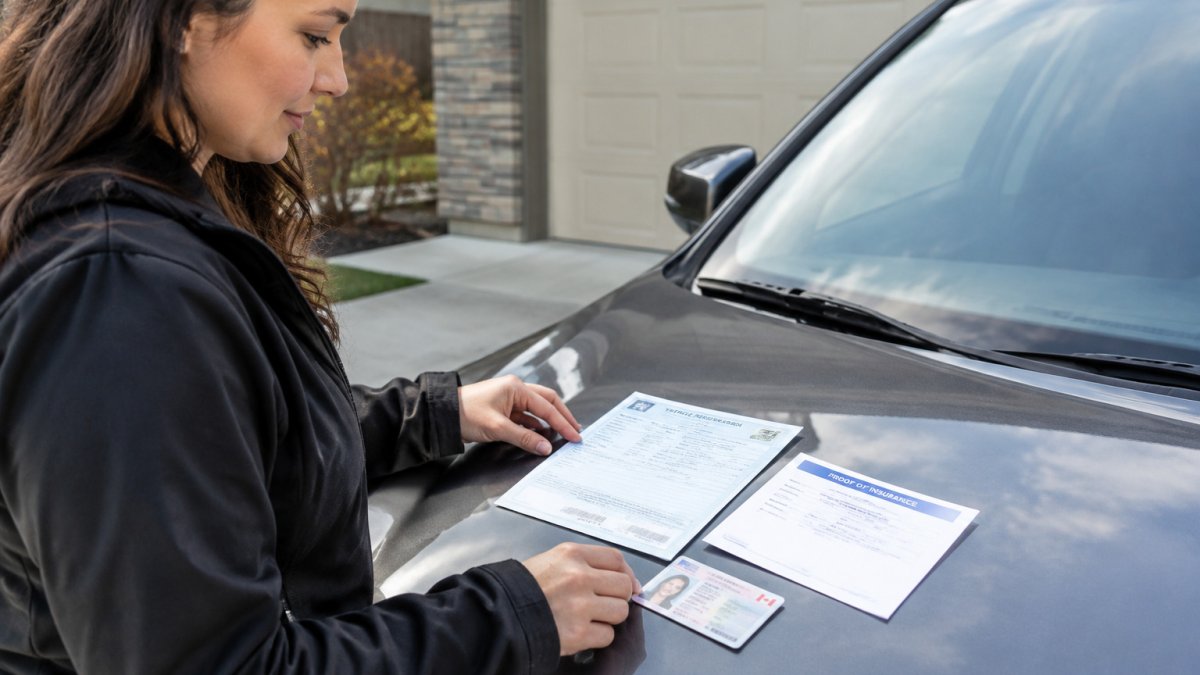
Gather these items before the inspection:
- Registration certificate
- Proof of insurance
- Government-issued photo ID
- Your insurer’s inspection request, if you have one
- Any previous inspection reports
- Keys and any remotes
Clean the vehicle and clear out loose items so the inspector can access the engine bay, tires and undercarriage.
Out-of-Province Vehicle Inspection Alberta: Rules and Exceptions
If your vehicle was registered outside Alberta, the rules may differ. Read the detailed out-of-province inspection rules and exceptions. Requirements depend on where the vehicle was last registered, how long it has been in Alberta, and what your insurer asks for. Check your insurer’s exception list and the official provincial guidance before assuming an inspection is or is not needed.
Booking a Mobile Insurance Inspection in Alberta and Pricing Expectations
A mobile inspection comes to your location, which saves a trip to a shop. Pricing depends on the vehicle, the inspection type and your location, so contact Vehicleinspectionservices directly for a current quote. Before you book, have your insurer’s request and your documents ready.
Contact Vehicleinspectionservices to confirm what your insurer needs and to schedule a visit.
What Happens After a Pass or Fail and Your Next Step
Most guides stop at the inspection bay. What happens next is where coverage decisions are actually made, so it helps to know the sequence before you book.
If the vehicle passes. The inspector completes the report and gives you a copy. Send it to your insurer through the channel they specified, usually email or a portal upload, and keep the original. The insurer reviews the report and, if it is complete, binds or continues coverage. A pass does not guarantee a specific premium; it confirms condition, and underwriting still sets the rate.
If the vehicle fails. A fail is not the end of the process. The report lists the deficiencies, and insurers typically set a deadline for repairs and reinspection. Confirm that deadline with your insurer before you book repairs.
How long a report stays valid. Inspection reports are dated documents. If your coverage start date is far out, ask your insurer whether the report will still be accepted or whether you should book closer to the effective date.
What a fail can mean for coverage. The outcome depends on the insurer and on what failed, so ask your insurer how it will treat the specific deficiencies listed.
Reinspection logistics. Ask your insurer whether the same facility must perform the reinspection.
A practical next-step sequence:
- Read the report line by line and note every deficiency.
- Confirm with your insurer the repair deadline and whether invoices are required.
- Book repairs with a shop that can document the work.
- Schedule the reinspection before the deadline, not on it.
- Send the passing report to your insurer and confirm receipt.
Watch out: a report submitted after your insurer’s deadline may not be accepted, so note the date as soon as you receive it.
If you are unsure whether your file needs a reinspection or a fresh inspection, contact us and we will walk through what your insurer has asked for.
The sequence after the inspection is where coverage decisions are made, so here is what to expect at each outcome.
| Outcome | What happens | What to do |
|---|---|---|
| Pass | Inspector gives you a copy of the report | Send it to your insurer and keep the original |
| Pass | Insurer reviews the report | Confirm receipt; a pass does not set a premium |
| Fail | Report lists the deficiencies | Read each item and note every deficiency |
| Fail | Insurer sets a repair deadline | Confirm the deadline before booking repairs |
| Fail | Reinspection needed | Schedule it before the deadline, not on it |
| Late submission | Report may not be accepted | Note the insurer’s deadline as soon as you receive the report |
Frequently Asked Questions
When does an insurer require a vehicle inspection in Alberta?
Insurers in Alberta commonly require an inspection when a vehicle reaches a certain age, when coverage is being reinstated after a lapse, or when a policy is written on a vehicle with an unclear condition history. Requirements vary by insurer, so the first step is to ask your insurance company which trigger applies to your vehicle. Once you know the reason, you can confirm the required inspection type and whether the insurer needs a specific report form before you book.
Can I get a vehicle inspection at my home or workplace?
Yes, a mobile inspection can be completed at your home, workplace or another location in Alberta, which saves a trip to a shop. Vehicleinspectionservices offers on-site mobile service in Alberta. Before booking, confirm the location, have the vehicle accessible and ready, and check with your insurer whether a mobile inspection report is accepted for your requirement. For current pricing, contact Vehicleinspectionservices directly for a quote.
What happens if a vehicle fails an insurance inspection?
A failed inspection lists the items that need repair. You can have the repairs completed, then request a reinspection so the report can be updated. Ask your insurer about any deadline or coverage timing as soon as you receive the report. Keeping the repair invoices helps show the vehicle now meets the required standard.
Is an insurance inspection the same as an out-of-province inspection?
No. An insurance inspection checks whether a vehicle meets your insurer’s requirements, while an out-of-province inspection is a separate check that some jurisdictions require when a vehicle is brought in from another province. A vehicle may need one, the other, or both, depending on where it is registered and how it is insured. Confirm which inspection your insurer or registry requires before booking to avoid paying for the wrong one.