
Last Updated: October 28, 2026
Quick Summary
Mobile fleet maintenance services in Alberta are worth it because they bring journeyman-certified mechanics to your yard instead of tying up trucks in a shop queue. On-site visits cover inspections and repairs across light, medium and heavy-duty vehicles, and per-vehicle rates usually improve as fleet volume rises.
- Mobile service flips the reactive tow-and-wait model by repairing vehicles where they sit.
- Ask for a mechanic who is both AMVIC-registered and journeyman-certified before booking.
- Inspection cost drivers include inspection type, vehicle class, fleet size and travel distance.
- Response times range from same-day to multi-day depending on location and season.
- Confirm after-hours, weekend and holiday call-out fees up front to avoid invoice surprises.
Table of Contents
- Why Mobile Fleet Maintenance Beats Towing Trucks to a Shop
- Alberta Mobile Fleet Maintenance Providers: Side-by-Side Comparison
- What an AMVIC Certified Mobile Mechanic Actually Proves
- On-Site Fleet Inspection Costs: What Drives the Number
- Building a Preventative Maintenance Schedule for Commercial Fleets
- Service Coverage, Response Times, and Emergency Repair Expectations
- How to Vet a Provider and Book Your First On-Site Visit
- Frequently Asked Questions
Why Mobile Fleet Maintenance Beats Towing Trucks to a Shop
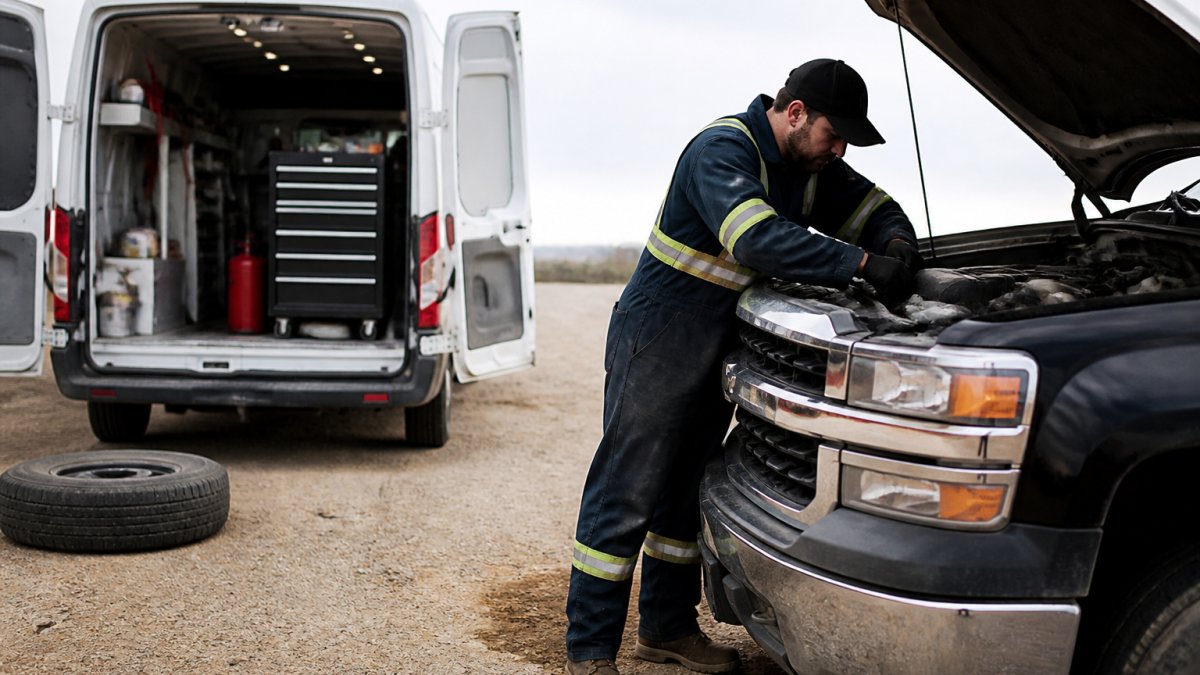
Every hour a truck sits in a shop bay, it is not earning. That math is why mobile fleet maintenance services in Alberta have moved from niche convenience to core operations. At Vehicleinspectionservices, we have spent a decade bringing journeyman-certified mechanics directly to vehicles across the province.
The traditional model is reactive. A truck fails, gets towed, waits in a queue, and returns days later. Mobile service flips that sequence.
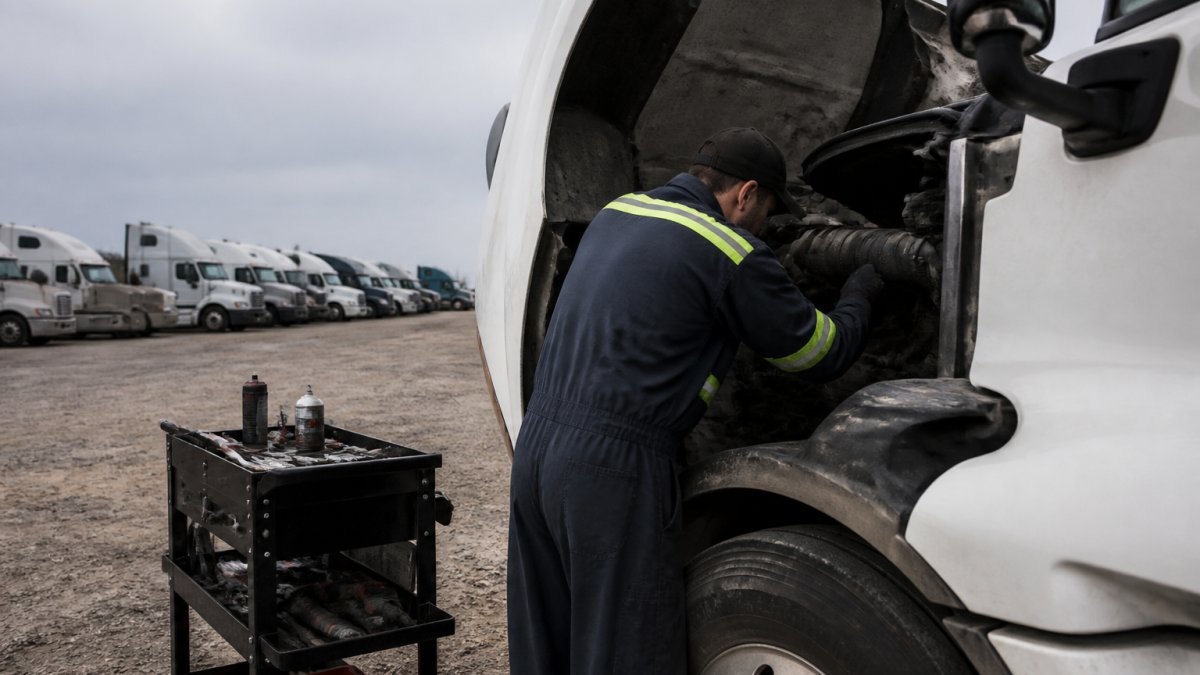
If you want to see what the on-site model looks like in practice, you can explore mobile vehicle repairs and how they are delivered at your location.
Alberta Mobile Fleet Maintenance Providers: Side-by-Side Comparison
| Provider | Best For | Vehicle Classes | Mobile Service | Coverage Notes | Hours | Pricing |
|---|---|---|---|---|---|---|
| Vehicleinspectionservices | Mixed light and commercial fleets needing inspections plus on-site repair | Light to medium commercial; some heavy-duty | Yes, at your location | On-site across Alberta; confirm remote yards | Scheduled visits; confirm after-hours | Competitive; request a written quote |
| TOP GUN HD Mechanical | Heavy-duty truck and trailer fleets needing round-the-clock help | Heavy-duty trucks and trailers | Yes, roadside and fleet-yard | Alberta-wide per its site | 24/7 advertised | Contact for pricing |
| Antler Point Heavy Duty Repairs | Fleets needing truck plus heavy equipment repair | Heavy trucks and heavy equipment | Yes | Rocky View County base; confirm your region | Not stated; confirm | Contact for pricing |
| Torque by Ryder | Fleets wanting PM and repair at their own lot | Mixed fleet per its site | Yes | Coverage not confirmed; verify first | Confirm | Contact for pricing |
How to read the comparison
Vehicle classes. Match the provider to what you actually run. Ask which classes the provider services regularly, not just whether it accepts them.
Coverage notes.
Hours.
Pricing.
Vehicle and repair capability matrix
- Light commercial vans and pickups: routine PM, brakes, tires, fluids, diagnostics.
- Medium-duty trucks: PM, brake and air system work, cooling system repair, electrical diagnostics.
- Heavy-duty tractors and trailers: full PM, brake adjustment and repair, suspension, driveline, trailer electrical and air systems.
- Refrigeration and cooling units: transport refrigeration diagnostics and repair; confirm the provider carries the specific unit brands you run.
- Oilfield and off-road equipment: heavy equipment repair alongside truck service; confirm the provider’s equipment range.
- On-site completion: ask which repairs the provider can finish at your yard versus which require a shop visit or a tow.
Vehicleinspectionservices
Our model centers on inspections and repair delivered where the vehicle sits. Journeyman-certified mechanics handle pre-purchase, insurance, and AMVIC inspections, plus a complimentary courtesy check. We also provide on-site automotive repair services.
Best for: fleets that want inspections and repair from one mobile provider.
Skip if: you run exclusively heavy-duty tractors and need dedicated highway breakdown response.
TOP GUN HD Mechanical
Best for: heavy-duty truck and trailer fleets needing emergency roadside repair.
Skip if: your fleet is mostly light commercial vehicles.
Antler Point Heavy Duty Repairs
Best for: fleets that combine heavy trucks with heavy equipment.
Skip if: you need a firm, published service-area map before committing.
Torque by Ryder and Tristan Fleet
Torque by Ryder provides on-site mobile fleet maintenance and repair at customers’ lots, emphasizing preventive maintenance, but its supplied information does not confirm Alberta coverage, verify first. Tristan Fleet combines fleet management and repair with trailer sales and online parts ordering. Neither publishes pricing.
Before you compare quotes, write down your fleet mix, your yard locations, and your must-have repair capabilities. A provider that matches your top three needs is a better fit than one that claims to do everything.
What an AMVIC Certified Mobile Mechanic Actually Proves
Ask for both. A mechanic who is AMVIC-registered and journeyman-certified can inspect to standard and repair what the inspection finds. To check a credential before you book, verify journeyman mechanic certification using the steps we outline.
On-Site Fleet Inspection Costs: What Drives the Number
- Inspection type. A pre-purchase or insurance inspection is more detailed than a routine courtesy check.
- Vehicle class. Heavy-duty trucks take longer than light commercial vans.
- Fleet size. Per-vehicle rates usually improve as volume rises.
- Travel distance. Remote yards may carry a call-out or travel component.
Building a Preventative Maintenance Schedule for Commercial Fleets
- Daily: driver walk-around checks for tires, lights, and fluid leaks.
- Weekly: fluid levels and belt condition.
- Monthly: brake inspection and tire rotation as needed.
- Per manufacturer interval: full PM service with oil and filter changes.
- Annually: comprehensive inspection and documentation review.
Service Coverage, Response Times, and Emergency Repair Expectations
Service coverage varies widely by provider, and response times range from same-day to multi-day depending on location and season. Geography is the main constraint: a provider based in one region may not serve a yard two hours away without a travel charge or longer wait. Use the framework below to evaluate response-time claims without relying on marketing language.
Regional coverage breakdown
| Region | Typical coverage pattern | What to confirm |
|---|---|---|
| Major urban centers | Same-day or next-day scheduled visits common; multiple providers compete | After-hours availability, weekend scheduling, and whether travel is included |
| Surrounding commuter and industrial corridors | Scheduled visits on set days; emergency response may be same-day | Which days the provider runs your corridor, and the travel charge |
| Rural and remote yards | Scheduled visits on a route; emergency response may be next-day or longer | Route frequency, minimum visit size, and whether a travel surcharge applies |
| Oilfield and remote industrial sites | Coverage tied to the provider’s route and equipment range | Equipment classes served, site-access requirements, and response window |
How to evaluate response-time claims
- What counts as an emergency? A breakdown blocking a loaded unit is different from a scheduled PM. Confirm which situations qualify for priority dispatch.
- What is the dispatch process? Ask whether a live dispatcher answers after hours or whether calls route to voicemail until the next business day.
- What is the typical response window? Ask for a range, not a guarantee, and ask whether it changes by season or region.
- Is there a call-out fee? Confirm after-hours, weekend, and holiday charges up front so the invoice does not surprise you.
- What happens if the repair cannot be completed on-site? Ask whether the provider coordinates a tow or a shop visit, and who bears that cost.
Alberta’s vehicle industry regulator, AMVIC sets the rules for inspection work, so confirm any provider’s registration there. For operators in remote areas, you can check mobile mechanic service for rural Alberta to understand what coverage and response times to expect.
Building a coverage and response plan
How to Vet a Provider and Book Your First On-Site Visit
- [ ]
- [ ]
- [ ]
- [ ]
- [ ]
Ready to start? You can contact us.
Frequently Asked Questions
What are the benefits of mobile fleet maintenance over traditional shops?
Mobile fleet maintenance brings the technician to your yard, so vehicles stay on site instead of being driven or towed to a shop and waiting in a queue. That cuts downtime, keeps drivers on scheduled routes, and lets one visit cover several units back to back. It also makes preventive maintenance easier to keep up with, since scheduling a service call is simpler than releasing a truck for a day. For fleets spread across a wide area, the time saved on trips to a fixed shop adds up quickly.
Are mobile mechanics in Alberta required to be AMVIC licensed?
AMVIC regulates Alberta’s automotive business sector, and businesses that perform vehicle inspections or repairs for the public generally need to operate under its rules. Ask any provider for their AMVIC registration and confirm the individual technician holds journeyman certification. A legitimate mobile fleet maintenance provider will share both without hesitation. If a mechanic cannot produce credentials, treat that as a reason to keep looking, especially when the work supports insurance or resale requirements.
What types of vehicles can mobile fleet services maintain?
It depends on the provider. Some mobile fleet maintenance companies focus on heavy-duty trucks and trailers, including roadside and emergency repair. Others handle light-duty commercial vehicles, vans, and pickups, plus equipment such as oilfield units or refrigeration systems. Before booking, confirm the provider services your specific make, model, and weight class, and ask whether they carry parts for it. A short capability conversation up front prevents a wasted service call.
How does on-site maintenance reduce fleet downtime?
On-site service removes the two biggest time sinks in conventional repair: transporting the vehicle and waiting for shop capacity. A technician arrives at your lot, works through the inspection or repair, and the vehicle is back in rotation the same day in most routine cases. Scheduling several units in one visit compounds the saving. Fleets that track uptime usually see fewer unexpected breakdowns once preventive maintenance happens on a predictable schedule rather than after something fails.
What should I look for in a mobile fleet maintenance provider?
Check four things: credentials (AMVIC registration and journeyman certification), coverage (whether they reach your yard, including rural locations), capability (the vehicle classes and systems they service), and response expectations for emergency calls. Ask how they document inspections and whether you receive written records for your maintenance files. Pricing structure matters too, so request a quote that explains call-out fees and what a routine visit includes before you commit to a maintenance plan.
Getting ahead of breakdowns is the whole game in fleet operations, and it starts with a provider who shows up, documents the work, and catches problems early. Vehicleinspectionservices brings journeyman-certified mechanics to your location, offers AMVIC inspections alongside on-site repair, and includes a complimentary courtesy check with every visit. Get started with Vehicleinspectionservices and keep your fleet on the road instead of in a tow queue.