
Table of Contents
- Why Verifying Mechanic Credentials Matters Before You Hire
- AIT Alberta Trade Certificate Verification: Step-by-Step
- What You Need Before You Start the Verification Process
- Understanding the Certificate of Qualification and Red Seal
- AMVIC Mechanic Requirements and What They Mean for You
- Benefits of Hiring a Journeyman Mechanic for Inspections
- Spotting Fraudulent Certificates and Credential Red Flags
- Cross-Provincial and International Credential Checks
- Frequently Asked Questions
Last Updated: October 2, 2026
Why Verifying Mechanic Credentials Matters Before You Hire
Hiring a mechanic you can trust starts with one step most drivers skip: checking certification through a public trade register before you hand over your keys. This guide from Vehicleinspectionservices walks you through each step.
Hiring an uncertified mechanic can void your insurance coverage and leave you with no legal recourse if the work fails. Always confirm certification before booking any repair or inspection.
The Risks of Hiring an Uncertified Mechanic
The biggest risk isn’t a bad repair bill. It’s safety. An uncertified mechanic may miss brake wear, steering faults, or structural damage, problems that cause crashes.
- No formal training or testing standards
- No regulatory oversight of their work
- No accountability if something goes wrong
- Potential insurance claim denial after an accident
- No protection under consumer protection rules
AIT Alberta Trade Certificate Verification: Step-by-Step
AIT Alberta trade certificate verification means checking a mechanic’s credentials through the Alberta trade register, a free public database maintained by the Alberta Institute of Trades (AIT). Here’s how:
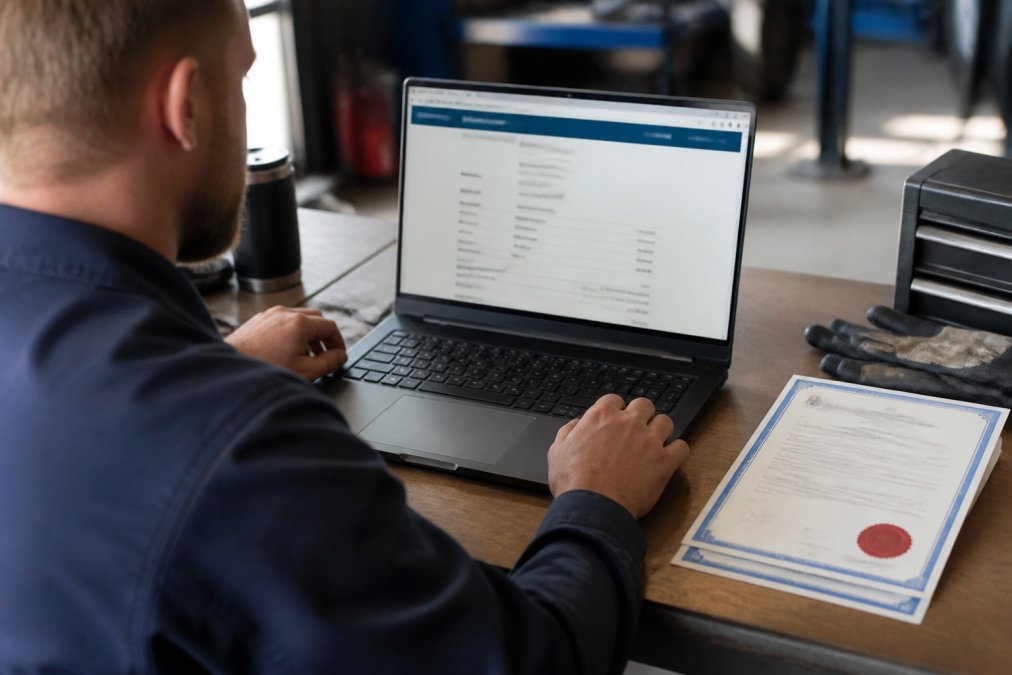
- Go to the AIT public register website
- Enter the mechanic’s name or certification number
- Review their trade designation and status
- Confirm the certificate is current, not expired
- Save a screenshot or print the result for your records
Using the Public Register to Confirm Certification
The public register lists every certified tradesperson in the province. Look for:
- Full name matching the person you’re hiring
- Trade designation (for example, Automotive Service Technician)
- Registration status (active or expired)
- Certificate number for cross-checking
What You Need Before You Start the Verification Process
Gather a few details first. This makes the search faster and more accurate.
You’ll need one of the following:
- The mechanic’s full legal name
- Their certification or registration number
- The name of their trade
- The province that issued their certificate
Ask for both the wall certificate and the wallet ID card. The wall certificate shows the trade and issue date. The ID card carries the certification number you need for the lookup tool.
Understanding the Certificate of Qualification and Red Seal
A Certificate of Qualification proves a tradesperson has met provincial standards, issued after passing a certification exam and, for apprentices, completing on-the-job hours and vocational training.
Red Seal Endorsement and Cross-Provincial Recognition
Not every certified mechanic holds a Red Seal, but those who do have passed an interprovincial exam, so their skills are recognized across the country. It signals two things:
- The mechanic met a national standard, not just a local one
- Their credentials transfer if they move between provinces
AMVIC Mechanic Requirements and What They Mean for You
AMVIC, the Alberta Motor Vehicle Industry Council, regulates vehicle sales and sets the rules for mechanical inspections used in those transactions. If you’re buying or selling a used vehicle, an AMVIC-regulated inspection may be part of the process, and the person performing it must be qualified.
When you book an AMVIC inspection, confirm both:
- The shop is licensed with AMVIC.
- The mechanic performing the inspection is certified and their certificate is current.
| Stage | What to Confirm | Where to Look |
|---|---|---|
| Before booking | Shop is AMVIC-licensed | AMVIC records |
| Before booking | Mechanic’s certification is active | Provincial trade register |
| At the shop | Wall certificate and ID card match | On-site, in person |
| After inspection | Report signed by a certified mechanic | Inspection document |
| For resale | AMVIC compliance on the report | AMVIC records |
The Legal and Financial Stakes of an Uncertified Inspection
If an inspection is performed by someone not properly certified, the consequences can land on the buyer, the seller, or both.
- Insurance exposure. Insurers can question a claim if a safety-critical repair or inspection was performed by an uncertified person. Coverage is not automatically void, but the burden of proving the work was done properly shifts to you.
- Warranty and recourse. If a certified mechanic signs off on work, there is a paper trail and a regulatory body behind it. If an uncertified person does the work, your recourse is limited to civil action against an individual, which is slower and harder to enforce.
- Resale risk. A buyer who later discovers the inspection was not performed by a certified mechanic may have grounds to challenge the sale.
- Compulsory trade rules. In trades designated as compulsory, performing the work without certification can violate provincial trades legislation, exposing the business to penalties.
An AMVIC-licensed shop is not the same as a certified mechanic. Confirm both. A licensed business can still employ someone whose certificate has lapsed or who is not certified in the trade being performed.
What to Ask Before You Book
A short script saves trouble:
- “Is this shop AMVIC-licensed?”
- “Which mechanic will perform the inspection, and what is their certificate number?”
- “Can you confirm their certificate is current in the relevant trade?”
A legitimate shop will answer all three without hesitation. If any answer is vague, verify independently through the public register and AMVIC records before you commit.
Benefits of Hiring a Journeyman Mechanic for Inspections
The benefits of hiring a journeyman mechanic go beyond a stamp on a report. A journeyperson has logged thousands of hours of hands-on work and passed written and practical exams, so they spot problems untrained eyes miss. That means:
- Accurate diagnosis of issues before they become expensive
- Compliance with insurance and AMVIC requirements
- Recourse if the work doesn’t meet standards
- Longer vehicle life through proper maintenance
- Safer driving for you and your passengers
Spotting Fraudulent Certificates and Credential Red Flags
Fake certificates exist. Watch for these warning signs:
- Blurry or photocopied certificates with no seal
- Certificate numbers that don’t appear in the public register
- A trade designation that doesn’t match the work being done
- Reluctance to show the wall certificate or ID card
- A shop that can’t name its regulatory body
- Prices that seem too low for certified work
The public register is the single most reliable way to confirm a mechanic’s certification. If a name or number doesn’t appear there, treat the credential as unverified until proven otherwise.
One more red flag: a certificate from outside Canada with no Canadian equivalency assessment. International credentials don’t automatically transfer. A tradesperson trained abroad must have their skills assessed before they can be certified here.
Cross-Provincial and International Credential Checks
Certification is issued province by province, so a mechanic certified in one jurisdiction is not automatically recognized in another. Here’s how to handle a mechanic who trained or worked elsewhere.
Verifying a Mechanic Who Moved Between Provinces
Each province and territory runs its own apprenticeship and trades authority with its own public register, there is no single national lookup tool. To verify a mechanic certified elsewhere, check two things: the original issuing authority’s register, and whether the credential has been recognized in your province.
Practical steps:
- Ask the mechanic which province issued their Certificate of Qualification and the certificate number.
- Look up that number on the issuing province’s public register to confirm the certificate is real and in good standing.
- Ask whether the trade is Red Seal endorsed. If yes, cross-provincial mobility is usually straightforward.
- If the trade is not Red Seal, contact your province’s apprenticeship authority to confirm whether the out-of-province credential is recognized for the work being performed.
- For safety-critical work such as vehicle inspections, confirm the mechanic is authorized to perform that specific inspection in your province, not just certified in the trade.
Red Seal program and interprovincial standards
Verifying International Credentials
Credentials earned outside the country do not transfer automatically, a tradesperson trained abroad must go through a formal assessment before they can be certified here. What to look for:
- A credential recognition or prior learning assessment completed through the relevant provincial apprenticeship authority. This is the formal process that maps foreign training and work hours against the local standard.
- A provincial Certificate of Qualification issued after that assessment. Without this, the mechanic is not certified in the trade, regardless of how many years they worked elsewhere.
- A Red Seal endorsement, if applicable, which confirms they met the national standard after assessment.
If you are an employer screening a candidate with international training, ask for the assessment outcome letter from the provincial authority, not just the original foreign certificate. The assessment letter is the document that connects foreign training to the local standard.
Why This Matters for Employers
Hiring a mechanic whose credential is not recognized in your province creates exposure. If the work is in a compulsory trade, you may be in breach of provincial trades legislation. If it’s safety-critical, an unrecognized credential can complicate insurance, warranty, and liability questions after a failure. Verifying credentials before hiring is cheaper than resolving those questions afterward.
Frequently Asked Questions
What is the difference between an apprentice and a journeyman mechanic?
An apprentice is still in training and works under supervision while completing required hours and coursework. A journeyman mechanic has finished the apprenticeship program or passed the trade qualification exam, earning a Certificate of Qualification. Only journeypersons can work independently on certain tasks and sign off on specific inspections. When you verify journeyman mechanic certification, you confirm the person holds that completed status rather than still being in training.
How do I check if a mechanic is licensed in Alberta?
You can verify a mechanic’s credentials through Alberta’s Apprenticeship and Industry Training (AIT) public register. Ask the mechanic for their certification number, then look it up on the AIT verification portal. The register shows their name, trade, certification status, and issuing jurisdiction. If their name does not appear or the status shows as expired or suspended, that is a red flag. You can also ask to see their wall certificate or ID card directly.
Does AMVIC require mechanics to be journeyman certified?
AMVIC sets requirements for vehicle inspections conducted for sale purposes, and those inspections must be performed by qualified individuals. While AMVIC does not directly issue trade certifications, the mechanics performing AMVIC inspections typically hold journeyman credentials or equivalent qualifications recognized by Alberta’s apprenticeship authority. Always confirm that the shop or mobile inspector you hire meets AMVIC mechanic requirements and can show proof of journeyman certification.
Can I verify a trade certificate from another province?
Yes. The Red Seal program allows journeypersons certified in one province to have their credentials recognized across Canada, provided their trade is part of the Red Seal network. To verify an out-of-province certificate, check the public register in the issuing jurisdiction first, then confirm with Alberta’s AIT that the credential has been recognized locally. Cross-provincial verification ensures the mechanic is authorized to work in Alberta, not just where they originally certified.