
Table of Contents
- What Fleet Operators Actually Need From a MrTorque Alternative
- Quick Comparison: Five mrtorque Alternatives for Canadian Fleets
- Vehicleinspectionservices: On-Site Mobile Repair Backed by AMVIC Certified Fleet Mechanics
- Whip Around: Digital DVIR Compliance Without the Telematics Overhead
- Samsara: Full Telematics and GPS Integration for Large Fleets
- AUTOsist and Fleetio: Maintenance Software for Smaller Operations
- Building a Commercial Fleet Maintenance Checklist That Reduces Downtime
- Fleet Vehicle Downtime Reduction Strategies That Work at Any Fleet Size
- Frequently Asked Questions
Last Updated: September 28, 2026
What Fleet Operators Actually Need From a MrTorque Alternative
Searching for a mrtorque alternative for fleet operators gets confusing fast, because two very different businesses compete for the same search. One sends a mobile mechanic to your yard. The other sells software that tells you when that mechanic is needed. They are not substitutes, and treating them as one category is the most common mistake fleet managers make when comparing options.
Mobile Repair vs. Software Platforms: Two Different Jobs
Mobile repair is a service: a journeyman-certified mechanic travels to your location and performs the work on site. You are buying labour and convenience.
Where the Hybrid Model Wins
The strongest fleet operations run both: software for planning, mobile service for execution.
When evaluating any provider, ask how they hand off records. A mobile mechanic who logs findings into your maintenance system saves hours of admin. One who hands you a paper invoice does not.
Quick Comparison: Five mrtorque Alternatives for Canadian Fleets
Here is the short version before the detail. Match the tool to your actual bottleneck, not to the longest feature list.
| Option | Type | Best For | Pricing Model |
|---|---|---|---|
| Vehicleinspectionservices | On-site mobile repair | Fleets needing hands-on service at their yard | Quote-based |
| Whip Around | DVIR and inspection software | Compliance-focused operators | Fixed, unlimited |
| Samsara | Telematics and safety platform | Large fleets with complex logistics | Subscription |
| AUTOsist | Maintenance tracking software | Small fleets digitising paper records | Subscription |
| Fleetio | Full fleet management platform | Fleets wanting modular tools | Per-asset subscription |
Vehicleinspectionservices: On-Site Mobile Repair Backed by AMVIC Certified Fleet Mechanics
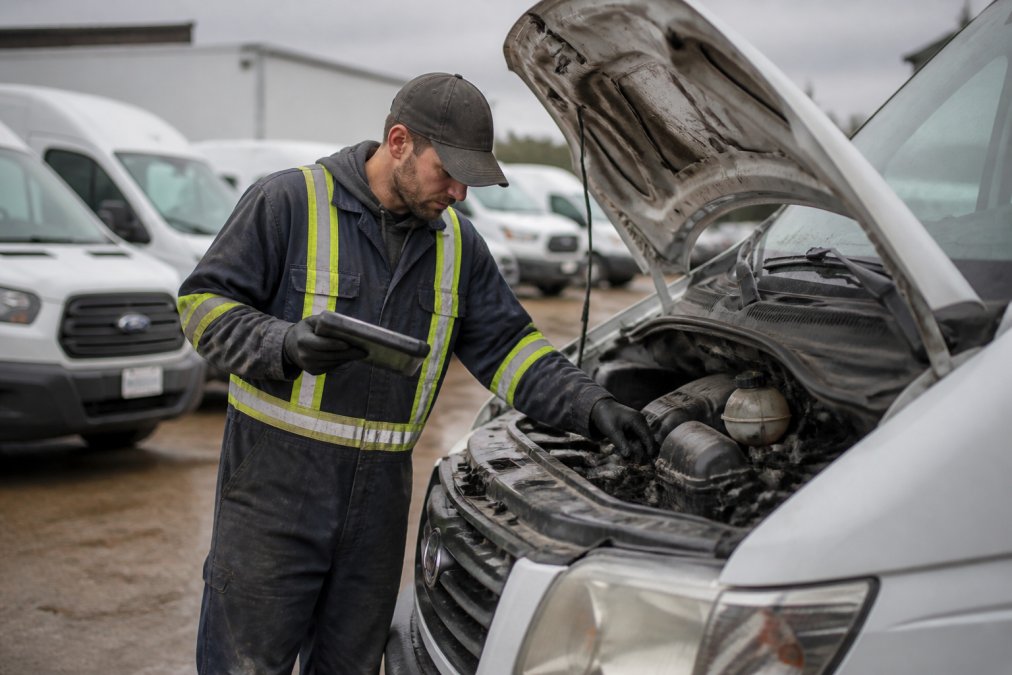
For operators who need repairs done at their own yard rather than booked into a shop, Vehicleinspectionservices is the strongest pick on this list. The team sends journeyman-certified mechanics directly to your location, covering pre-purchase, insurance, and AMVIC inspections alongside routine maintenance and repair work.
Pros and Cons
Pros:
- On-site mobile service, so vehicles stay at your yard
- Journeyman-certified mechanics with documented credentials
- AMVIC inspection provider status
- Complimentary Courtesy Check with service visits
- Early detection focus that prevents major repairs
Cons:
- Service coverage is across Alberta, so national fleets need a regional plan
- No self-serve software dashboard; scheduling runs through direct contact
What It Costs
Vehicleinspectionservices does not publish fixed rates, because pricing depends on fleet size, vehicle type, and the scope of work. Operators should request a quote directly for current pricing.
Whip Around: Digital DVIR Compliance Without the Telematics Overhead
Whip Around handles one job well: digital driver vehicle inspection reports with photo evidence and automated maintenance scheduling. If your compliance paperwork is the weak point, this is a focused fix.
How the DVIR Workflow Actually Runs
The mechanism is straightforward, and understanding it tells you whether the tool fits a mobile-repair model:
- A driver completes a walkaround inspection on a phone or tablet before the shift.
- Defects are flagged with a photo and a severity level.
- Failed items trigger an automated work order or a maintenance alert to a named person.
- The defect stays open until someone closes it with a repair note.
Where It Fits and Where It Does Not
Whip Around is a strong fit when your compliance exposure is the real risk, for example when a provincial commercial vehicle inspection or an insurer asks for documented daily inspections. It is a weak fit when your problem is that you cannot see fuel burn, idle time, or driver behaviour, because it does not collect that data.
Pros and Cons
Pros:
- Strong DVIR workflows with photo evidence for audit readiness
- Automated scheduling based on mileage or engine hours
- Handles mixed-asset fleets, including trailers and non-motorised equipment
- Low training burden for drivers
Cons:
- Lacks the deep telematics integration of larger enterprise suites
- No native mobile-mechanic dispatch, so the repair handoff is manual
- Reporting is inspection-centric rather than cost-centric
What It Costs
Whip Around uses fixed, unlimited pricing rather than per-asset tiers. Contact the vendor for current rates, since fleet-size tiers change. When you compare it against a per-asset tool, run the math on your actual asset count, because unlimited pricing wins at higher counts and loses at very low ones.
Before you commit to any DVIR tool, ask the vendor one question: can a third-party mechanic close a defect record without a paid user seat? If the answer is no, budget for the admin time that workaround will cost you.
Samsara: Full Telematics and GPS Integration for Large Fleets
Samsara is the heavyweight option. It combines real-time GPS tracking, engine diagnostics, AI-assisted driver safety monitoring, and automated maintenance alerts in one platform.
Pros and Cons
Pros:
- Leading hardware and sensor integration
- Strong analytics for fuel and operational efficiency
- Automated work order management
Cons:
- Higher cost of entry than maintenance-only tools
- Hardware rollout takes planning
What It Costs
Samsara runs on subscription pricing with hardware components. Contact the vendor for a quote.
AUTOsist and Fleetio: Maintenance Software for Smaller Operations
Smaller fleets often need records and reminders, nothing more. These two cover that ground.
AUTOsist: Service Records and Automated Reminders
AUTOsist is cloud-based maintenance tracking with a low learning curve. It centralises service records and receipts, sends automated preventative maintenance reminders, and offers mobile access for drivers and technicians.
Fleetio: Modular Pricing and Third-Party Integrations
Fleetio is the more capable of the two. It automates maintenance workflows, integrates with fuel cards for expense reporting, and offers an API for custom integrations. Pricing is modular, which lets small fleets control costs as they grow.
Building a Commercial Fleet Maintenance Checklist That Reduces Downtime
A commercial fleet maintenance checklist is the single cheapest downtime reduction tool available. It costs nothing to write and catches failures before they strand a vehicle.
- Daily walkaround: tyres, lights, fluid leaks, warning indicators
- Weekly: brake feel, wiper function, battery terminals, tyre pressure
- Monthly: oil level, coolant, belts, hoses, undercarriage inspection
- Quarterly: full brake inspection, suspension check, alignment
- Annually: comprehensive safety inspection, AMVIC-standard review where applicable
- Every service: log the date, odometer reading, and work performed
Skipping documented inspections is the fastest route to a failed compliance audit and a denied insurance claim. Paper trails matter as much as the repairs themselves.
Fleet Vehicle Downtime Reduction Strategies That Work at Any Fleet Size
Fleet vehicle downtime reduction strategies come down to three levers: prevent, detect, and recover. Most guides stop there. The useful part is knowing which lever to pull first, and how to prove the spend is worth it.
A Total Cost of Ownership Framework You Can Run This Week
This is the gap the top-ranking articles leave open. They tell you to “calculate TCO” without giving you the inputs. Here is a framework built for the mobile-repair-versus-software decision.
Step 2: Count your downtime days.
Step 3: Price the three levers.
- Prevention: the annual cost of your maintenance software or scheduling discipline.
- Detection: inspection time, diagnostic tools, or a DVIR platform.
- Recovery: the premium you pay for mobile or emergency service versus a scheduled shop visit.
Step 4: Compare against the avoided cost.
Step 5: Re-run it quarterly.
Choosing Between the Levers
A simple rule of thumb: if your unplanned downtime days outnumber your scheduled service days, you have a prevention problem and should invest in scheduling and inspections first. If your downtime is low but each event is expensive and slow to resolve, you have a recovery problem and should invest in mobile service access.
Run the five-step framework before you sign any contract. The operators who do usually discover their bottleneck is not the one they assumed, and they stop paying for capability they will never use.
Frequently Asked Questions
What are the benefits of using mobile fleet maintenance services?
Mobile fleet maintenance brings the technician to your yard or job site, which cuts the time vehicles spend traveling to and waiting at a shop. For operators running tight schedules, that means fewer vehicles out of service and lower towing costs when something breaks down. It also lets a mechanic assess the vehicle in its working condition, which can surface issues a shop-based inspection might miss.
How do I choose a reliable commercial vehicle repair provider?
Start by verifying credentials. In Alberta, AMVIC sets the rules for automotive businesses, so a legitimate provider should be able to show its AMVIC registration. Ask whether the mechanics are journeyman-certified and how long the company has operated in your region. A provider that offers a courtesy check or a clear inspection report before you commit is usually a safer bet than one that quotes a price without seeing the vehicle.
Are on-site fleet inspections compliant with AMVIC standards?
Yes, if the provider is an AMVIC-registered business and the inspection follows the required scope. AMVIC regulates automotive sales and inspections in Alberta, and a mobile provider that holds the right registration can perform compliant inspections at your location. Ask for the registration number and confirm the inspection type matches what your insurer or buyer requires before booking.
How does mobile fleet repair reduce vehicle downtime?
The biggest gain is eliminating the drive to and from a shop. A vehicle that needs a brake job might sit for a full day in a traditional shop queue, but an on-site mechanic can often complete the same work in a few hours at your yard. Pairing on-site repair with a preventative maintenance schedule and automated alerts keeps small issues from turning into multi-day breakdowns.
What is the difference between general mobile repair and specialized fleet maintenance?
General mobile repair handles one-off jobs for any vehicle that needs work. Specialized fleet maintenance is built around a recurring schedule for a group of vehicles, with service intervals tracked by mileage or engine hours, inspection records kept for compliance, and work planned around your operating hours. If you run more than a handful of vehicles, the specialized approach usually pays for itself through fewer breakdowns and better record-keeping.
Fleet downtime rarely comes from one big failure. It comes from small ones nobody logged. Vehicleinspectionservices brings journeyman-certified mechanics to your location for on-site inspections and repairs, backed by AMVIC certification and a decade of Alberta fleet experience. Get started with Vehicleinspectionservices and keep your vehicles working instead of waiting.