


Last Updated: November 7, 2026
Quick Summary
To learn how to handle disputes with mobile mechanics, start by contacting the mechanic in writing with a calm, factual complaint that states the invoice number, repair date, and the remedy you want. Give five to ten business days to respond, then escalate to a formal dispute letter, independent inspection, consumer protection complaint, or small-claims court only if needed.
- A written estimate listing diagnosis, parts, labor hours, and total cost in CAD is your first line of defense.
- Verbal go-ahead approvals are the single most common source of billing disputes, so authorize work by text or email.
- Export messages and keep original photos rather than deleting threads or editing files after a dispute starts.
- Request a specific remedy with a clear deadline, such as corrective work, partial refund, full refund, or corrected invoice.
- An independent inspection report from a mechanic with no stake in the dispute turns opinions into facts.
Table of Contents
- Start With Prevention Before the Wrench Turns
- Gathering Evidence for a Mechanic Dispute
- How to Dispute a Mechanic Bill Without Escalating
- Writing a Mechanic Repair Dispute Letter That Gets Results
- The Mobile Mechanic Complaint Process, Step by Step
- Repair Quality, Faulty Work and Corrective Repairs
- Getting an Independent Inspection Before You Pay
- Booking a Neutral Inspection to Settle the Disagreement
- Frequently Asked Questions
Start With Prevention Before the Wrench Turns
Knowing how to handle disputes with mobile mechanics starts with understanding that most disputes begin long before anyone argues about a bill. They start with a vague verbal agreement, no written estimate, and a repair the customer never formally approved. Learning how to handle disputes with mobile mechanics is easier when you understand that the best dispute is the one you prevent. If you’re still choosing a mechanic, see how can you find a reliable mobile mechanic before you hire.
What a Written Estimate Should Cover
A written estimate is your first line of defense. It should list the diagnosis, the parts needed, the labor hours, and the total expected cost in CAD. Ask for it before any work begins. A good estimate also states whether the price can change and why. If a mechanic won’t put numbers on paper, treat that as a warning sign.
Confirming Repair Scope and Authorization
Repair scope is the boundary of what you agreed to pay for. Before the mechanic starts, confirm in writing what is included and what is not. Then authorize the work, ideally by text or email so you have a written record. Watch out: verbal “go ahead” approvals are the single most common source of billing disputes. If the scope changes mid-job, the mechanic must get fresh authorization before doing more work.
Gathering Evidence for a Mechanic Dispute
Solid evidence for a mechanic dispute turns a shouting match into a documented claim. Start collecting the moment something feels wrong. A stronger file generally makes disputes easier to resolve.
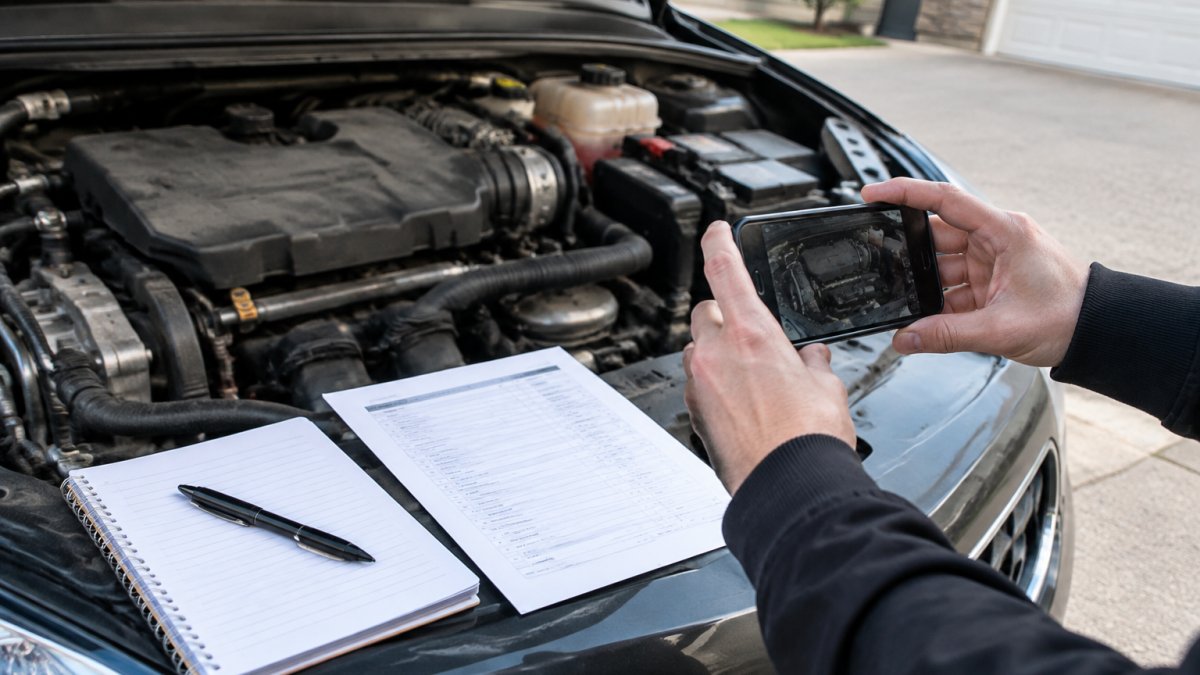
The Evidence Checklist
Work through this checklist and keep everything in one folder, ideally a cloud folder with dated subfolders:
- Written estimate or quote, including the diagnosis, parts, labor hours, and total in CAD.
- Final invoice or receipt, itemized line by line.
- Proof of payment, deposit, or advance payment, such as a card statement or e-transfer confirmation.
How to Preserve Evidence Properly
Collecting evidence is only half the job; preserving it is the other half. A few habits make your file far more useful:
- Export messages rather than deleting them. Screenshot text threads with the timestamp and phone number visible, and email yourself a copy so the record is not tied to one device.
- Keep original files. Do not crop or edit photos; keep the originals alongside any annotated copies.
- Record dates and times in a simple log. A one-page timeline of what happened and when is often the most persuasive document in the file.
Watch out: deleting a thread or clearing a call log after a dispute starts can look like bad faith and weaken an otherwise strong claim. Preserve first, organize second.
Sample Wording for a Written Complaint
A short, factual written complaint is often all you need to open the file. Adapt this wording:
On [date], your mechanic performed [repair] on my [year, make, model] at [location]. The written estimate was [amount] CAD, and the final invoice was [amount] CAD. My concerns are: [list two or three specific issues]. I am requesting [remedy] within [number] days. I have attached the estimate, the invoice, photos, and my notes. Please confirm receipt and your proposed resolution.
Keep the tone neutral and the facts specific. A calm, organized file carries far more weight than a long complaint. If you’re unsure whether a mechanic is properly credentialed, it helps to know how to verify journeyman mechanic credentials before you build your case.
How to Dispute a Mechanic Bill Without Escalating
The fastest way to dispute a mechanic bill is a calm, written first contact. Call the business, then follow up in writing so the conversation is on record.
Keep your tone neutral. If you want to understand the business’s own quote and pricing process before you call, you can review their pricing and quote process so your concern lands with the right person.
Writing a Mechanic Repair Dispute Letter That Gets Results
A mechanic repair dispute letter works best when it is short, factual, and specific. Skip the emotion and lead with the facts. Here is a template you can adapt:
Subject: Dispute of Invoice #[number] dated [date]
Dear [Business name],
On [date], your mechanic performed [repair] on my [year, make, model] at [location]. The written estimate was [amount] CAD, but the final invoice was [amount] CAD.
My concerns are: [list 2-3 specific issues].
I am requesting [refund / partial refund / corrective work] within [number] days. I have attached photos, the estimate, and the invoice.
Please confirm receipt and your proposed resolution.
Sincerely, [Name, phone, email]
Send it by email so you have a timestamp. Keep a copy in your evidence file. A clear letter shows you’re serious but reasonable, which is exactly the posture that gets results.
The Mobile Mechanic Complaint Process, Step by Step
The mobile mechanic complaint process follows a predictable path, and the goal at every stage is to keep the dispute neutral and documented rather than adversarial. Work through each step before jumping to the next, and keep a written record of every contact.
- Contact the mechanic directly in writing. State the invoice number, the repair date, what you expected, and what outcome you want. Give a reasonable response window, such as five to ten business days.
- Send a formal dispute letter with your evidence attached. Use the template in the next section. Send it by email so you have a timestamp, and keep a copy in your evidence file.
- Request a specific remedy with a clear deadline. Ask for corrective work, a partial refund, a full refund, or a corrected invoice, and say which one you want. Vague demands slow resolution down.
- Get an independent inspection if repair quality is in question. A written report from a mechanic with no stake in the dispute turns opinions into facts and is often the fastest way to settle a technical argument.
- File a formal complaint with the relevant consumer protection body. In Canada, complaint routes vary by province and territory (The Complaint Roadmap). Provincial and territorial consumer affairs offices handle many vehicle-repair complaints, and some provinces also have a motor vehicle sales regulator or a vehicle inspection program. Check the Canadian consumer affairs offices for the correct route in your province or territory before filing.
- Consider small-claims court for unresolved balances or refunds. Provincial and territorial small-claims courts have monetary limits that vary by jurisdiction, and the process is designed for people representing themselves. Bring your evidence file, the dispute letter, and any inspection report.
Escalate only when a step fails. Many disputes settle early in the process.
Choosing the Right Remedy at Each Stage
Not every dispute calls for the same remedy. Match the ask to the problem:
- Minor billing error or unclear line item: request a corrected invoice with an itemized breakdown.
- Repair did not fix the problem: request corrective work at no additional charge, and confirm the warranty terms in writing.
- Repair caused new damage: request a partial or full refund and document the new damage with photos and the inspection report.
Watch out: threatening a chargeback or a regulator in your first message often pushes a business into defense mode and slows resolution. State the facts and the remedy you want, and keep escalation as a later step.
What Each Route Requires
- Direct negotiation: the estimate, the invoice, and your written complaint.
- Independent inspection: the inspection report plus before-and-after photos.
- Consumer protection complaint: the dispute letter, the invoice, proof of payment, and a summary timeline.
Knowing your legal options keeps the process fair for both sides, and it helps you decide when a partial refund is a better outcome than a long fight over a small balance.
Here is the escalation path laid out in the article, with the remedy to ask for at each stage.
| Step | What to do | Remedy or note |
|---|---|---|
| 1 | Contact the mechanic directly in writing | Give five to ten business days to respond |
| 2 | Send a formal dispute letter with evidence attached | Send by email for a timestamp |
| 3 | Request a specific remedy with a clear deadline | Corrective work, partial refund, full refund, corrected invoice |
| 4 | Get an independent inspection if repair quality is questioned | Written report turns opinions into facts |
| 5 | File a formal complaint with the consumer protection body | Routes vary by province and territory |
| 6 | Consider small-claims court for unresolved balances or refunds | Monetary limits vary by jurisdiction |
Repair Quality, Faulty Work and Corrective Repairs
A faulty repair is work that fails to fix the problem or creates a new one. When that happens, the mechanic should make it right through corrective work, a refund, or a partial refund.
Not every bad outcome is a bad repair. If you’re dealing with work you believe was done poorly, our guide on whether mobile mechanics guarantee their work explains what recourse you actually have.
Getting an Independent Inspection Before You Pay
An independent inspection is a technical second opinion from a mechanic who has no stake in the dispute. It settles arguments about repair quality with facts instead of opinions. Book one before you pay a bill you doubt, or before you escalate a complaint.
The inspection report should document:
- What was repaired and whether it was done correctly
- Any new damage or fluid spill from the work
- Whether the parts match what you were billed for
This report becomes powerful evidence. It also protects you if the dispute reaches small-claims court.
Booking a Neutral Inspection to Settle the Disagreement
A neutral third-party inspection ends most repair disputes quickly. It gives both sides an objective record, and it keeps the conversation focused on facts.
To arrange one, contact us with your vehicle details and the nature of the dispute. We’ll confirm a time and location that works for you.
Disputes with mobile mechanics rarely need to reach a courtroom. They need a clear paper trail, a calm written request, and an independent opinion when the facts are in question.
Frequently Asked Questions
Should I pay a mobile mechanic if I dispute the work?
Pay any undisputed portion and hold back only the amount you are challenging in writing. Withholding the full invoice weakens your position if the matter reaches small claims court, because you appear to have refused payment outright. Send a written note explaining what you are paying, what you are withholding, and why. Keep the receipt for the partial payment. If the mechanic placed a deposit or advance payment, ask for a written breakdown of labour and parts already used before any refund discussion.
Can I ask another mechanic to inspect disputed repair work?
Yes, and you should. An independent inspection from a journeyman-certified mechanic who did not perform the original work gives you a written technical opinion on whether the repair was done correctly. Ask for a report that names the specific components, notes whether the fault was addressed, and photographs anything relevant. This report is the strongest single piece of evidence for a mechanic dispute, and it carries far more weight than your own description of the symptoms. Keep the original invoice and any text messages alongside it.
How do I make a formal complaint about a mobile mechanic?
Start with a written complaint to the business itself, sent by email so you have a dated record. If that fails, Provincial consumer protection offices handle many vehicle-repair complaints, so check the official government source for your province to confirm the correct route. Include your invoice, the dispute letter, photos and any independent inspection report. Keep copies of everything. Small claims court is an option for amounts within the applicable provincial limit.
What should I do if a mobile mechanic’s repair does not fix the problem?
Contact the mechanic in writing within a reasonable window, describe the symptoms that remain, and ask for a diagnosis and a proposed remedy. Do not authorize further paid work until you have a written explanation of what was missed. If the mechanic offers to re-inspect at no charge, accept in writing so the terms are clear. If they refuse, get an independent inspection, then send a mechanic repair dispute letter requesting corrective work or a partial refund. Document every call with a follow-up text message so the conversation is on record.
