
Last Updated: November 8, 2026
Quick Summary
Yes, in most cases you can inspect car at home with a mobile service. Pre-purchase and insurance inspections are the most common reasons people request this, and they are usually well suited to a home visit. Official inspections required by a program or regulator may still need an authorized station.
- A mobile inspection is an independent condition assessment you choose for your own peace of mind.
- An official inspection is required by a program, regulator, or insurer and may need an authorized station.
- Confirm the inspection type and requirements with the organization asking before you book.
- Weather, lighting, and access can prevent a proper home inspection, so reschedule if conditions are unsafe.
- Confirm the service area, travel fee, and total cost in writing before the appointment.
Table of Contents
- Yes, Most Pre-Purchase and Insurance Inspections Can Be Done at Your Home
- Mobile Car Inspection vs. Official Inspections: What Each One Covers
- Pre-Purchase Car Inspection at Home: Checking a Used Vehicle Before You Buy
- Insurance Vehicle Inspection at Home: When Your Insurer Requires One
- When You Still Need an Authorized Vehicle Inspection Station
- How to Book an At-Home Inspection and What to Prepare
- Booking Your At-Home Inspection in Alberta: Your Next Step
- Frequently Asked Questions
Can a mechanic actually inspect your car at home in Alberta? In most cases, yes, you can inspect car at home with a mobile service. Mobile inspection services can provide on-site automotive inspections, so you can get an assessment without driving to a shop. Pre-purchase and insurance inspections are the most common reasons people request this service, and they are usually well suited to a home visit.
The key distinction is between a mobile inspection and an official inspection. A mobile inspection is a professional assessment of a vehicle’s condition. An official inspection is one that a government program or regulator requires, and it may need to be done at an authorized station. Knowing which one you need saves time and avoids surprises.
Yes, Most Pre-Purchase and Insurance Inspections Can Be Done at Your Home
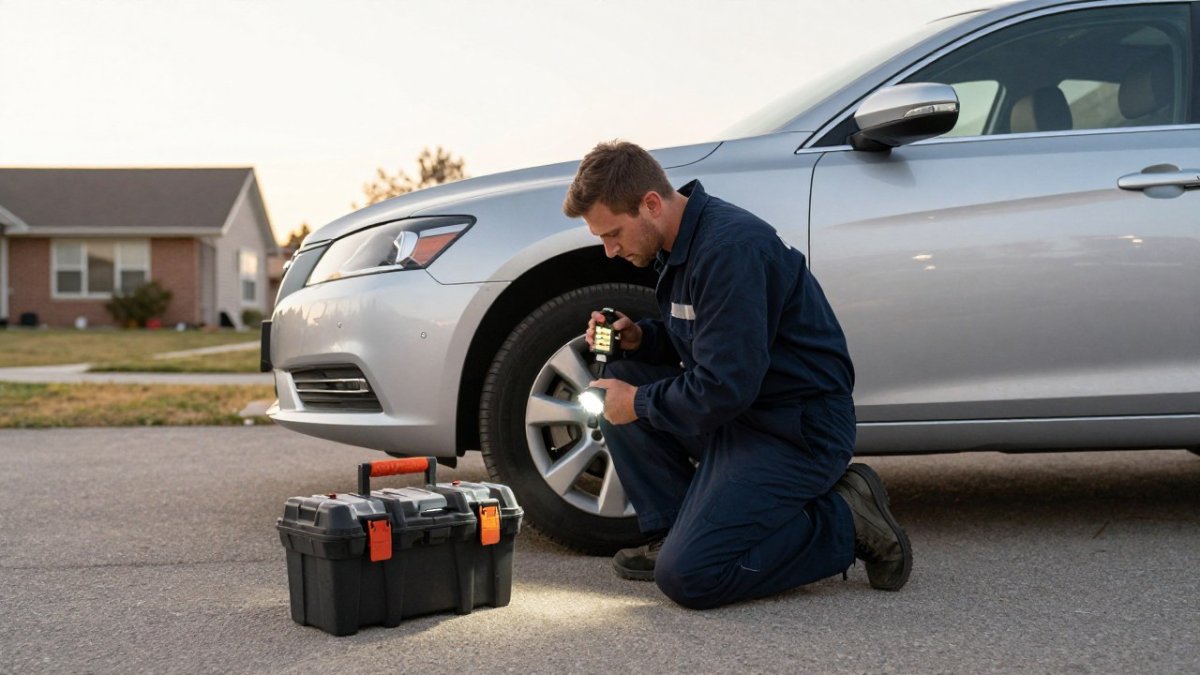
Many buyers and vehicle owners assume a proper inspection requires a lift and a full garage. That is often not true. A qualified mechanic can check many of these systems using portable tools and a road test.
Here is what a typical at-home inspection usually covers:
- Engine condition, fluid levels, and visible leaks
- Brakes, tires, and suspension
- Body panels, paint, and signs of prior damage
- Interior electronics, warning lights, and wear
- A short road test to check steering and noise
Mobile Car Inspection vs. Official Inspections: What Each One Covers
These two services serve different purposes, and it helps to know the difference before you book.
A mobile inspection gives you an independent opinion on a vehicle’s mechanical and physical condition. It is a service you choose for your own peace of mind.
An official inspection is required by a specific program, regulator, or insurer. The rules vary by reason and jurisdiction, so check the requirements that apply to your situation.
A mobile inspection can help you decide whether to buy or what repairs to expect. It cannot replace an official inspection that a program requires. If you are unsure which one applies, confirm with the organization asking for the inspection before you book.
Pre-Purchase Car Inspection at Home: Checking a Used Vehicle Before You Buy
Buying a used car without an inspection is a gamble. A pre-purchase inspection at home lets you see the vehicle in its own environment, and it lets you ask questions while the seller is nearby. To see why this step matters, read why pre-purchase inspections are important for used vehicles.
Here is a general approach to consider:
- Ask the seller for the vehicle’s service records and history report.
- Arrange the inspection at the seller’s location, or at your home if you prefer.
- Ask the inspector to focus on the areas most important to you.
- Request a written report you can review before you decide.
Watch out: Do not rely on a seller’s own mechanic. Choose an independent inspector who has no stake in the sale.
Insurance Vehicle Inspection at Home: When Your Insurer Requires One
Some insurers ask for an inspection before they will cover a vehicle, especially if the car is older, has been modified, or was recently repaired after damage. Requirements differ by insurer and policy, so read your policy or call your provider to confirm what they need.
If your insurer accepts an at-home inspection, ask them to confirm in writing that it meets their requirements. Keep the inspection report with your policy records. This helps avoid delays if the insurer asks for proof later.
When You Still Need an Authorized Vehicle Inspection Station
A home visit is a convenience, not a substitute for every inspection. Some checks are tied to a government program or a regulator and must be performed at a licensed or authorized facility, so you cannot always inspect car at home. The fastest way to avoid a wasted booking is to confirm the requirement with the organization asking for the inspection before you schedule anything.
A common pattern is that the following inspection types are tied to an authorized station rather than a driveway:
- Safety or mechanical fitness inspections required to register a vehicle, transfer ownership, or return a rebuilt or salvage vehicle to the road.
- Out-of-province or imported vehicle inspections required when a vehicle enters a jurisdiction and needs to be registered there.
- Emissions or environmental inspections where a program applies.
- Commercial vehicle inspections for vehicles operated under a carrier safety regime.
- Insurer-mandated inspections where the policy or underwriter specifies an authorized facility or a specific form.
Requirements vary by province and territory, and they also vary by the reason for the inspection. A safety inspection for registration in one province may not be accepted in another, and an out-of-province vehicle often needs a fresh inspection in the destination jurisdiction. Rather than assume, check the website of the provincial or territorial ministry responsible for transportation or motor vehicles where the vehicle will be registered, or ask the registry agent or insurer that requested the inspection. Those sources publish the accepted inspection types, the forms required, and whether a mobile provider can complete them.
There are also practical reasons an inspector may decline a home visit even for an inspection type that is normally allowed on-site:
- Weather: heavy rain, snow, ice, or extreme cold can make an exterior and underbody check unsafe or unreliable.
- Lighting: an evening appointment in a dim driveway limits the ability to spot leaks, frame damage, or tire wear.
- Access: a steep driveway, soft ground, a tight parking structure, or a vehicle blocked in by other cars can prevent a proper walkaround and road test.
- Vehicle condition: a vehicle that does not start, cannot be safely moved, or has an active safety defect may need to be towed to a facility.
- Site restrictions: some condominiums, apartment buildings, and commercial properties prohibit repair or inspection work on the premises.
If an inspector cannot complete the check at your location, they should tell you why and point you to the next step, whether that is an authorized station, a different appointment time, or a facility with a lift.
A home inspection is best treated as a condition assessment you choose for your own information. An official inspection is a program requirement with a defined form, facility, and acceptance rule. When both apply, book the official inspection at an authorized station and use the mobile inspection for the independent opinion it is designed to provide.
How to Book an At-Home Inspection and What to Prepare
Booking an at-home inspection usually takes a short call or an online request, but the quality of the visit depends on what you confirm up front and how you set up the vehicle. You can review the inspection services offered before you request a booking.
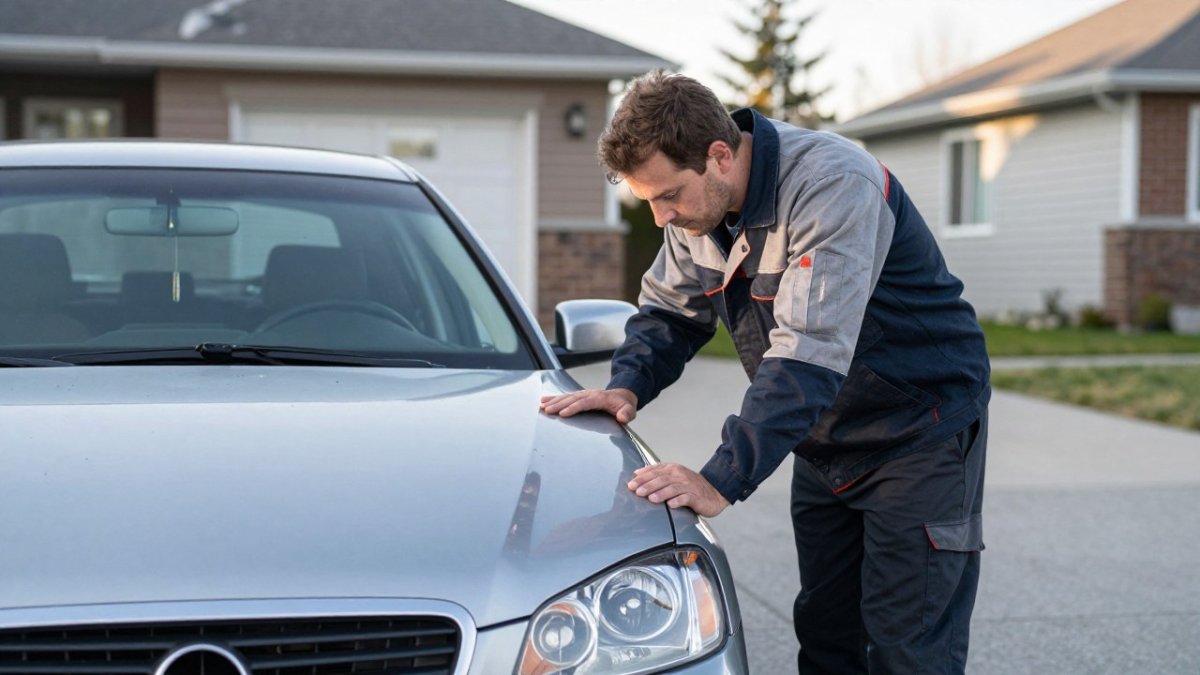
Confirm these details when you book:
- Inspection type: state whether you need a pre-purchase assessment, an insurance inspection, or an official inspection, because the last one may not be available as a home visit.
- Location and access: give the exact address and describe where the vehicle will be parked, including whether the spot is level, covered, and clear of other vehicles.
- Service area and travel: ask whether your address falls inside the provider’s service area and whether a travel fee applies outside it. Travel fees and service-area limits are common, so get the total before you commit.
- Time and duration: ask how long the inspection is expected to take and whether the inspector needs the vehicle to be cold or warm for specific checks.
- Report format: confirm whether you receive a written report, photos, or both, and when it will arrive.
- Payment and cancellation: ask about the price, accepted payment methods, and the cancellation or rescheduling policy.
Before the inspector arrives, prepare:
- A clear, level spot with enough room to open the doors, hood, and trunk fully.
- Good lighting, especially for an evening appointment; a garage or covered area is better than a dim street.
- The vehicle’s registration, service records, and any recent repair invoices.
- A list of questions or concerns, such as a noise you have noticed or a warning light that comes on intermittently.
- The keys, plus any codes or fobs needed to open locked areas, the fuel door, or the hood.
- The vehicle cleaned enough that the inspector can see body panels, tire sidewalls, and fluid levels.
During the visit: stay nearby and ask questions as the inspector works. A short walkthrough often teaches you more than the written report alone, and it is the right time to point out symptoms you have noticed.
After the visit: review the written report, compare the findings against your budget and the seller’s asking price, and decide on next steps. If the report flags safety items, get a repair estimate before you finalize a purchase.
Confirm the service area, any travel fee, and the total cost in writing before the appointment, and reschedule rather than let the inspector work in unsafe weather or poor lighting. Check whether your address is covered on the mobile inspection service locations page.
The table below summarises the booking checks and preparation steps covered in this section.
| Item | What to do | Note |
|---|---|---|
| Inspection type | State pre-purchase, insurance, or official | Official may not be available at home |
| Location and access | Give exact address and parking details | Spot should be level and clear |
| Service area | Confirm address is inside the area | Check for any travel fee |
| Time and duration | Ask how long the inspection takes | Ask if vehicle must be cold or warm |
| Report format | Confirm written report, photos, or both | Ask when it will arrive |
| Payment and cancellation | Ask price, payment methods, and policy | Get total cost in writing |
Booking Your At-Home Inspection in Alberta: Your Next Step
Choosing to have a car inspected at home is a practical way to protect yourself before you buy, insure, or maintain a vehicle. A mobile inspection from Vehicleinspectionservices gives you an independent look at the car’s condition, delivered to the place where you need it most. Journeyman-certified mechanics can bring the inspection to your location across Alberta. Contact Vehicleinspectionservices to request a booking.
Frequently Asked Questions
Can a mechanic inspect my car at home?
Yes, many mobile mechanics will inspect a vehicle at your home, workplace or the seller’s location. Pre-purchase inspections and most insurance-related inspections can usually be done on site, provided the car is accessible, the lighting is adequate and there is room to lift or drive the vehicle if the inspector needs to check the underside. Weather, unsafe access or a car that cannot be driven or moved may cause an inspector to decline or reschedule. Call ahead to confirm that your specific inspection type is available at your address.
Are mobile vehicle inspections legally valid?
It depends on the purpose. A mobile inspection is a valid independent assessment of a vehicle’s condition, which is useful for a pre-purchase decision. However, some official inspections in Alberta must be completed at an authorized vehicle inspection station, and the required paperwork must come from that station. Before booking, confirm with the inspection provider and with the organization requesting the inspection, such as your insurer or the AMVIC process, which format they will accept.
How long does an at-home vehicle inspection take?
Inspection length depends on the vehicle and the checks requested. Ask the provider for an estimate when you book, and allow extra time if the car needs to be lifted or road-tested.
What should I prepare before an inspector arrives?
Have the vehicle parked on a flat, dry surface with enough space to open the doors and hood fully. Make sure the car is accessible and that the inspector can get underneath it if needed. Gather the vehicle registration, the VIN, any maintenance records you have, and the seller’s contact details if you are buying. Keep the keys ready, and if the car has an active warning light, let the inspector know in advance so they can plan the inspection accordingly.
